All Saints Prayer 2025

As we prepare our hearts for prayer on this All Saints Sunday I want to share some words for our meditation from Linda Hogan in her book “Dwellings.” She says,

“Walking, I am listening to a deeper way. Suddenly all my ancestors are behind me. Be still, they say. Watch and listen. You are the result of the love of thousands.”


O Holy One, God of the present age, of every generation that has enabled our being here today, and of all the multitudes who will follow in our footsteps if we find a way to a sustainable future for the creation we are a part of.

We know All Saints Day may sound pretentious because none of us are truly saintly.
We are all a weird mixture of sinner and saint striving to be more the latter as followers of Jesus and good stewards of your creation. We want to be builders of a peaceable kingdom, a beloved community, honest we do.

But you know that our fears and anxieties too often lead us to foolishly put our trust in stuff that promises security but only creates higher walls of tribal suspicion and prejudice. Bigger bombs and battleships only motivate others to make more weapons that steal resources from hungry children.

As we ponder the mysteries of how our ancestors made sense of their lives help us lovingly forgive their mistakes even as we learn from their collective wisdom.  We are grateful that we don’t have to reinvent every wheel because we are surrounded by a cloud of witnesses who bless us with their presence. We are never alone, although at times it sure feels like it.

Among those saints are those whose names we all know – Moses, Ruth, Micah, Theresa, Amos, Francis, Jesus and Paul – but those famous ones are totally outnumbered by the ordinary Joes and Judys who quietly have preserved the faith through disasters, depressions, pandemics, and ages of apathy.


Today we remember those dear ones who have passed through the thin veil that divides our reality from eternal peace and truth. We give thanks for those who dwell now in your very heart, O God. We envy their peace and unity with you, even as we humbly give thanks for their love that has produced this community of faith that nurtures us still today.


We are indebted to their example of service. We are inspired by their faith that overcame the doubts and despair that are part of the human condition. Like them we journey ever on toward the cross of Christ and the example he gives us as we join our voices with all the saints in the prayer Jesus taught us to pray ….

Northwest United Methodist Church, Columbus, Ohio, November 2, 2025

Prayer for Father’s Day 2025

O Heavenly Father, we use many metaphors to describe your holy mystery, terms like Father, Mother, Parent, Spirit, Friend, all pointing to your very essence which is Love. Today we honor those who can be one reflection of your love, the men who are or were fathers to us, biological or honorary. Many earthly fathers or father figures are great sources of wisdom, encouragement, and love, and for them on this day especially we offer thanks and praise.

But, unfortunately not all fathers are created equal. Some, because of their own trauma, are less than Hallmark papas, and because of that this day can be difficult for some of us. Where there is strife or pain associated with such relationships we pray for comfort, forgiveness, and reconciliation where those things are possible. For others we simply ask for the serenity to accept the things we cannot change.

Ideally, we pray for the closeness that you, God, had with Jesus. He referred to you with the term of endearment Abba, which is translated in English as “Daddy.” For fathers and those who fill that important role we pray for the wisdom, closeness, and love reflected in your holy relationship with Jesus. We know none of us mere humans can achieve that depth of agape love, and we do not want to create guilt for our mortal weaknesses and failures. But in you, God, we see a model for the kind of parent, grandparent, aunt, uncle, or friend we strive to be for those young in years or new in their faith journey.

Whether we realize it or not all of us are mentors and teachers for young people who observe and imitate our words and actions. Help us, Heavenly Father, to be worthy models of integrity, courage, faith, and love in all we do. May all of us so live that our fathers and children will be proud of us, but most importantly that you one day will say, “Well done, good and faithful servant.”

We pray as we try to live, in the name of Jesus, who taught us how to live, to love, and to pray using these words: Our Father, who art in heaven . . .

Northwest United Methodist Church, Columbus, Ohio

Happy Motherly God‘s Day

My home of origin in the 1950’s and 60’s was a very traditional patriarchal family. And the church family I grew up in was likewise dominated with patriarchal theology and structure. I can’t go back and change any of that, but I regret that my foundational values and theological constructs were void of any feminine images and qualities.

This reality for me was complicated by a strained relationship with my father. My dad survived a painful childhood with an abusive, alcoholic step-father and a near-death experience as a 24 year-old pilot in World War II. No one had discovered PTSD in those days, but I’m sure my dad was a classic case. He compensated by living by a very strict and literal adherence to conservative theological and cultural norms.

I never questioned my father’s love for me, but it always felt conditional on my living up to his high expectations and obedience to his rules. Theologically for me this meant the patriarchal image of God was filtered through my relationship to my earthly father. It never occurred to me or anyone in my circle of influence to question the God as Father theology I learned at church.

One of my regrets about this is that I felt much more comfortable with and closer to my mother but had no model for seeing her as the image of God. She was a good subservient wife as was expected in the culture we lived in, but there was also a quality of unconditional love and acceptance about her that was lacking in my dad. If I had a problem or screwed up, as I did often, I would always go to my mom and confess because she would calmly help me deal with the situation where my dad would either verbally or non verbally convey disapproval. That’s who my parents were. There’s no judgment in that now, although there was for many years as I tried to liberate myself from the conservative world my dad lived in.

My point here is that I wish someone had suggested to me that God is also an expression of the maternal, loving qualities we rightly or wrongly have attributed to the feminine. Because no one dared to think outside the patriarchal box I lived many years of my life with a fear of a judgmental God. And the larger church and even the liberal seminary I went to in my early 20’s was still a prisoner to the male-dominated images of God.

The entire faculty and 96% of my seminary class were white males. That began to change dramatically in the 1970’s after I graduated as women and people of color were added to the seminary community. That’s wonderful, but I missed it! I worked with several great senior pastors in my ministry, but again all white and male.

Finally in the early 2000’s when I was about 60 years old I joined a congregation with a wonderful, creative, vibrant female pastor. I went on to work part-time in retirement with her and other women, and it has opened a whole new world of theological depth and understanding to my image of the divine as full and inclusive of all of God’s creation. I still am blessed to hear the word proclaimed many Sundays and Holy Days from a unique female perspective. Most of the current devotional and theological blogs, podcasts, and books I have benefited most from in the last few years are created by female writers, pastors, and theologians.

And so this Mother’s Day I am giving thanks for all the women who have helped shape my life. Grandmothers, mother, aunts, colleagues, friends, wives, preachers, political leaders and more. Let’s celebrate that special capacity so many women have to nurture, soothe, love, and bless us with those God-given qualities the world so desperately needs right now.

Lent: Fourth Sunday Prayer

O God of eternal love, we are here again needing your amazing grace.  We’re half way through our Lenten journey, and to be honest some of us have lost our way.  The distractions of life keep pulling us off track.  There are taxes to do, gardens to prepare, and our houses, offices, and even our lives need a good spring cleaning. 

Spring break isn’t long enough, and quite frankly we often come back from vacations more tired than when we left. Those school assignments or work deadlines are still lurking on our lap tops and in the back of our minds.  Instead of focusing on what you would have us do for others we get turned in on our own fears and doubts about the future—concerns about our own health or the well-being of our loved ones. 

Gracious Holy One, we know you have told us over and over again to put our trust in you and not in things that thieves or natural disasters can take from us.  But we still have to buy expensive food and watch our retirement accounts shrivel up.  Those fears are real, God.  And they make it hard to trust in the future. 

So we’re here seeking hope and assurance.  We need forgiveness for the times we have strayed from the narrow path that leads to salvation and for the times when we self-righteously look down our noses at others who are just as lost as we are.  Speak to us again your words of grace that tell us and show us that we can never wander so far that you can’t find us, for you are with us and your spirit is right within our hearts.

Remind us once more, O Holy One, that you are not the judgmental, angry God many of us grew up learning about, but you are the Good Shepherd, the mother hen, the eagle parents nurturing their young. You love us unconditionally forever.  There’s no fine print, no preexisting conditions in the new covenant we have with you that was signed and sealed in Jesus’ own blood on Calvary’s cross.

So with grateful hearts we the people of your kindom reaffirm our trust and offer again the prayer Christ taught us to pray …

Contentment in Any Role

“All the world’s a stage,
And all the men and women merely players;
They have their exits and their entrances,
And one man in his time plays many parts…”

Those lines from Shakespeare’s “Mid Summer Night’s Dream” have been floating around in my head for quite some time. But I did not remember until I looked up the quote that it is the beginning of a monologue about the stages of life from infancy to death.

Being 78 and a cancer patient I have spent more time than I like thinking about my mortality, and that whole monologue that describes 7 stages of life fits right into that conversation in my head.

The questions I want to ask about that metaphor are two: What do you do or how do you cope when you don’t get the part you really want? And what about the times you get stuck with a part in the play of life that you really don’t want?

I’m guessing we’ve all been in both of those situations. When I was a sophomore in college a young woman I had been in a serious relationship for almost two years informed me I was no longer needed in the play of her life. She had a good reason, and I appreciated her sharing it with me. I was still devastated, but she helped me understand the break up wasn’t just about me personally; but about a career path I had chosen that she wanted no part of.

Earlier that year I had decided to switch majors from engineering to philosophy in preparation for going on to seminary after college. In other words I had opted for a very different part in a totally different play, and she did not want to play the role of a pastor’s wife. There are very good reasons to say no to what can be a very challenging unpaid, high expectations job, and I understand that better now than I did way back then. I also understand that I undoubtedly made the situation worse by making that important career decision without ever discussing it with her. Yes, I was still working from an old script where wives are subservient to their husbands.

The second half of the 20th century was a confusing time to be playing a romantic role. The old scripts of how men and women related were being thrown out, and new ones were still being written. Societal norms about sex, race, war, and peace were all in a state of flux. Life was like improv theater – we were all making it up on the fly.

That flux had major impact on the job market as well. We didn’t call it DEI back then, but in liberal circles where I played my roles as student and pastor and teacher the civil rights and women’s rights movements spurred efforts to increase diversity in the workplace and on faculties. As a white male that was a personal disadvantage to me. I had my heart set on a particular professorship when I finished my doctoral work and thought I had a good shot at it. I had been teaching at this school as an adjunct professor for two years, and my student evaluations were excellent.

Little did I know that the position had already been promised to a black woman who had taught there before me as an adjunct and left to do her PhD. I was disappointed, especially since I had turned down a role as a pastor at a church I had always admired earlier that year. Sometimes we don’t get to play the part we want or even be in that particular play, but in this case I did understand and agreed with the school’s priority on building a more diverse faculty. When I had been a student there 20 years earlier the entire faculty and administration was white and male, and the student body was 98% the same.

But to circle back to Shakespeare’s take on the stages of life as the roles we play from birth to death, I find his list rather limiting. He spends little time on the variety of parts we might play in adulthood, and I realize that life expectancy back then was much shorter than it is today. With advances in health care a productive adult life can last 50 or 60 years and may include several different careers, sometimes simultaneously.

I was a pastor, a teacher, and a university administrator in a period of 38 years of full time employment, and then spent 11 years in retirement doing all of those things on a part-time basis. But concurrent with those roles I was also a son, husband, father, brother, author, golfer, skier, softball player tennis player, runner, and friend.

But here’s my existential question for this stage I am acting on just now. In the last 8 months I have played parts I didn’t want, namely icu patient, cancer patient, and one dealing with a whole host of other old age maladies. What do we do when life throws us a curve and we find ourselves playing parts in our life drama that we never auditioned for? As I told my son a few months ago — I liked the roles I played in my 40’s and 50’s a whole lot better than this role as a senior citizen.

I can’t think about this dilemma without remembering St. Paul who had some affliction he calls “a thorn in the flesh.” We don’t know what the thorn was, but here is what Paul says about it: “Therefore, to keep me from being too elated, a thorn was given me in the flesh, a messenger of Satan to torment me, to keep me from being too elated. Three times I appealed to the Lord about this, that it would leave me, but he said to me, “My grace is sufficient for you, for power is made perfect in weakness.” (II Corinthians 12:7-9)

I don’t know about you, but if I were in Paul’s situation I wouldn’t be too thrilled with that answer. But God’s ways are not our ways, and being a man of great faith Paul was able to make peace with that thorn. He writes in Philippians 4:11, “I have learned in whatever state I am, to be content.” I’m not there yet with the parts I am playing in this stage of my life.

I am not content with my chronic pain. I am not content giving up most of the activities I used to enjoy. I am not content watching the country I love being destroyed by wanna be dictators and oligarchs. I am very uncontent to watch God’s beautiful creation on earth being destroyed by corporate greed that values short term profits over long term preservation of the planet.

Given all those things that disturb my contentment and peace which are important I have to realize that the stress they create in me are not healthy and in fact make me less able to respond to any of them. In spite of all the problems in our nation and the world there is still great beauty and kindness if I shift my attention to observe them and express gratitude for them. And that’s the point of Paul’s wise words just before the ones about being content. And therein lies the secret to his peace and contentment.

Here is what he says: “Finally, brothers and sisters, whatever is true, whatever is honorable, whatever is just, whatever is pure, whatever is pleasing, whatever is commendable, if there is any excellence and if there is anything worthy of praise, think about these things. As for the things that you have learned and received and heard and noticed in me, do them, and the God of peace will be with you.” (Philippians 4:8-9)

That’s a pretty good script to play from at any age and on any stage. Break a leg.

ICU LIFE LESSONS

Three days ago I quite unexpectedly began a crash course in life lessons I didn’t sign up for. Thanks to dangerously low blood pressure and low Hemoglobin I became so dizzy at home and unable to stand that I earned myself a first-ever ride in an ambulance. That bumpy ride landed me two other firsts —two nights in ICU and a first time blood transfusion.

Quite a day and night, and I’m happy to report that within 24 hours and after some bleeding ulcers were discovered and treated I made a remarkable recovery. I am writing this from a regular hospital room just under four days after it all began and am processing it all by trying to capture and share some of what I’ve learned.

First and foremost I have been amazed and humbled by the outpouring of love I’ve felt from family and friends. The hospital EMT’s and hospital staff have been fantastic. I expected that, but am still beyond grateful for how dedicated and wonderful they all have been, and some of what they had to do for me was quite frankly disgusting.

What blew me away however has been the constant stream of visits, texts, and phone calls from family and friends concerned about my welfare. My dear wife, Diana, has been a rock, and I can never repay her for the hours she has spent with me and so thoughtfully brought me things from home that I might need. I can’t imagine going through something like this without her. I hope I will never take her for granted, but I also know we have pledged to care for each other in sickness and in health. It’s a covenant we made with each other 22 years ago, and one we take very seriously.

But it takes a village to hold up the most loving care giver. And that’s where I am in awe at how large and strong my village is. I am not bragging. I am so humbled because I know I am not as supportive of my family and friends as mine have been for me in the last 96 hours. For example, it is about a 30 minute drive from my house to Riverside Methodist Hospital in Columbus, Ohio. I was not in crisis; so my ambulance ride did not feature high speeds or sirens.

I was however in bad enough shape that I was taken immediately into treatment once we arrived at the ER. That was a blessing, but even more so was that within the first 20 minutes I was in the ER in walked my beautiful 25 year old granddaughter. Her mother called her because she was the closest family member to my location, and she was able to leave work and come sit with me during that scariest part of my journey.

It was a powerful reminder to me of how important a ministry of presence is. Olivia was simply there for me, and her maturity and calm demeanor was contagious. She asked questions I didn’t think of and just was an extra pair of eyes and ears for me.

And much to my wondering eyes other family members just kept showing up. Within my first hour in the ER my village blossomed to include my daughter (who is herself recovering from painful foot surgery) and son-in-law, along with their two sons (my grandsons). And to round out my entourage a nephew by marriage who is a surgical nurse at Riverside dropped by to add his medical knowledge and expertise.

They all stayed around until I was admitted and situated in an ICU room and have all been back or called/texted me every day since. And so has my son who was not able to join the welcome party that morning but came to visit with his wife that first evening.

I knew I was loved by my family before Thursday, but quite frankly we don’t always show that love as much as we could. My family members are all very busy people, and it is easy to feel sometimes like we oldsters are not a priority for them; but they have showed me in no uncertain terms this week that when they are needed the most they are there.

Humility. I know everyone jokes about how you surrender your dignity when you become a hospital patient, and that’s true. The first thing the nurses did when I arrived in the ICU was remove every stitch of the clothing I came in with. They wiped me down with baby wipes, and I use that term because I felt like a helpless baby. And that feeling came through even more strongly that night when my bowels did their thing all over me and my bed before I had time to even realize what was happening.

The staff calmly cleaned me and my mess up as if they do it every day, and likely they do. And then it happened again a few hours later, and I was really embarrassed. When I apologized they simply said, “that’s what we’re here for.” What gracious and loving servants!

We are all just a minute away from such a reminder of how interdependent we are. Being helpless and needing assistance with even the most basic of bodily functions is nothing to be embarrassed about. It is part of the cycle of life and our human condition.

I know that my situation here has been nothing compared to people who are battling life-threatening diseases and injuries, but the lessons are similar. I also know I am very privileged to have access to excellent medical care which far too many of my fellow citizens do not have. Those are the sisters and brothers we all have who need us to be their advocates and village members who demand a just and universal health care system.

We are our sisters and brothers keepers, and I will emerge from my experience not just healed of my physical symptoms but with better empathy and awareness of how I can pay forward the wonderful care I have received.

Thank you my dear village.

Overdue Apology Update

This is a quick follow up to my post from July 9 (“A Long Overdue Apology”) which is about one of my juvenile dating blunders 60 plus years ago. Especially for my high school classmates who inquired about that situation at our class reunion last Saturday – here’s the rest of the story.

I did decide while at the reunion to apologize to the woman I had disrespected on that long ago date. To my relief she remembered the date but did not remember my bad behavior and graciously assured me I need no longer worry about that incident.

The interesting thing that ensued during our conversation was that she shared her story about apologizing to her brother for a time when she had treated him badly. And then another classmate joined our conversation and told us of a situation similar to mine where he apologized to a woman he had treated poorly on a date many years before.

I left the reunion glad I had apologized and even happier that my doing so had opened the door for some mutual sharing of our common humanity.

Faith Like the Birds

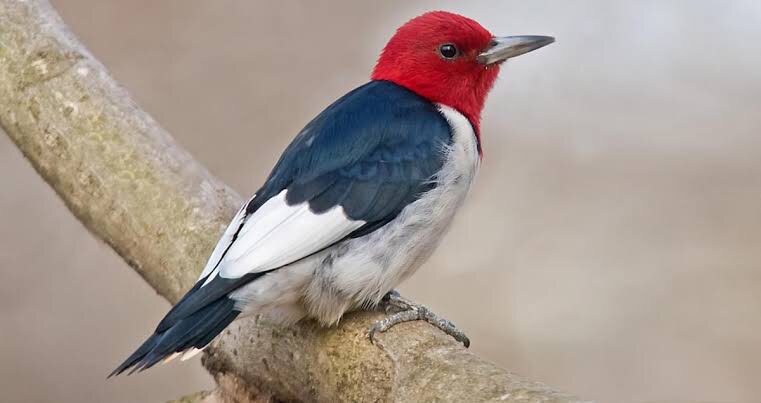
In this frigid cold snap we have had in Ohio recently I have been filling our bird feeders every day, and the cardinals, blue jays, woodpeckers, sparrows, and the whole wonderful diversity of our feathered friends have flocked to our yard as soon as I finish. How they communicate so quickly that it’s feeding time is a mystery to me, but they do; and I’ve decided we have very biblical birds in our neighborhood.

You see, the birds don’t ever leave food on the table or let the seeds that fall on the ground go to waste, and that has reminded me of the story in Exodus about God providing manna/bread from heaven each day to feed the Hebrews in the wilderness. As usual the Hebrew people are complaining to Moses that he has brought them out into the wilderness to starve. They say they were better off as slaves in Egypt. When Moses shares their concern with Yahweh this is the response he gets: ”Then the Lord said to Moses, “I am going to rain bread from heaven for you, and each day the people shall go out and gather enough for that day. In that way I will test them, whether they will follow my instruction or not.” (Exodus 16:4) 

And God delivers on that promise, but the test is that God through Moses instructs the people to only gather enough of the manna for that day’s needs and not to try and store some up for another day. God is testing their faith to see if they will trust that each day the promise will be fulfilled again. That’s why when Jesus teaches his disciples what we now know as “The Lord’s Prayer” we are instructed to pray only for “our daily bread,” and not for a whole week’s worth. To do so is the difference between a mindset of faith in God’s providence and a scarcity mentality where we hoard more than our share of life’s resources for fear that we will run out the next day.

And that’s the way the birds in our yard live. They don’t leave any bird seed in the feeder for tomorrow because they trust that I will be faithful to meet their needs each new day. As you will see if you read the rest of the story in Exodus 16 some of God’s human children aren’t quite as trusting. And since I don’t speak fluent bird it may be that my feathered friends do complain when I’m late filling their feeders. They are much earlier risers than I; so I don’t pretend to be as faithful as God, but I can tell by the way they flock to the feeders whenever I fill them they are very grateful. And I am grateful to them for reminding me to be satisfied with my daily bread.