Hair Loss and Strength

Diagnosis. Last month – sudden and unexpected. Large B cell lymphoma. I have been in and out of denial the last 4 weeks or so, but denial came to screeching halt in the shower the other day when I realized my hair was already falling out. I almost cried sitting in the shower.

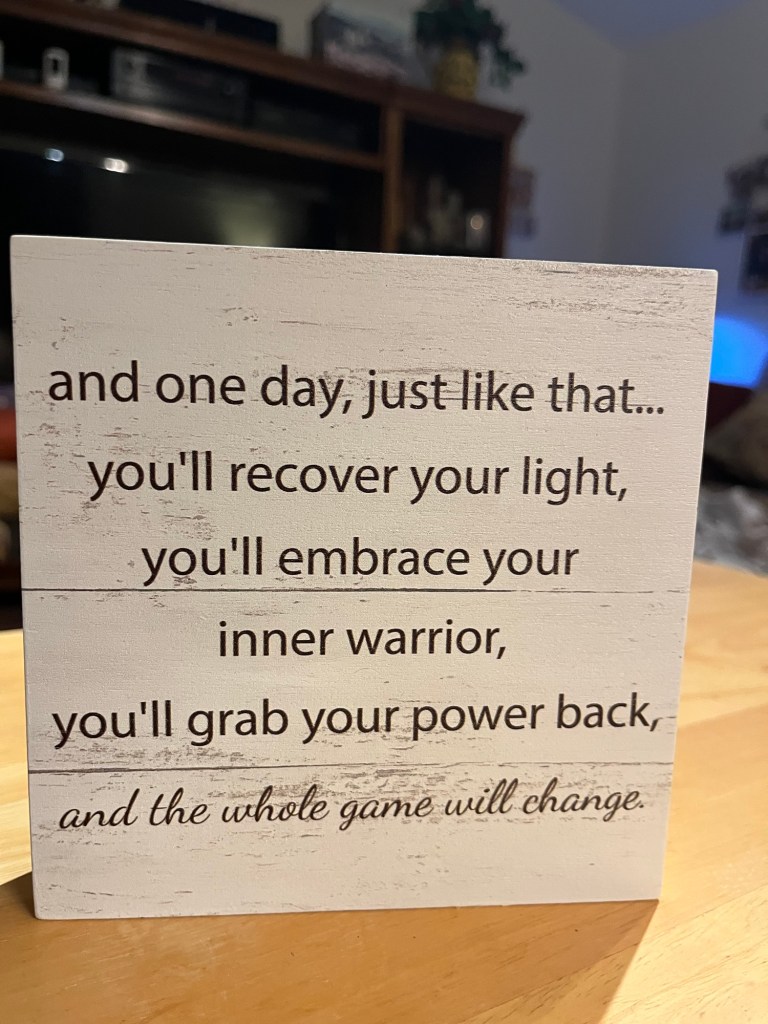
Diana had bought me this plaque even before the diagnosis came down. I had been struggling with fatigue for several weeks which was likely an early symptom of my cancer. But the plaque took on new significance when I got home from 10 days in the hospital.

As I pondered those words and my cancer journey a story from Judges about another guy who lost his hair came to my mind. Here’s the text about Samson and Delilah after he has lied to her three times about the source of his strength:

‘Then she said to him, ‘How can you say, “I love you”, when your heart is not with me? You have mocked me three times now and have not told me what makes your strength so great.’ Finally, after she had nagged him with her words day after day, and pestered him, he was tired to death. So he told her his whole secret, and said to her, ‘A razor has never come upon my head; for I have been a nazirite to God from my mother’s womb. If my head were shaved, then my strength would leave me; I would become weak, and be like anyone else.’

When Delilah realized that he had told her his whole secret, she sent and called the lords of the Philistines, saying, ‘This time come up, for he has told his whole secret to me.’ Then the lords of the Philistines came up to her, and brought the money in their hands. She let him fall asleep on her lap; and she called a man, and had him shave off the seven locks of his head. He began to weaken, and his strength left him. Then she said, ‘The Philistines are upon you, Samson!’ When he awoke from his sleep, he thought, ‘I will go out as at other times, and shake myself free.’ But he did not know that the LORD had left him. So the Philistines seized him and gouged out his eyes. They brought him down to Gaza and bound him with bronze shackles; and he ground at the mill in the prison. But the hair of his head began to grow again after it had been shaved.” (Judges 16:15-22)

Samson lost his strength when he lost his hair, but I am vowing to do the opposite. I don’t know how much hair I will lose or how I will look bald if it comes to that (I promise pictures), but with God’s help I am vowing to grow stronger with or without hair and as a friend of mine said, “Kick this crap to the curb!”

What I have learned already in spades is the need to walk humbly not only with the source of all healing, but with a whole village of people who have surrounded me with love and support – wonderful, patient, caring nurses, doctors, family members and friends who literally gave up days and nights to care for me after my hospital stay, some who drove hundreds of miles to be with me, FB friends praying for me, church members and friends who have volunteered to drive me to endless doctors’ appointments, and so many more.

And then there’s my long-suffering, hard-working wife, Diana. After 24.5 year of marriage I didn’t think I could love her any more, but I have never been so wrong. I simply have no words to describe the unconditional, undeserved love she has shown me in so many small and large ways. I am blessed beyond any thing I can ever deserve or repay.

In Whom Do We Trust?

Note: I am republishing part of a post from 2/7/18 (“Power Parade”):

“Some take pride in chariots, and some in horses,
but our pride is in the name of the Lord our God.
They will collapse and fall,
but we shall rise and stand upright.” (Psalms 20:7-8)

If we want peace in the world and not just an excuse to pour more money into the military-industrial complex the answer is not more weapons. Ask Pharaoh how well his horses and chariots did against unarmed refugees at the Red Sea. (Exodus 14) Peace will not come by unpeaceful means. Life will not flourish by weapons of mass destruction.

This is not a new problem of course. I found these words I wrote in this blog 2.5 years ago: “The answer is not more horses and chariots or bigger bombs. The answer is not more guns. The answer is to examine our fears that drive us to build gated communities, to propose building walls on our borders to keep others out. Instead of repairing roads, educating our children, alleviating poverty, and addressing social injustice, we spend obscene amounts of money and resources on defense because we are afraid. The gun lobby sells more and more automatic weapons that have no purpose but to kill other people because we are afraid. Wealthy lobbies buy more and more congressional votes because our legislators are afraid to take courageous stands that will cost them their office and lifetime benefits. The church is silent about being peacemakers and turning the other cheek because we are afraid those unpopular views will cost us members and contributions.” (Aug 6 2015, Blowing in the Wind: Hiroshima and Our Addiction to Violence)

Our money says “In God We Trust” but,for too long we have put our trust in more and bigger horses and chariots. If we continue to do that the United States will go the way of every other empire in human history, just as the Psalmist says: “They will collapse and fall.”

Perhaps this is best captured in the words to a contemporary rock song by that very name, “Horses and Chariots:”

“Horses and chariots, churches and states
Devotion turns dangerous when armed with rules of faith
Prisoners and patriots, angels and saints
If minds are persuaded enough compassion turns to hate

So when the tide comes to bury us, together we must stay
Don’t let their horses and chariots drag our love away
No!

Borders and boundary signs drawn by red tape
Those who color outside of the lines define the human race
Warlords and suffering eyes, soldiers and slaves
The side of the fence that we climb determines who’s afraid

So when the tide comes to bury us, together we must stay
Don’t let their horses and chariots drag our love away
Until we swallow our pride our hearts will collide.” (Billy Talent, 2016)

Power Parade

President Trump’s desire to have a big, ugly military parade is wrong on so many fronts. The first is money. When we can’t afford to rebuild our crumbling roads and bridges, when public education is being starved to death (perhaps intentionally) for lack of funds and when the latest budget proposal feeds the already bloated national debt by increasing military spending it is insane to spend millions of dollars to rattle our rockets and roll our tanks down Pennsylvania Avenue. Secondly, what message does such a display of military prowess send to the rest of the world about our national priorities and values? It demeans us to look like Russia and North Korea to a world starving for peace not more war.

Third, beating our pruning hooks and plows into spears and swords only serves to give terrorists around the world more propaganda that the United States is a bully that threatens them and justifies their own murder and mayhem. But most important to me is the theological argument against militarism. There are many passages in the Bible that advocate for peace and portray God’s will for creation to live in a peace and Christ as love incarnate. But the one that this pompous parade idea brought first to my mind is this:

“Some take pride in chariots, and some in horses,
but our pride is in the name of the Lord our God.
They will collapse and fall,
but we shall rise and stand upright.” (Psalms 20:7-8)

If we want peace in the world and not just an excuse to pour more money into the military-industrial complex the answer is not more weapons. Ask Pharaoh how well his horses and chariots did against unarmed refugees at the Red Sea. (Exodus 14) Peace will not come by unpeaceful means. Life will not flourish by weapons of mass destruction.

This is not a new problem of course. I found these words I wrote in this blog 2.5 years ago: “The answer is not more horses and chariots or bigger bombs. The answer is not more guns. The answer is to examine our fears that drive us to build gated communities, to propose building walls on our borders to keep others out. Instead of repairing roads, educating our children, alleviating poverty, and addressing social injustice, we spend obscene amounts of money and resources on defense because we are afraid. The gun lobby sells more and more automatic weapons that have no purpose but to kill other people because we are afraid. Wealthy lobbies buy more and more congressional votes because our legislators are afraid to take courageous stands that will cost them their office and lifetime benefits. The church is silent about being peacemakers and turning the other cheek because we are afraid those unpopular views will cost us members and contributions.” (Aug 6 2015, Blowing in the Wind: Hiroshima and Our Addiction to Violence)

Our money says “In God We Trust” but Trump’s parade would proclaim loud and clear that is not true. For too long we have put our trust in more and bigger horses and chariots, and if we continue to do that the United States will go the way of every other empire in human history, just as the Psalmist says: “They will collapse and fall.”

Perhaps this is best captured in the words to a contemporary rock song by that very name, “Horses and Chariots:”

“Horses and chariots, churches and states
Devotion turns dangerous when armed with rules of faith
Prisoners and patriots, angels and saints
If minds are persuaded enough compassion turns to hate

So when the tide comes to bury us, together we must stay
Don’t let their horses and chariots drag our love away
No!

Borders and boundary signs drawn by red tape
Those who color outside of the lines define the human race
Warlords and suffering eyes, soldiers and slaves
The side of the fence that we climb determines who’s afraid

So when the tide comes to bury us, together we must stay
Don’t let their horses and chariots drag our love away
Until we swallow our pride our hearts will collide.” (Billy Talent, 2016)

Where’s the Peace?

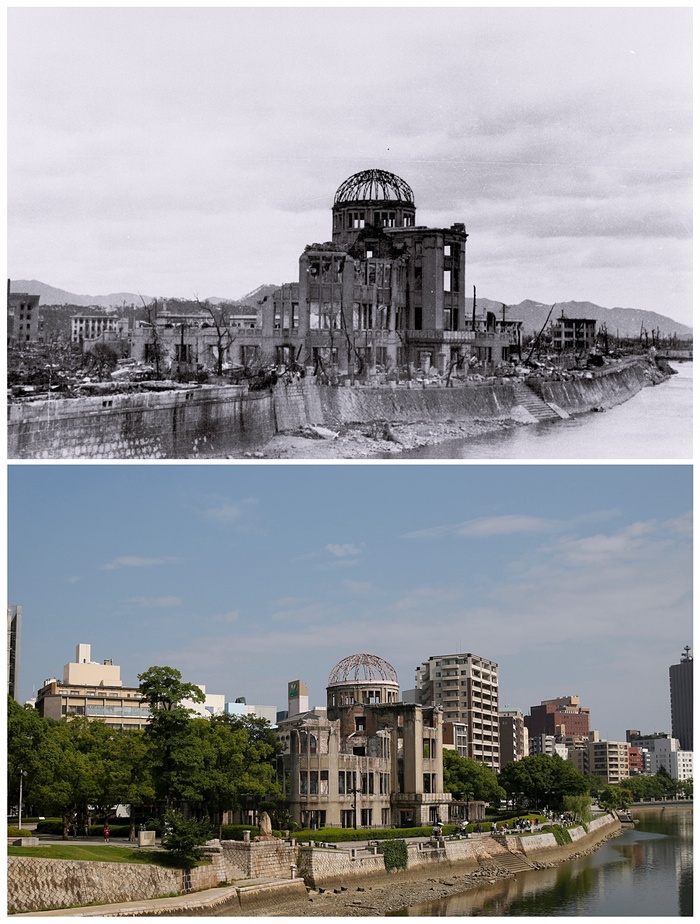
In this frightening week that is the anniversary of the bombings at Hiroshima and Nagasaki when we seem to be closer to nuclear war than any time since the Cuban Missile Crisis I feel a need to pray without ceasing for peace and also to share some thoughts. As I was wondering what to say I reread the introduction to my book, “Building Peace from the Inside Out.” What follows are excerpts from that introduction that seem unfortunately as relevant as they were when I wrote them 6 years ago.

“The Judeo-Christian scriptures have been promising a Messiah who brings peace to the world for 3600 years. Even for the US Post Office three and a-half centuries is pretty slow delivery service. In the New Testament (John 14-16), Jesus’ farewell discourse, describing a kind of peace the world cannot give, promises no less than four times that whatever we ask in Jesus’ name, God will provide. So where’s the peace? What’s the hold up? Maybe the problem is not on the shipping end, but on the receiving end? When we don’t get the peace we request is it because we don’t really mean what we ask for? Or is something getting in the way of our receiving what we say we want?
Luke 1:79 says that the long-awaited Messiah will “guide our feet into the way of peace.” Notice it says “into” the way of peace. It doesn’t say the Messiah will hold our hand and make sure we stay on the path. The Messiah gets us to the entrance ramp and trusts us to stay on course from there. We’re given a good map and expected to be able to follow it.

But really, shouldn’t God have known better? We humans don’t have the best track record when it comes to following directions. Would it have taken the Hebrews 40 years to travel the 200 or 300 miles from Egypt to Palestine if they were good at following directions? Even while Moses was up on the mountain getting the directions, the people he’s supposed to be leading are down in the valley building a golden calf to worship and fomenting a rebellion against Moses and God. Do they really want to get to the Promised Land? Or are they more concerned with their own comfort and being in control of where they’re going and how to get there? Peace seekers have to stay the course in good times and bad. When we start looking for short cuts instead of following the path that leads to peace how often do we end up far from our goal?

Luke 1:68-79 lays out very succinctly what the map to peace looks like. It mentions mercy twice, service, holiness, righteousness, knowledge, forgiveness, and light. There’s nothing in this passage about cruise missiles or Weapons of Mass Destruction–nothing about peace through domination or threats of Mutually Assured Destruction. What are we missing here? If we look around in the Judeo-Christian scriptures a little further we can find that Luke’s omission of peace through strength isn’t an oversight. Isaiah and Micah both specifically talk about beating swords into plowshares and spears into pruning hooks and not learning war anymore. If that’s not clear enough, Psalm 20 says that those who put their pride in horses and chariots will collapse and fall. Jesus restores the ear of the Roman servant that Peter has lopped off in the Garden of Gethsemane and spells it out very clearly – “Put away your sword. Those who live by the sword will die by the sword.” (Matthew 26:51-52)

And Jesus’ followers heed that advice so well they have given us the Crusades, the Inquisition, the Holocaust and assorted examples of genocide on nearly every continent. Based on results over several thousand years of history, it seems we don’t really want peace all that much.

So what’s the secret? It’s not rocket science. Sages of every tradition teach us the same values: mercy, forgiveness, righteousness, service. The Hebrew prophet Micah sums it up very succinctly when he asks and answers the basic question of all peace seekers and peace makers.
“He has told you, O mortal, what is good; and what does the Lord require of you but to do justice, and to love kindness, and to walk humbly with your God?” (Micah 6:8)

The Messiah’s mission is to show us in stories and actions what that means. Jesus says it and does it over and over again – treating the least and lost as worthy of God’s love and healing. In the Sermon on the Mount (Mt. 5-7) Jesus directly challenges the old ways that have failed repeatedly to bring peace. He says “you have heard it said an eye for an eye and a tooth for a tooth, but I say to you, love your enemies, pray for those who persecute you, turn the other cheek.” “Blessed are the Meek, for they shall inherit the earth.” The Meek? Maybe we don’t want peace that badly if we have to be wimps to get it.

Who are the role models and heroes and heroines we look up to most in our society? Why does the taller candidate win almost every presidential election in US History? We still put our trust in swords and horses and chariots and new impersonal technological ways to deliver “fire and fury” even though it’s obvious in generation after generation how ineffective and misdirected that route to “peace” is.

More subtly – in the Judeo-Christian tradition, look at how God’s peacemaking Messiah gets delivered to us – born in a barn – a helpless little baby. “A little child shall lead them.” Get it? We keep looking for Rambo and God sends us Gandhi. We don’t get what we say we want because it doesn’t come packaged the way we think it should look. If we want real peace, the gifts we need to cherish and open first are those wrapped in justice, mercy, humility, forgiveness, and love.

Personally, I am learning after decades of frustration trying to create peace and persuade or coerce others to live peaceful lives that what Gandhi said is so true, “there is no way to peace. Peace is the way.”
I have spent most of my adult life trying to do peace, only to realize that peace is not a matter of doing, but one of being. One cannot think or reason his or her way to peace but can only accept the natural state of peace by trusting the basic goodness of Being itself and living in harmony and trust with the universe. It may sound trite, but peace can only be built one relationship at a time, from the heart, with non-judgmental, unconditional love for oneself and every other being.

Justice, mercy, kindness, love, humility–all of those marvelous words tell us about keys to inner and outer peace. But just hearing about peace isn’t enough. Stories show us what peace looks and feels like, and, by contrast, what peace isn’t. My son teases me that he learned a lot of valuable lessons about sports and life from me – by seeing my mistakes and learning how NOT to do things. Learning by negative example is a wonderful teacher. We often learn more from our mistakes and those of others than we do from things that go well. When success comes too easily we have no reason to reflect on why things worked.

A mentor of mine taught me a great lesson several years ago. He said that there are only three simple questions we need to ask about why something happened. Whether we think an outcome is good or bad, playing the blame game does not help us learn and move forward. The three questions are:
“What worked?” “What didn’t work?” “What next?”

Those three simple questions help me find peace in difficult situations. They help me ground and center. They remind me I can never create positive change if I am stuck in being a victim to a past I cannot change. Those three questions help me to be more objective in analyzing and evaluating of situations and choices.

We know the things that make for peace. Pray that we relearn them quickly and avoid the endless and futile pursuit of peace through force and violence. They don’t work. It’s time to ask “What Next?”