Longing to Belong – A Prodigal Prequel, Genesis 32:3-8, 22-31

[Sermon preached at Northwest UMC, October 8, 2017]

Do you remember what it was like to be at summer camp or some other foreign place and be so miserably homesick that you thought you would die? I certainly do. The gospel song that says, “Sometimes I feel like a motherless child” describes that horrible feeling for me. But homesickness is not just a childhood disease. Adolescence, mid-life crises, old age are all recurring outbreaks of homesickness—of feeling broken and alone in a strange world where we wonder what we’re doing here? This week after another horrific massacre of innocent people in Las Vegas I’m very homesick for a world with less violence and hate.

Some homesickness is quite normal. As teens or young adults we are the ones who think we want freedom and our own space. We are the ones who get embarrassed when our parents want to hug and kiss us in public because we’re much too grown up for that kid stuff. And that’s OK. It’s all part of growing up. And we’re the ones who think God’s rules for living are too confining, too old-fashioned, and certainly our parents are. We can do much better on our own. And that’s OK too. So we go out on our own and we blow it, not once, but several times, and that’s also OK because we learn from those experiences. But what isn’t OK is when we are too proud to admit that we were wrong or that we really do need help.

It’s hard to admit we’re wrong. People just love to say, “I told you so,” don’t they? So we don’t even try to be reconciled with family or friends or even with God because we’re afraid we’ll be rejected or ridiculed. That’s where our friend Jacob finds himself in our Scripture for today. What we have in Chapter 32 is just a snippet of the story of Jacob that takes up half of the book of Genesis. It’s a fascinating saga so full of deception, incest, polygamy, fake murders and kidnapping that it could be mistaken for a modern day soap opera. I’d recommend taking the time to read or re-read the whole story because we can only deal with one brief but very dramatic episode today. The bad blood between Jacob and his twin brother Esau that is the impetus for what we read today begins back in Genesis 25 when Jacob, still in utero, grabs the heel of Esau and tries to pull him back into the womb so he, Jacob, could claim the prize of being Isaac’s first born.

As a young adult Jacob, true to form, tricks his near-sighted old father into giving him the blessing that by custom belonged to the eldest son Esau. And because of his underhanded tactics Jacob has to flee from his angry brother to the land of Haran where he lives and prospers with his Uncle Laban. The details of how Jacob and Laban take turns deceiving each other and have a falling out many years later is fascinating – but that will have to be a teaser for another sermon. Except to say that it sets the stage for why we find Jacob in our text today heading back to Canaan to finally face the brother he cheated.

Anyone here have any conflicts in your family? Sure we do, we all do so much that there are times when I think the term “dysfunctional family” is redundant. Conflict in human relationships is inevitable unless we choose to keep our relationships superficial. Some of us are like comedian Ron White who says, “I had the right to remain silent, I just didn’t have the ability.” And introverts like me are often so quiet nobody knows what we’re thinking. Neither extreme is satisfying because both leave us feeling inauthentic and homesick.

We live in a time of terrible isolation and loneliness. We live in houses or apartments in close proximity to other people but don’t really know our neighbors. The Las Vegas shooter was so much a loner that none of his neighbors or his own brother really knew him, maybe not even the woman he lived with. And tellingly his brother said they never really knew their father either. We may never know the reason he killed and maimed so many innocent people, and it’s even less likely that we will ever know the depth of the loneliness or homesickness that drove him to do the unspeakable.

None of that is to make any excuses for mass murder, but it is a call for all of us to come clean about our own homesickness. Where in our lives have we alienated ourselves from others? Where have we failed to love our neighbors because we simply don’t know them? What guilt or disagreement has driven us to move away from family or friends, or to withdraw within ourselves? I heard a great quote from James Baldwin this week on NPR. He said, “Not everything that is faced can be changed, but nothing can be changed until it is faced.”

Jacob was homesick. In his message to Esau he says, “I have lived with Laban as an alien.” He is heading home and dreading the inevitable confrontation with the brother he has wronged. Jacob is imagining the worst – that he will get his just desserts; and so he does everything he can think of to appease his brother. He sends Esau enough gifts to rival the Publisher’s Clearinghouse Sweepstakes. In one section of Chapter 32 that we skipped today for brevity there is an inventory of all the livestock Jacob sends ahead to Esau with his messengers, and the list totals 530 head of livestock. Jacob also bows and scrapes by addressing Esau repeatedly as “my lord” while referring to himself as Esau’s servant. To his credit Jacob is very transparent about what he’s doing. He concludes his message to Esau by saying that he has sent these gifts “in order that I may find favor in your sight.” The only thing missing is an actual apology for cheating his brother out of his birthright, but that may be expecting too much.

Jacob’s messengers return from their mission to report that Esau is coming to meet him. That sounds promising, but then the messengers add the kicker – he’s got 400 men with him. That’s like challenging your big brother to a game of basketball and being told he’s bringing LeBron James and the Cavs with him!

“Then Jacob was greatly afraid and distressed,” verse 7 tells us, and he devises a clever plan to save his hide, even if it means putting others, including his wives and kids at risk. He divides his large company into two groups, thinking that if one group is destroyed by Esau and his army the others will be able to escape.
Finally as a last resort Jacob does what he should have done first – he prays. Anyone else ever forget to pray until things get tough or is that just me? We didn’t read this part either but in his prayer Jacob does two things. As we would expect he prays for God to deliver him, but before that he does something even more important that we can all learn from. Listen to what he says in verses 9-10: “O God of my father Abraham and God of my father Isaac, O Lord who said to me, ‘Return to your country and to your kindred, and I will do you good,’ 10 I am not worthy of the least of all the steadfast love and all the faithfulness that you have shown to your servant, for with only my staff I crossed this Jordan; and now I have become two companies.”

Jacob acknowledges all that God has done for him and his ancestors in uncharacteristic humility, but then he reminds God of the promises God made to him that convinced him to come back home and face the music. Why would he need to do that? Surely God doesn’t forget his promises! No, Jacob is reminding himself who he belongs to, he’s claiming his blessing from God, and we’ll see how he does that again in much more dramatic fashion in the best-known part of this text.

After Jacob prays and sends his family across the river we are told “Jacob was left alone.” He is really alone. Jacob is like you and me. We try to cure our homesickness with a host of home remedies—large doses of education, exercise—be it running marathons or climbing corporate ladders, accumulating social media friends who fill our time and the lack of peace we feel. Power, money, prestige, new cars, new clothes, new houses, new jobs, new spouses, booze, beauty treatments, Grecian Formula. We try it all don’t we? But when we let our defenses down and find ourselves alone with nothing to do—remember those were the times the homesickness got you at camp too? When we’re not too busy to think and feel, then the old feeling sneaks up on us and we start feeling like that motherless child again.

“Jacob is alone” Genesis says, “and a man wrestled with him until daybreak.” But this is no ordinary man and the wrestling match is not the WWF! These two combatants struggle all night long and the match is still a draw as morning approaches, although Jacob’s hip will never be the same. And the man says, “let me go, for the day is breaking.” That’s our first clue that this is no ordinary man. This is God and they both know that if any mortal sees the face of God he or she will die. God is protecting Jacob even as they struggle by warning him not to see God’s face. But Jacob refuses to let go unless God blesses him. Jacob realizes that God’s blessing is more important than life itself, and after God gives Jacob a new name “Israel” because he has striven with God and prevailed God blesses Jacob and the struggle is over as abruptly as it began.

It is after wrestling with God and only then that Jacob is ready to meet his brother. Like another prodigal son that Jesus talked about, it is an encounter with God that gives us courage to confess and face our human struggles. Jacob had to wrestle all night long, and sometimes those dark nights can last for weeks or years, but if we can hang on to God above all else, morning will come and with it the courage to carry on.

I slept in last Monday and as I got up I remember thinking that I had missed my usual breakfast with the CBS Morning News team. Unfortunately the news of the massacre in Las Vegas lasted all day. The cumulative effect of bad news stories recently, each one worse than the last, knocked me into a funk that lasted several days. I’d probably still be there if I didn’t have this sermon to prepare. Sermons are a constant reminder to preachers that no matter how we are feeling, Sunday’s coming!

That’s important for all of us, not just preachers. We Christians worship on Sunday because that’s the day of Christ’s resurrection; and that is our reminder that no matter how bad the news is or how dark the skies are – Sunday’s coming. I gladly borrow that phrase from the great preacher Tony Campolo who made it famous in a Good Friday sermon entitled “It’s Friday, but Sunday’s Coming!”

When personal or national tragedies threaten to blow us away we can be like Lt. Dan in the movie “Forrest Gump.” Lt. Dan got his legs blown off in Viet Nam and was angry at Forrest for saving his life. But a few years later he is reunited with Forrest and helps him run the Bubba Gump Shrimp Company. In one great scene Dan and Forrest are out on their shrimp boat during Hurricane Carmen. Double amputee Lt. Dan climbs the mast of the ship as the waves are crashing onto the deck below and he shouts at God, “Is that all you’ve got? You call that a storm?” This foul-mouthed atheist has learned in the school of hard knocks that life goes on if we just hang on till morning comes. Psalm 30 puts it this way: “Weeping may linger for the night, but joy comes with the morning.”

Anyone here have trouble handling big changes in life? That’s homesickness. Because change, even positive change, is hard, and much of the division in our nation today is because change is coming at us at warp speed. We are so homesick for a simpler day that we resent those who represent change – immigrants, people of different races or faiths or political opinions. And on top of that this baby boomer is homesick for the things my aging body just won’t do anymore. We seniors are eager for younger folks to take over leadership of businesses and families and churches, but darn it the younger generation doesn’t always do it the way we’ve done it for years.

Being an itinerant United Methodist pastor has comes with built in homesickness. Like people in many professions and businesses we move a lot, and that makes it hard to know where home really is. I grew up in the small town of Wapakoneta in northwest Ohio. Wapak is where I’m from but I rarely go back there. My parents moved away from there while I was in college, and I moved away intellectually as I accumulated multiple degrees in higher education. I still have several aunts and uncles back there in Auglaize County, but I’m ashamed to admit I’ve been on a 50 year ego trip that has kept me away from that extended family. None of them went to college and as my theology and worldview changed over the years I felt like we just didn’t have anything in common. I don’t want to argue about religion or politics with them, and quite frankly I felt superior.

Over Labor Day weekend this year I went back home with my two sisters. I must give my sisters credit for initiating the trip. It was my one sister’s 50th high school reunion, and while we were there they suggested we visit our three uncles who live there.

It was a marvelous experience with all three of them but the priceless moment came when we visited the one we call Uncle Frog in the hospital. He’s just 15 years older than I; so when I was a kid he was a big strong athletic guy that I adored. He took time to play catch with me and made me feel like I mattered. Now he’s 86 and has a very bad heart. He knows he doesn’t have long to live. He called me over to his hospital bed and got very emotional as he tried to ask me something, but the words wouldn’t come. I knew he wanted me to conduct his funeral when the time comes because we had talked about that after another uncle’s funeral 10 years ago when Frog was still in good health. As I held his hand and assured him I’d be there for him I realized I was home.

We can go home again if we’re willing to struggle and cling on to God’s blessing which is always wherever we are on life’s journey. Beyond the beliefs and ideologies that divide us is a deeper human bond we all share. It’s love that bridges those divisions but we have to cross that bridge to get home.

There was a movie many years ago called “The Poseidon Adventure” about a group of people who were trapped in a ship that got turned upside down in a storm. Isn’t that how life feels sometimes? Like everything is upside down and we can’t find our way home. The theme song from that movie captures the truth that Jacob learned wrestling with God. The song says, “There’s got to be a morning after if we can hold on through the night.” Whatever darkness or struggle you are facing – just hang on to God till morning comes.

Jacob refuses to let go till God blesses him, and in the strength of that blessing he immediately goes to meet his brother. What happens then is summed up in this description from Genesis 33: “He himself went on ahead of them, bowing himself to the ground seven times, until he came near his brother. But Esau ran to meet him, and embraced him, and fell on his neck and kissed him, and they wept.” The prodigal was limping, but he was home.
Amen


Embrace the Squiggle: Fools for Christ, I Corinthians 3:18-23

[Note: 98% of this sermon was written before the tragic events in Charlottesville last Saturday. When I heard about Charlottesville Saturday evening I tried to figure out how I needed to change the message in light of the hatred and racsim on display in Virginia. I was pleasantly surprised to see that the message seemed very relevant to current events with only a few changes. We addressed the situation in Charlottesville directly in our prayer time on Sunday morning, including a reading of part of Dr. King’s “Letter from a Birmingham Jail.”]

When I saw the preaching schedule said I got to preach on being fools for Christ my first thought was, “I’ve been typecast!” Then I came across this old picture of me in my youth ministry days and thought, “OK, I guess the shoe fits.” But seriously, why would Paul advise us to be fools?

Do you know it says in the Bible, “There is no god?” It really does, and that particular verse is a great reminder that we cannot pick and choose things from the Bible and take them out of context. Psalm14:1 is where it says “there is no god,” but if you read the whole verse you discover it says, “Fools say in their hearts, ‘there is no god.’” That’s obviously not the kind of fool Paul wants us to be.

A friend sent me a list of some not so bright things people have said. They reminded me that some of the squiggles in life are caused by fools. Here are a couple of these squiggly quotes:
“Whenever I watch TV and see those poor starving kids all over the world, I can’t help but cry. I mean I’d love to be skinny like that, but not with all those flies and death and stuff.” Maria Carey
“I’ve never had major knee surgery on any other part of my body.” UK basketball player Winston Bennett
“We don’t necessarily discriminate. We simply exclude certain types of people.” Colonel Gerald Wellman, ROTC instructor.
“Your food stamps will be stopped effective March 1992 because we have received notice that you passed away. May God bless you. You may reapply if there is a change in your circumstances.” Dept. of Social Services, Greeneville, SC.

That’s not the kind of fools Paul is talking about either. Verse 18 says “Do not deceive yourselves. If any of you think you are wise by the standards of this age, you should become “fools” so that you may become wise.” Come again Paul? How does one become wise by becoming a fool? That seems pretty foolish.
Verse 19 helps a bit. It says, “For the wisdom of this world is foolishness in God’s sight. As it is written: “He catches the wise in their craftiness”; (Job 5) and again, “The Lord knows that the thoughts of the wise are futile.” (Ps. 94)

The Interpreter’s Bible commentary explains some of the confusion this way. Corinth, because of its geographic location was a very cosmopolitan city. Corinth, sitting in southern Greece and just across the Aegean Sea from modern day Turkey, was on the major trade route between the eastern and western parts of the Roman Empire. It was therefore made up of a diverse population and affected by a variety of religious and secular ideas. Among the key influences was the Greek philosopher Diogenes who taught that the “wise are friends of the gods and gods own all that is. Therefore the wise have access to everything.” It was an early version of what today is known as the prosperity gospel, namely that if we believe the right things we can expect God to reward us with material prosperity. It’s a favorite theology of those who start out to do good and end up doing very well.

By contrast Jesus taught the exact opposite, that “it is easier for a camel to go through the eye of a needle than for someone who is rich to enter the kingdom of God,” and that we shouldn’t “store up treasures on earth where rust can consume and thieves break in and steal.” That’s not the kind of wisdom we hear from our financial advisers and retirement planners now is it?

As I read this text over the song that says “Fools rush in where angels fear to tread” kept coming to mind. But we have to give Paul credit. He practiced what he preached, getting imprisoned for his faith several times and once even refusing to escape from jail when he had the chance. He, like many martyrs and visionaries seemed to be a fool himself by challenging the wisdom of the world. In the church at Corinth Paul felt it necessary to do that because some of the members in that church were becoming arrogant and feeling self-important. Some who had particular spiritual gifts thought they were better than others who didn’t have the same gift. Paul addresses that specifically later in I Corinthians chapter 12 where he compares the church to the human body that needs all of its parts to work. And no one part is more important than any other.

Paul urges Godly foolishness because the ways of the world are not God’s ways. Worldly wisdom says “Good people finish last.” Jesus says, “The Last will be first.” The wisdom of world says, “Don’t get mad, get even.” “Do unto others before they do unto you.” The folly of Jesus says, “Turn the other cheek,” and “love your enemies.” Fools for Christ say, “The cycle of hate and revenge stops here.”

Paul is asking the church at Corinth and the Church on the Hill for moral responsibility. Moral responsibility requires self-awareness so we make conscious and intentional choices instead of really foolish ones based on worldly wisdom. There’s a great line in the old baseball movie, “Bull Durham” describing a clueless rookie pitcher named Ebby Calvin LaLoosh. One of the other characters in the movie says Ebby is “not cursed with self-awareness.”

When we are not self-aware it’s too easy to act irresponsibly. Instead of doing what we know to be right or stopping to think about that, we just go along with the crowd. Someone said recently that he was glad he grew up before cell phone cameras were everywhere because he did a lot of really stupid things in his youth and there’s no record of any of them. At its worst those who are not blessed with self-awareness can fall prey to what’s known as mob mentality. That can lead to horrible actions that most people would never do on their own but will when we lose our sense of self in the anonymity of a crowd. The violence in Charlottesville is an extreme instance. An example on a less dangerous scale is the term “fan” we use to describe a sports team’s followers. The word “fan” is short for “fanatic” and we’ve all seen or been one of those kinds of fools who get a little too carried away with team spirit, or some other kind of spirits. My family hated to sit with me at my son’s high school basketball games because for some strange reason they thought expressing my displeasure with the referees was embarrassing!

Without moral responsibility we lose track of our values and priorities. Like Pastor Chris said in last week’s sermon our own personal goals and bucket lists can become more important than doing what is right and good. I grew up a huge fan of the Cincinnati Reds in the days of the Big Red Machine. I suffered with them through two World Series losses to those darn Yankees and the Oakland A’s. And then in 1975 they won it all in one of the best World Series ever against the Boston Red Sox, and I thought my dreams were fulfilled. The Kingdom of God could come now. Somehow I expected things to be different because of a silly game played by overgrown and over paid kids. Of course it didn’t change anything.

The world doesn’t even change when the Buckeyes win a national championship or the right political party is in charge. In victory or defeat our purpose is the same, to be responsible moral agents for God’s will. We don’t base our behavior on peer pressure or majority rule. I think it must be in every Mom’s handbook to ask “If everyone else jumped off the bridge would you too?” And that’s solid advice. Being morally responsible means a constant process of learning critical thinking skills. It means we need to ask God to set us free from any selfish goals or priorities that prevent us from doing the right thing. We may have to say no to the consumerism of the world so we can pick up a cross and follow Jesus. When Jesus called his disciples he didn’t say, “Go home and pack.” He just said, “Follow me.”

There’s even a lesson we can learn from something as scary as the nuclear game of chicken going on with N. Korea. We’re all praying for a peaceful solution to this problem, but it’s a reminder that in the worst case scenario if there is a nuclear attack anytime we won’t have days or even hours to get our moral house in order. We need to be right with God all the time, even when it makes us look foolish in the eyes of the world.

Let’s not sugar coat it. To be a fool for Christ can be lonely. I was a Boy Scout all through Jr. High and high school, and it was a great experience. But I have to tell you I dreaded Boy Scout week each February because it meant we were supposed to wear our scout uniforms to school. It wasn’t cool to be a boy scout. The same thing happened when I got my call to ministry at a church camp my sophomore year in high school. It took me 3 years before I told anyone about that because I was afraid people would think I was some kind of goodie two shoes.

We all know bullying is a major problem for kids these days. Being a Christian fool means doing something to stop a bully, whether it’s intervening directly or getting a teacher or other adult to address the situation. There was an incident in Portland, Oregon recently where a man was yelling racist and anti-Muslim threats at two women on a bus. Three other passengers intervened and two were killed and the other wounded when the bully pulled a knife on them. What they did to put ourselves in harm’s way might seem foolish to the world, but the harm to one’s conscience when we fail to do the right thing is much worse. That’s an extreme case of course, but it illustrates the seriousness of Christian discipleship. And then the violence in Charlottesville happened yesterday, and the risks of standing up for truth and justice were written in bloody broad strokes for all of us to see. There’s nothing funny or silly about being a fool for Christ.

Christian fools pay a price for their faithfulness. John and Charles Wesley who started the Methodist church were thrown out of the Church of England because they challenged things in that church that they believed were wrong. Worldly values would call Mother Theresa foolish to go live among the squalor and disease in Calcutta, but we call her a saint.

I am so proud to be part of this congregation for all the foolish things we do. Worldly values often base decisions on what the ROI will be of a particular action. ROI stands for Return on Investment. By the ROI standard Northwest Church does a lot of foolish things. Our Kairos ministry shares the Gospel and delicious cookies with prisoners at the Marion Correctional facility several times a year. None of those men are likely to ever darken the door of our church. Where’s the ROI for the time and effort that goes into that ministry?
We send food and servants down to Broad St. UMC to serve meals to hungry and homeless people at the Manna Café. We even have some wonderful servants who get up very early some Sunday mornings to serve breakfast to hungry people at the Church for All People. None of those folks will ever contribute to our church’s bottom line. Where’s the ROI?
Same thing with Brown Bag Lunches and back packs filled with school supplies to kids in our own backyard. It’s unlikely that most of those people will come and sit in these pews so our attendance numbers look better for the bishop.

The world operates on a profit motive, but the church runs on a prophetic model. The world says “what’s in it for me?” Christian fools say “what’s in it for others?” Our ROI is the warm feeling of having done something good for one of God’s children. It’s seeing the joy and pure delight on the faces of hungry kids receiving their brown bag or backpack; watching them run out to meet our church van because it shows them somebody cares about them.

When I was youth minister at Worthington UMC we took our kids on mission trips every summer. One year we went to West Virginia to help with flood relief. We stayed overnight in a UM church in Morgantown, WV on our way home. It was a big downtown church with a two-story education wing. I went out that evening to pick up some pizza for the group and as I drove back to the church I was both amused and embarrassed at what I saw. Hanging from the upstairs windows of the church was a big sign that said “Love for Sale.”

I made the kids remove the sign as soon as I got in the church, and we had a talk about it while we ate our pizza. I don’t remember what I said to the kids way back then 30 years ago. I’m sure I said their sign wasn’t appropriate, but reflecting on it now here’s what I wish I had said. “Love is never for sale. When we love someone we don’t weigh the costs and figure out what we can get in return – that’s not love. It’s a business transaction.”

The wisdom of the world is self-centered. The foolishness of the Gospel says those who love must be servants of all. Christians are called to always reflect love and grace, not judgment and exclusion. I learned a simple prayer in a seminar on peacemaking a few years ago. It really helps when I remember to pause in a tough situation when it is so easy to lose my temper. It’s simply to repeat to myself these three phrases: “Let me be peaceful, let me be kind, let me accept myself and others as we are.” That’s really very hard to do, and I often fail miserably; but it’s what we are all called to do and be by the biggest fool the world has ever known.

Jesus spent his three year ministry breaking rules and challenging the wisdom of the establishment. He offended the wise leaders of both the Roman Empire and the Jewish hierarchy. By worldly standards Jesus had no qualifications to be wise – no degrees, no portfolio, and no 401K. He got himself in so much hot water he was brutally killed. The world says that’s the height of foolishness. One of the thieves crucified with him speaks for the worldly values. He says, “Jesus, use your divine powers Jesus to save yourself and us.”

Instead Jesus said, “Father forgive them, for they know not what they do.” And then, “Father into your hands I commend my spirit.” The wisdom of the world thought it had triumphed on Good Friday. Jesus’ mother and disciples grieved the death of Jesus and their hopes for the future. But on resurrection day God got the last laugh.

The basic ground rules for being a fool for Christ are captured in these words which reportedly were written on the walls of Mother Theresa’s home for children in Calcutta:
“People are often unreasonable, irrational, and self-centered.
Forgive them anyway.
If you are kind, people may accuse you of selfish, ulterior motives.
Be kind anyway.
If you are successful, you will win some unfaithful friends and some genuine enemies.
Succeed anyway.
If you are honest and sincere people may deceive you.
Be honest and sincere anyway.
What you spend years creating, others could destroy overnight.
Create anyway.
If you find serenity and happiness, some may be jealous.
Be happy anyway.
The good you do today, will often be forgotten.
Do good anyway.
Give the best you have, and it will never be enough.
Give your best anyway.
In the final analysis, it is between you and God.
It was never between you and them anyway.” Amen.

[Preached at Northwest UMC, Columbus, Ohio, August 13,2017]

Where’s the Peace?

In this frightening week that is the anniversary of the bombings at Hiroshima and Nagasaki when we seem to be closer to nuclear war than any time since the Cuban Missile Crisis I feel a need to pray without ceasing for peace and also to share some thoughts. As I was wondering what to say I reread the introduction to my book, “Building Peace from the Inside Out.” What follows are excerpts from that introduction that seem unfortunately as relevant as they were when I wrote them 6 years ago.

“The Judeo-Christian scriptures have been promising a Messiah who brings peace to the world for 3600 years. Even for the US Post Office three and a-half centuries is pretty slow delivery service. In the New Testament (John 14-16), Jesus’ farewell discourse, describing a kind of peace the world cannot give, promises no less than four times that whatever we ask in Jesus’ name, God will provide. So where’s the peace? What’s the hold up? Maybe the problem is not on the shipping end, but on the receiving end? When we don’t get the peace we request is it because we don’t really mean what we ask for? Or is something getting in the way of our receiving what we say we want?
Luke 1:79 says that the long-awaited Messiah will “guide our feet into the way of peace.” Notice it says “into” the way of peace. It doesn’t say the Messiah will hold our hand and make sure we stay on the path. The Messiah gets us to the entrance ramp and trusts us to stay on course from there. We’re given a good map and expected to be able to follow it.

But really, shouldn’t God have known better? We humans don’t have the best track record when it comes to following directions. Would it have taken the Hebrews 40 years to travel the 200 or 300 miles from Egypt to Palestine if they were good at following directions? Even while Moses was up on the mountain getting the directions, the people he’s supposed to be leading are down in the valley building a golden calf to worship and fomenting a rebellion against Moses and God. Do they really want to get to the Promised Land? Or are they more concerned with their own comfort and being in control of where they’re going and how to get there? Peace seekers have to stay the course in good times and bad. When we start looking for short cuts instead of following the path that leads to peace how often do we end up far from our goal?

Luke 1:68-79 lays out very succinctly what the map to peace looks like. It mentions mercy twice, service, holiness, righteousness, knowledge, forgiveness, and light. There’s nothing in this passage about cruise missiles or Weapons of Mass Destruction–nothing about peace through domination or threats of Mutually Assured Destruction. What are we missing here? If we look around in the Judeo-Christian scriptures a little further we can find that Luke’s omission of peace through strength isn’t an oversight. Isaiah and Micah both specifically talk about beating swords into plowshares and spears into pruning hooks and not learning war anymore. If that’s not clear enough, Psalm 20 says that those who put their pride in horses and chariots will collapse and fall. Jesus restores the ear of the Roman servant that Peter has lopped off in the Garden of Gethsemane and spells it out very clearly – “Put away your sword. Those who live by the sword will die by the sword.” (Matthew 26:51-52)

And Jesus’ followers heed that advice so well they have given us the Crusades, the Inquisition, the Holocaust and assorted examples of genocide on nearly every continent. Based on results over several thousand years of history, it seems we don’t really want peace all that much.

So what’s the secret? It’s not rocket science. Sages of every tradition teach us the same values: mercy, forgiveness, righteousness, service. The Hebrew prophet Micah sums it up very succinctly when he asks and answers the basic question of all peace seekers and peace makers.
“He has told you, O mortal, what is good; and what does the Lord require of you but to do justice, and to love kindness, and to walk humbly with your God?” (Micah 6:8)

The Messiah’s mission is to show us in stories and actions what that means. Jesus says it and does it over and over again – treating the least and lost as worthy of God’s love and healing. In the Sermon on the Mount (Mt. 5-7) Jesus directly challenges the old ways that have failed repeatedly to bring peace. He says “you have heard it said an eye for an eye and a tooth for a tooth, but I say to you, love your enemies, pray for those who persecute you, turn the other cheek.” “Blessed are the Meek, for they shall inherit the earth.” The Meek? Maybe we don’t want peace that badly if we have to be wimps to get it.

Who are the role models and heroes and heroines we look up to most in our society? Why does the taller candidate win almost every presidential election in US History? We still put our trust in swords and horses and chariots and new impersonal technological ways to deliver “fire and fury” even though it’s obvious in generation after generation how ineffective and misdirected that route to “peace” is.

More subtly – in the Judeo-Christian tradition, look at how God’s peacemaking Messiah gets delivered to us – born in a barn – a helpless little baby. “A little child shall lead them.” Get it? We keep looking for Rambo and God sends us Gandhi. We don’t get what we say we want because it doesn’t come packaged the way we think it should look. If we want real peace, the gifts we need to cherish and open first are those wrapped in justice, mercy, humility, forgiveness, and love.

Personally, I am learning after decades of frustration trying to create peace and persuade or coerce others to live peaceful lives that what Gandhi said is so true, “there is no way to peace. Peace is the way.”
I have spent most of my adult life trying to do peace, only to realize that peace is not a matter of doing, but one of being. One cannot think or reason his or her way to peace but can only accept the natural state of peace by trusting the basic goodness of Being itself and living in harmony and trust with the universe. It may sound trite, but peace can only be built one relationship at a time, from the heart, with non-judgmental, unconditional love for oneself and every other being.

Justice, mercy, kindness, love, humility–all of those marvelous words tell us about keys to inner and outer peace. But just hearing about peace isn’t enough. Stories show us what peace looks and feels like, and, by contrast, what peace isn’t. My son teases me that he learned a lot of valuable lessons about sports and life from me – by seeing my mistakes and learning how NOT to do things. Learning by negative example is a wonderful teacher. We often learn more from our mistakes and those of others than we do from things that go well. When success comes too easily we have no reason to reflect on why things worked.

A mentor of mine taught me a great lesson several years ago. He said that there are only three simple questions we need to ask about why something happened. Whether we think an outcome is good or bad, playing the blame game does not help us learn and move forward. The three questions are:
“What worked?” “What didn’t work?” “What next?”

Those three simple questions help me find peace in difficult situations. They help me ground and center. They remind me I can never create positive change if I am stuck in being a victim to a past I cannot change. Those three questions help me to be more objective in analyzing and evaluating of situations and choices.

We know the things that make for peace. Pray that we relearn them quickly and avoid the endless and futile pursuit of peace through force and violence. They don’t work. It’s time to ask “What Next?”

Prayer for Independence Day

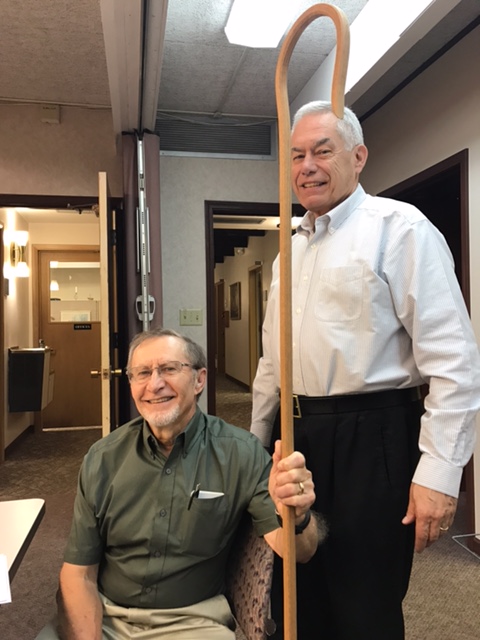
Last week I had the honor of joining the staff of Northwest United Methodist Church as a part-time Pastor of Congregational Care. In a bittersweet moment my good friend Tom Slack, who is retiring from the Northwest staff after 11 very good years of ministry, presented me with a shepherd’s staff that he received when he came to Northwest. We will all miss Tom and his wit and wisdom and caring ways. I am humbled to pick up some of the Slack (pun intended) created by Tom’s departure but know I cannot begin to fill his shoes.

Part of my responsibility will be to lead congregational prayer at Sunday worship; so I will be sharing those prayers from time to time here in my blog beginning with this one for Sunday, July 2. Please pray for Tom and me and our congregation during this time of transition.

O Giver of true freedom and joy, today we celebrate the brave founders of our country who 241 years ago pledged “their lives, their fortunes and their sacred honor” to declare the freedoms we continue to cherish and enjoy today. We give thanks for their courage and vision and for all those who have worked and sacrificed to preserve and perfect those freedoms ever since.

Our prayer today is that your spirit will come like a mighty wind to heal our divided nation and world. Give us hearts of compassion and ears willing to hear the opinions of others that differ from ours. Teach us to disagree without being disagreeable. Bless those who have taken upon themselves the heavy burden of governing in these difficult times.

We pray for peace and justice for all of your children. For those who suffer from addiction, depression, chronic pain, grief, oppression and war. Fill our hearts with the love of Christ and drive out the fear that makes us more concerned about our own freedom than the needs of our neighbors. Teach us again that freedom is not a zero sum game. In your eternal love, O God, remind us that there is a wideness in your mercy that provides healing and liberation for all of creation. When any of your children suffer, we all suffer together, and unless there is liberty and justice for all, no one is truly free.

The goal of spiritual freedom for all is a big dream and we are tempted to despair that we will ever achieve it. But then you remind us that with you all things are possible. Renew and refresh our faith and willingness to dream big dreams as we again celebrate Independence Day.

In the words of Sister Ruth Fox, we too pray that you “O God will bless us with anger at injustice, oppression, abuse, and exploitation of people, so that we will work for justice, equality, and peace.
May God bless us with tears to shed for those who suffer from pain, rejection, starvation and war, so that we will reach out our hands to comfort them and to change their pain to joy.

May God bless us with the foolishness to think we can make a difference in this world, so that we will do the things which others tell us cannot be done.

Hear our prayers O God, in the name of the young and fearless prophet Jesus Christ, Amen.

A Field of Dreams (Father’s Day Sermon), Deuteronomy 4:6-9

Back when my body would allow it, I used to play a lot of softball. I love that game in part because there’s no clock or time limit, or as Yogi Berra said, “It ain’t over till it’s over.” I learned that and another important life lesson in a softball game many years ago. Our team was down by 4 runs coming up for our last at bat. Just so you know, our team had never come back from 4 runs down ever in the history of the franchise. I was the 8th batter due up in that final inning; so I was not optimistic that I would get another at bat.

But, a few hits and a couple of errors by the other team and I suddenly realized I might be called on to hit. That was good, but the bad news was that because I didn’t expect our team to make a comeback, I hadn’t been paying as close attention to the score as I should have. Lo and behold, with two outs the batter just before me hit a triple and drove in a run and I was due up to bat. I knew the runner on 3rd base represented either the tying or the winning run, but I wasn’t sure which. Of course I could have asked the umpire or our coach, but I was too embarrassed to admit I didn’t know the score.

And it made a big difference. If the score were already tied and I made the 3rd out – we would just go to extra innings. But if we were still down a run and I messed up, the game would be over; and my out would result in our losing the game. (Just for the record – I got the game winning hit–one of the few highlights in my non-athletic career.) But the life lesson learned was more important – be sure you know the score, because you never know when you may be called on to step up to the plate with the game on the line.

Our text today from Deuteronomy is about making sure our children know the score in the game of life. In this passage Moses is like a coach giving his team final instructions because they are about to play a big away game when they cross the Jordan into the Promised Land. He tells them the most important thing is loving God always with their whole being and warns them that the prosperity they are about to enter after 40 long years of wandering in the desert is not just flowing with milk and honey. There is also the danger that when life is good for them they will forget that it is God who has delivered them and brought them to this good place. When we are going through rough times like a baseball team in a long losing streak we are likely to ask God to deliver us. But during the thrill of victory we may fall into the trap of thinking our success is because of our great skill and forget to give God the credit.

Moses goes on to stress the importance of teaching children about loving God and making sure future generations know the stories of God’s great acts of salvation. How do we do that? As Mebane said last week, it’s all about the fundamentals. First Moses says “Hear O Israel.” As players on God’s team we need to listen to God as our coach. If we are going to know how to play the game of life we need to learn how God wants us to live before we can pass that faith on to others. Moses says we do that with both our words and the example of our lives. He tells us we should recite God’s words to our children and talk about them when we are at home and away, which means everywhere.

Every sports team knows the importance of having home field advantage. You get to sleep in your own bed, eat normal meals, keep your regular routine in familiar surroundings and have the energy and enthusiasm of your fans supporting you during the game. Away games are much tougher. Traveling is tiring, most of us don’t rest as well in a strange place, you miss family and home cooking, schedules are different, and then of course there’s the problem of hostile fans when playing on the road. Championship teams are those that can overcome all those distractions and still play their best games away from home.

The game of faith is no different. It’s much easier to do daily devotions and prayer at home, to live our Christian values without the added temptations of a secular world bombarding us with lies about what it means to be successful. Especially away from the friendly confines of home we need to know the score, and coach Moses says we do that by loving God all the time, when we lie down at night wherever we are and when we rise up to face a new day. To win at the game of life we need to live in the assurance of God’s love when things are good and when we’re down 4 runs in the bottom of the ninth with two outs. That constant love is what gives us the peace that passes understanding to calmly step up to the plate and be ready for any curve ball life throws us.

How do we keep the love of God foremost in our minds and hearts? Moses says, “Bind God’s word as a sign on your hand, fix them as an emblem on your forehead, and write them on the doorposts of your house and on your gates.” For the Hebrew people these instructions literally meant to wear small leather pouches call phylacteries that contained small scrolls with the 10 commandments and other key scriptures to constantly remind themselves of God’s word. Today that verse can mean any reminder that works for you – keeping a Bible in a visible place (and actually reading it), jewelry with Christian symbols, a fish symbol on your car, a tattoo, or an image that reminds you of God on a computer screen or iPhone, a post it on the bathroom mirror, whatever works for you.

But these symbols are just meant as reminders about how God wants us to live. They are not intended to be a way to flaunt our faith or brag about what good Christians we are. If we don’t walk the walk nothing else matters. The point is to love God, not just to talk a good game. In Matthew 23 Jesus criticizes the Scribes and Pharisees because “they do all their deeds to be seen by others; for they make their phylacteries broad and their fringes long.” Anyone can talk a good game, but results are determined on the field of play.

The key to Moses’ teaching is “to love God with all your heart, soul and might.” Please note that Love is a verb not a noun. Christian love means putting faith into action. How exactly do we show our love for God? Praising God and being grateful for our blessings is one way, but even more important is how we treat others and all of God’s creation. In his parable about separating the sheep and goats Jesus repeatedly says, “What you do to the least of these you do to me.” How we treat others and how we take care of God’s creation shows our love for God or our lack of it because God’s spirit is in every living creature and person, even the most unlovable. Also a good coach doesn’t just tell players how to play the game, he or she shows them, and that is even more true in the game of life. Someone once told me “faith is caught more than it’s taught.” When I was working on this part of the sermon I was reminded of a song from “My Fair Lady” where Eliza expresses her frustration with her boyfriend Freddie this way:

“Words, words, words!
I’m so sick of words

Don’t talk of stars, burning above
If you’re in love, show me!
Tell me no dreams, filled with desire
If you’re on fire, show me!

Here we are together in the middle of the night
Don’t talk of spring, just hold me tight
Anyone who’s ever been in love will tell you that
This is no time for a chat.”

I can just hear God looking at our world full of so much chaos and hate and disregard for creation and pleading with us, “If you’re in love, show me!”

Of course we do love God, but just as we often disappoint and hurt the people we love the most we sometimes mess up on loving God too. Ever since Adam and Eve rebellion against parental authority and our Heavenly Father’s authority seems to be built into human DNA. In one of the great baseball movies of all time, “A Field of Dreams,” Ray Kinsella rebels against his father’s passion for baseball by refusing to play catch with his dad and by berating one of his father’s heroes, Shoeless Joe Jackson. Ray said Shoeless Joe was a criminal because he was one of the Chicago White Sox players accused of throwing the 1919 World Series. Ray then moves as far away from home as he can get and has to live with the regret that his father died before he could ever tell him he was sorry. When a wise mentor asks Ray why he did that his response is “I was 17.”

Many of us have been on one or both sides of that rebellion as kids or parents. And it hurts. When young people reject the values and faith practices we’ve tried to instill in them it is very painful, and thus some of the mixed emotions holidays like Father’s Day conjure up in us. My Mom was not much of a philosopher but she liked to express the concern Moses had by saying that “Christianity is only one generation from extinction.” There’s some truth in that saying even though our biblical history teaches us that God always finds a way to raise up a faithful remnant when the majority of people turn away.

Having said that, the fear of losing basic Christian and human values is very real, especially in the state our world is in today. Instead of a field of dreams we have a field of screams in our nation’s capital and a shooting in the Columbus library! And that’s just two of a dozen or more acts of violence that have been in the news this week. Reading the morning newspaper over a cup of coffee used to be one of life’s real pleasures for me, and I still do it because I want to be an informed citizen; but it has become an increasingly depressing task. But rather than throw up our hands and accept defeat, all the terrible news in our world is just more reason we need to be sure we teach and live God’s way of love more diligently.

One danger is that we panic about where the world is headed and try to force Christian values on children or others in unloving ways. Sooner or later that strategy backfires. The text we read this morning about loving God with all our being is bookended by two verses that tell us to FEAR God. I’d like you to get a picture in your head of someone you are afraid of. Got it? Do you love that person? It’s almost impossible to love something or someone if we are fearful. There’s no room for love in our hearts when we are full of fear. Unfortunately many people get turned off on because they are taught about a judgmental God that seems more like Big Brother than a loving parent.
It seems pretty significant to me that when he was asked to pick the greatest commandment, Jesus didn’t pick either of the verses in Deuteronomy 6 that teach us to fear God, he picked the one that says, “Love the Lord your God with all your heart and all your soul and all your might.” I saw a quote from another preacher recently who said her first priority is that “my children’s first knowledge of God will be that God is a God of love.” That’s a great theology.

Father’s Day is a day for appreciation and love for fathers and father-figures, but no one is perfect; so regrets, we’ve all got a few or a lot. But here’s the good news and bad news about the Yogiism that says “It ain’t over till it’s over.” Baseball games have no clock, which means they can literally go on forever or what seems like it about the 18th inning. That’s a problem for baseball’s popularity in our fast-paced 4G world, but when it comes to the game of life extra innings are great. It means more time for reconciliation and love.

That’s what happens to Ray Kinsella when he builds a baseball field in the middle of his Iowa cornfield. He had to put up with ridicule and scorn from family and friends to follow his dream. His baseball field almost led to financial ruin, but he had the support of a loving wife and daughter who could see the dream because they too believed. Ray didn’t understand what it meant when he heard a mysterious voice say, “If you build it he will come,” but he took a leap of faith and built his field of dreams and finally discovers what it all meant in the final scene from the movie.

Ray and his family have just watched Shoeless Joe Jackson and other deceased baseball stars play a game on their field and are getting ready to retire for the night when they notice Shoeless Joe hanging around. When Ray asks him what he wants Joe nods toward a young catcher who is still removing his catching gear and says, “If you build it he will come.” Ray’s jaw drops as he recognizes his father as a young man. His dad, John, introduces himself and thanks Ray and his family for building the field. After Ray introduces his dad to the daughter-in-law and granddaughter he never got to meet the two of them are left alone on the field to talk.

John says that playing there is a dream come true (because he never made it to the big leagues as a player). Then he asks, “Is this heaven?” And Ray says, “No, it’s Iowa.” Then he asks his dad “Is there a heaven?” And John says, “Oh, yes. It’s a place where dreams come true.” Ray ponders that and looks back at his wife and daughter sitting on the porch swing and says, “Then maybe this is heaven.”

John is about to walk away toward the corn beyond left field, but Ray says, “Dad, could we have a catch?” John says, “I’d like that.” And the movie ends with the two of them playing the game of catch Ray had refused to play as a teenager.

“Heaven is the place where dreams come true.” The kingdom of heaven is that place right here and now for those who love the God of love and reconciliation with all their being. That loving God will come to us wherever we are if we build it – if we build our relationship with God that is, and if we are willing as Ray was to “Go the Distance” even when others think we’re crazy.

[Preached at Northwest UMC, Columbus, Ohio, June 18, 2017]

Palace Intrigue: Samuel and James Comey

I am serving as a Bible Storyteller tonight for our Vacation Bible School and the story for tonight is the anointing of David as King of Israel (I Samuel 16:1-12). As I prepared this week to share that ancient story the news was all about the “he said, she said” back and forth drama between former FBI director James Comey and President Trump. I couldn’t help but think about the parallels between the two narratives. (Fear not, this blog is totally separate from telling the story at VBS. I will not make any partisan political points with the kids at church.)

The biblical story begins when God asks Samuel, the last of the judges who ruled Israel before they, going against God’s advice, became a monarchy, to go to Bethlehem and anoint a new king from among the sons of Jesse. Samuel is afraid that Saul will kill him if he finds out what his mission is; so God suggests a little divine diversion and tells Samuel to take a heifer with him and pretend that the purpose for his trip is to offer a sacrifice. Samuel does the Lord’s bidding and invites Jesse and his sons to “the sacrifice” where he has Jesse bring before him each of his sons to see which one God has chosen to be the new king.

First is Eliab who is strong and handsome, and Samuel is sure he has found God’s man. But God says no and explains to Samuel that God does not look on outward appearances as mortals do. Instead God “looks on the heart.” (I Sam. 16:7) So the search continues with Abinadab, then Shammah, and four more of Jesse’s sons, and each in turn is rejected by God. In frustration Samuel asks Jesse if he has any other sons and is told that there is one more, David, the youngest who is out tending his father’s sheep. Samuel insists that David be summoned and when he appears God said to Samuel, “Arise and anoint him; for this is the one.” (v. 12)

Samuel didn’t want to challenge Saul’s authority and power. We can all understand the fear of retaliation. It occurred to me that the same thoughts must have been going on in James Comey’s mind before his testimony before the Senate on Thursday. We may never know for sure what his motives are. Only God can look on Comey’s heart and judge his intent. But I am willing to entertain the possibility that like Samuel the former FBI director may have overcome his fear of retribution by the President to do what he believed was required of him as a citizen, public servant, and Christian (he’s a very faithful United Methodist).

There are those who will argue that Comey is just angry because he was fired and is trying to get even with the President, and that’s a possibility; but considering the risks involved in challenging the most powerful person in the world I think that is unlikely. If I were in Comey’s shoes the option of simply going quietly into retirement free from the stresses of Washington politics would have a great deal of appeal. My opinion is that challenging the power of the President while knowing first-hand how President Trump normally deals with those who oppose him required a great deal of courage and faith in the power of doing what one believes is the right and honorable thing in spite of fears or consequences.

Fear is a powerful motivator. Even as I write these words I am not sure I will be brave enough to post them because I know several of my dear friends and family members will strongly disagree with what I’ve said. But sometimes telling the truth is a stronger duty than fear of conflict and disapproval. I hope someday soon we will know which version of the Trump-Comey controversy is the truth. In the meantime for the good of our own peace of mind and the health of our nation we would do well to withhold any surefire opinions and judgment and remember that only God can look into our hearts.

Spiritual Cardiology


After I wrote my meditation on “A Wise Heart” earlier this week it very quickly became apparent that Psalm 90:12 isn’t finished with me. That verse says, “So teach us to count our days that we may gain a wise heart,” and the focus of my earlier post was on having a compassionate and caring heart. It occurred to me shortly after I posted that piece that the heart is also the seat of courage. While head knowledge is incomplete without heart knowledge, neither is adequate without courage.

The hymn “God of Grace and God of Glory” points that out when it says, “Grant us wisdom, grant us courage for the living of these days,” and the turbulent early weeks of 2017 certainly seem like the kinds of days the great preacher Harry Fosdick had in mind when he penned those words. In fact Fosdick wrote that hymn in 1930 just as the Great Depression was beginning and the Nazis were coming to power. I am praying the parallel ends there, but given the political instability and unrest here and around the world present days certainly qualify as those that require wise and brave hearts.

So if we really want wisdom and courage for facing trying hours and days, be they personal or corporate, maybe what we need for Lent is a heart transplant. A few years ago a good friend of mine was scheduled for open heart surgery. I had not been able to visit him in the hospital because I had a cold at the time and my germs were persona non grata. The night before the surgery my friend called me and we talked a few minutes. I don’t remember the content of the conversation, but he told me after the surgery that I was one of many calls he made that night. He understandably had trouble sleeping knowing surgeons were going to cut his chest open the next morning. He was nervous and felt a need to reach out and talk to people who were important in his life not knowing if it might be his last chance to do so.

It seems to me that the act of asking God to give me a new heart is also pretty risky business. My peers remind me often of the wisdom of Mae West who once said, “Aging is not for sissies.” Neither is following Jesus. We are in denial; at least I often am, when I tell myself that when Jesus said, “Take up your cross and follow me” he was just speaking metaphorically. Living faithfully as Jesus followers in a world gone crazy over materialism, militarism, fear-inspired violence, and self-centered hedonism is not for the faint of heart. To offer the prayer of Psalm 51 asking “Create in me a clean heart, O God, and put a new and right spirit within me” is a radical prayer and should not be uttered by rote or taken lightly. It’s asking for a spiritual heart transplant.

I always enjoy March Madness of the basketball variety, but this year it is an especially welcome diversion from the madness going on in the world. As I was browsing at our public library this week I came upon a timely and enjoyable audio book about three legendary basketball coaches who all coached in the Atlantic Coast Conference in the 1980’s. The book is appropriately entitled “The Legends” by John Feinstein and is about Dean Smith (UNC), Jimmy Valvano (NC State), and Mike Krzyzewski (Duke). One story early in the book struck me as an excellent example of a brave heart. Dean Smith was one of the greatest coaches in the history of college hoops, but long before he was a legend with a basketball arena named after him, when he was a young, unknown assistant coach at the University of North Carolina in the late 1950’s he put his job and career on the line off the court. He and his pastor took an African American divinity student with them into a segregated restaurant where his basketball team ate frequently and quietly broke down one small racial barrier. When John Feinstein heard about that incident when he was writing his book decades later he asked Coach Smith why he had never heard that story. Feinstein said, “You must have been very proud of doing that.” But Coach Smith said, “You should never be proud of doing the right thing. Just do the right thing.”

Brave and humble hearts don’t need to boast about acting justly, they just do it. Actions speak louder than words about the kind of heart one has. One of my favorite more recent hymns describes how a spiritual heart transplant works. I can’t sing “Here I Am” by Dan Schutte without feeling my heart and faith grow stronger. In one verse Schutte has God say, “I will break their hearts of stone, give them hearts for love alone.” The courage to live boldly and take the narrow unpopular road that leads to salvation and justice comes from hearts filled with so much love that there is no room for fear and doubt.

The journey from fear to faith is often like the one Dorothy and her friends take in “The Wizard of Oz.” Those four pilgrims on the yellow brick road are looking for a heart, for courage, for a brain and a way to go home. Isn’t that a great metaphor for the human condition? Aren’t’ those the things we all long for to live a full and satisfying life?

Dorothy, the tin man, the scarecrow and the lion think they are on an external journey to the promised land of Oz to find themselves. What they discover is that the faith journey is first an internal journey. The Wizard can’t give them what they are seeking, but the pilgrimage they take to the Emerald City provides them a much more transformative trip inward where they all discover that they already have courage, heart, and wisdom; and Dorothy’s red shoes are her ticket back to Kansas.

So the good news is that we don’t need to undergo an actual heart transplant to find our brave voices. Our factory equipment hearts provided by God are full of wisdom, love and courage. But like our physical hearts our spiritual cardio-vascular system can also get clogged up by fear and weakened by lack of use. But no matter how weak or spiritually dead we think we are, no matter how long or how often we have failed to walk the walk of courageous and compassionate faith, Lent is another opportunity to take the inward journey to rediscover the depths of wisdom and courage God provides for the living of this day and every day.

To pray to God for a wise and brave heart is a first step on the journey, like when we realize we need to see a health care provider and live a more heart-healthy lifestyle. And even if we feel spiritually dead with a heart of stone, God is always ready and willing to do CPR or jolt us back to life with a defibrillator. God has an impressive record of bringing people back from both spiritual and physical death.

God nurtured Elijah back to health and courage on Mt. Horeb; gave Jesus the strength he needed to carry on in the Garden of Gethsemane; and turned that bunch of cowering fishermen hiding in the upper room into a band of leaders who turned the world upside down. God gave Ruth the courage to stay with Naomi; helped the Samaritan woman at the well bare her soul to Jesus, and blessed Mary Magdalene with a whole new demon-free life. Brave hearts pray “Not my will but thy will be done. Brave hearts beat to the rhythm of Isaiah’s response to God’s call in the year that King Uzziah died (Isaiah 6) or Mary’s brave response to God’s most incredible request to bear his son. The brave peasant girl said: “I am the Lord’s servant. May your word to me be fulfilled.” (Luke 1:38).

And in Lent 2017 God still asks, “Whom shall I send?” and brave hearts sing (and mean it) the chorus to “Here I am Lord:”

“Here I am Lord! Is it I Lord? I have heard you calling in the night. I will go Lord, if you lead me. I will hold your people in my heart.”

Do we mean it? Do I mean it? Our actions and lives will show the world what kind of hearts we have.

To Dust We Shall Return, An Ash Wednesday Meditation

“Remember you are dust and to dust you shall return.” That traditional reminder of our mortality that many Christians hear when ashes are imposed at the beginning of the Lenten season of repentance and reflection has always given me pause, which I guess is the whole idea. This year, my first Ash Wednesday as a septuagenarian makes those words more real than usual.

Mortality is one of those things we do not often speak of in polite company. Our youth-oriented culture is built on a shaky foundation of denial that Ash Wednesday threatens to expose. Maybe that’s why most churches are not overcrowded on that somber day. But mortality is a natural and essential part of our human condition. It can be argued it is one of the most important parts of what it means to be human. We don’t believe any other creatures are aware of their inevitable death, although I’m not sure that’s true.

Knowing our days are numbered is really a gift that makes it possible for us to value and prioritize the time we have in this life, and having the confidence that death is only a transition to another form of being frees us to embrace that gift.

So this Ash Wednesday this 70 something is going to enter a season of Lent reflecting on what God is calling me to do with the days remaining to me. I have no idea what that number is, but I know full well that it is a much smaller number than it was 10 or 20 years ago. On that score I find the wisdom of Psalm 90 sobering and uplifting at the same time:

“For all our days pass away under your wrath; our years come to an end like a sigh.
The days of our life are seventy years, or perhaps eighty, if we are strong;
So teach us to count our days that we may gain a wise heart.
Satisfy us in the morning with your steadfast love, so that we may rejoice and be glad all our days.
Let your work be manifest to your servants, and your glorious power to their children.
Let the favor of the Lord our God be upon us, and prosper for us the work of our hands—
O prosper the work of our hands!” (Selected verses from NRSV)

There’s plenty there to ponder for the entire 40 days of Lent, and that’s only part of the Psalm. The psalmist’s words call us to give up our regrets over what is past and fears of what is to come, to affirm and accept our dusty existence so we can “count our days” and make each one count.

The psalmist reminds us that we are alive only because of the grace of God, and that when attendance is called each morning we need to be present in every sense of that word because we have big work to do. God’s work is entrusted to us, God’s servants. That’s a huge job description, but if not me, then who? If not today, when?
We can even dare to consider accepting God’s mission as ours because with our marching orders comes the promise of God’s glorious power and that power alone can “prosper the work of hands.” Anything we do that is not according to God’s plan is doomed to failure.

I confess I begin too many days throwing a pity party for myself for the things I am no longer able to do. Ash Wednesday is a great day to repent, to turn around and welcome whatever task God has for me now in this stage of my life. Bucket lists are popular ways we talk about the things we want to be sure we do before we die. They are a good first step toward acknowledging that “we are dust and to dust we shall return.” But my challenge to myself and to you as we strive to keep a Holy Lent in 2017 is to ask not what’s on my bucket list, but take time in prayer and meditation each day to ask, “What’s on God’s bucket list for me?”

Speak Truth to Power

In his book “Telling the Truth: The Gospel as Tragedy, Comedy and Fairy Tale” Frederick Buechner challenges preachers to tell the whole truth of life and the Gospel with the closing line from Shakespeare’s “King Lear.” Buechner says, “…in the last act, the good and the bad, the wise and the foolish, the weak and the strong, all die alike, and the stage is so littered with corpses there is nobody much left except Edgar to stammer the curtain down as best he can. What he says is this: ‘The weight of this sad time we must obey; speak what we feel, not what we ought to say.’” Buechner offers this commentary: “They are not the most powerful lines in the play, but they are among the most telling because in them it would seem that Shakespeare is telling us something about himself and about the way he wrote his play…. In the interest of truth-telling there seems to be no risk Shakespeare is not willing to run as if from the conviction that if the truth is worth telling, it is worth making a fool of yourself to tell.”

It is the weight of the very sad times of political and social chaos in our country that demands that this foolish old preacher say what I feel and not what I ought to say.

I have watched President Trump and his band of billionaires violate the most sacred tenets of the US Constitution in his first month in office, and since only a few Republican representatives and Senators have had the courage to stand up to Trump’s authoritarian bully tactics I figure it’s time to add my voice to those who fear the consequences of his heavy-handed ways. I doubt that it will do a bit of good since the system of checks and balances built into our Constitution are currently suspended until enough Republicans realize the mortal danger we and the world are in if the current pattern of oppression and selfish nationalism is allowed to continue.

I continue to hope that sooner rather than later moral courage will override blind party and ideological loyalty in enough members of Congress to prevent the worst of the damage. But in the meantime innocent immigrant families are being torn apart, US citizens are being detained at airports for hours because they have “Muslim” names, and hate crimes and murder are being committed in the name of putting America First. This is wrong in the name of Christian values that proclaim that how we treat the “least of these” is how we treat Christ himself (Matthew 25:31-46). More than at any time in 150 years we are in a struggle for the soul of America like the one Lincoln described at Gettysburg “to see if this nation or any nation so conceived and so dedicated can long endure.”
There is hope that Congress will do its job and investigate the Russian connection to the Trump campaign and administration. Those of us who remember Watergate know what a long and painful process that kind of inquiry can be. Whatever the truth is about the firing of General Flynn, and Mr. Trump’s business connections and potential conflicts of interest, and the meddling of the Russians in the electoral process, we need to know the facts before any verdict can be rendered. That investigation needs to occur, but I do not believe we can afford to allow this President to wreak havoc on marginalized people and on our environment for as long as that process will take. And we don’t need to.

We already have ample evidence to take action against this President and begin impeachment proceedings. On January 20 President Trump swore to protect and defend the Constitution of the United States, and he has failed to do so in the first month of his Presidency. I am no Constitutional expert, but here’s what the Frist Amendment of the Constitution says: “Congress shall make no law respecting an establishment of religion, or prohibiting the free exercise thereof; or abridging the freedom of speech, or of the press; or the right of the people peaceably to assemble, and to petition the Government for a redress of grievances.”

The Founding Fathers believed those basic freedoms were so central to our democracy that they spelled them out in the very first item in the Bill of Rights. Freedom of religion and freedom of the press are the cornerstones of a free and open society. Faith-based people and reporters are on the front lines of the truth tellers in our society, and therefore the first people that authoritarian governments try to silence. Yes, I realize the amendment says that Congress shall not abridge those freedoms and so far it’s been executive orders and policies that have banned people from Muslim countries and excluded critical media from White House access. I’ll leave it to the lawyers to haggle over the technicalities while Rome burns, but it seems like common sense to me that if Congress can’t abridge those freedoms then neither can the President.

And it is Congress’s job to provide checks and balances and control a President who violates his Constitutional duties. If they fail to do so then they too are breaking their vow to uphold the Constitution. The Founding Fathers understood the weaknesses of humankind well enough to know what great power can do to even a well-intended person. We forget at our peril the wisdom of Lord Acton: “Power tends to corrupt and absolute power corrupts absolutely.” I believe that President Trump does believe he is doing what is best for the U.S. and what he promised to do during his campaign. The problem is that we do not live in an isolated nationalistic world. Fear is turning people all over the world into self-centered nationalists who are willing to sacrifice the best qualities of humanity for a false sense of security.

Yes the future is scary. It always has been. I wrote after the Brexit vote (“A Lament for Unity,” 6/25/16 post) that the history of centuries of bloody wars in Europe flowed from nationalistic fear, and now that misguided populism is spreading like a virus all over the world. Like it or not modern technology has created a global economy that we cannot put back in the bottle. We need forward-looking vision about how to adjust and thrive in a global community. We can’t retreat back into an isolationist, industrial age that is no more. To do so is only going to fan the flames of hatred and make us less secure, not more.

“How Can We Love Our Enemies?” Matthew 5:38-48

“God makes the sun rise on the evil and on the good, and sends rain on the righteous and on the unrighteous.” I heard Dr. Fred Craddock preach on this text once, and he observed most of us would not be so generous toward the evil and unrighteous. He said if he were in charge the rain would fall on the good farmer’s field and stop abruptly when it came to the property line of the evil farmer. He went on to say if God were really just that every golf ball hit by a Sunday golfer playing hooky from church would go straight up in the air and fall at the feet of the golfer.

This whole passage from the Sermon on the Mount is one of the most challenging in all of Scripture. And in particular Jesus telling us to love our enemies has to be high on the list of those things we wish Jesus hadn’t said. But those words are much needed in our bitterly divided nation and world today.

Before we dig into the practical problems of how in the world to live up to these teachings of Jesus I want to set the context by sharing a quote from Dallas Willard, a teacher of spiritual formation. Willard says, “The Gospel is less about how to get into the Kingdom of Heaven after you die and more about how to live in the Kingdom of Heaven before you die.” Let me repeat that: “The Gospel is less about how to get into the Kingdom of Heaven after you die and more about how to live in the Kingdom of Heaven before you die.” Those words are especially true of the Sermon on the Mount where Jesus is describing to his followers what it looks like to live as faithful disciples and citizens of his kingdom here and now in a world that teaches the very opposite. In other words, too many Christians focus on what Jesus did for us on the cross but not enough on what he requires of us as his disciples. That is a little strange since it is Jesus’ high standard of ethical living that got him in trouble with the authorities who killed him.

And so Jesus begins by repeating what previous Scriptures have taught about living in the worldly kingdom. “You have heard it said…” Don’t get mad, get even! Revenge is a natural human reaction, and I’m guessing most of us have been there in one degree or another in recent days or weeks. “You have heard it said, an eye for and a tooth for a tooth.” Sounds fair, doesn’t it? Let the punishment fit the crime. In fact, at the time those words were written hundreds of years before Jesus they were designed to limit revenge; so victims would not demand two eyes for an eye, or a whole mouthful of teeth for a tooth. As someone has said, if we follow the eye for an eye and a tooth for a tooth philosophy to its logical conclusion, we end up with a world full of blind, toothless people, and the cycle of violence and pain continues forever.

So Jesus reminds his disciples of the ancient law and continues, “But I say to you…” Look out whenever Jesus starts out with that phrase; brace yourself for a zinger. “But I say to you, love your enemies and pray for those who persecute you. If anyone strikes, you on the right cheek, turn the other as well.” O, Jesus, you’ve got to be kidding! We can’t do that! You can’t be serious. How can we possibly love those responsible for horrific acts of death and destruction? You don’t mean for us to love ISIS, or that creep who murdered and raped Reagan Tokes, or our political enemies do you? And you can fill out the rest of your list of those we find it hard if not impossible to love.

Let’s look at the big picture of how our understanding of God’s will changes and grows. God doesn’t change, but our ability to grasp the enormity of God’s grace and love increases as we grow in faith both as individuals and as a faith community. We’ve already seen how that process unfolds from the days of Moses to Jesus, but let’s look at some other examples of how God surprises us throughout the Scriptures. I found this wonderful summary of that process in a Facebook post from Bixby Knolls Christian Church:

“In Deuteronomy 23 we read that the people of Moab are bad and not allowed to dwell among God’s people. But later in the Old Testament we meet Ruth the Moabitess (who becomes the grandmother of David and one of the women listed in Matthew’s genealogy of Jesus).
Jeremiah 25 tells us that people from Uz are evil, but then comes story of Job, a man from Uz who is the “most blameless man on earth.”
No foreigners or eunuchs allowed, again from Deuteronomy, and then comes the story in Acts 8 of an African eunuch welcomed into the church.
God’s people hate Samaritans, but Jesus tells one of his most famous stories where a Samaritan is the hero and the model for what it means to be a good neighbor.
The story may begin with prejudice, discrimination, and animosity, but the Spirit moves God’s people toward openness, welcome, inclusion, acceptance and affirmation.”

And our Judeo-Christian Scriptures aren’t when it comes to non-violent responses to those who hurt us. The Dali Lama, a leader of another of the world’s great religions, wrote these words shortly after 9/11, certainly one of the most trying times in our lifetime for those who take Jesus seriously. The Dali Lama was commenting on how America should respond to 9/11 and wrote, “It may seem presumptuous on my part, but I personally believe we need to think seriously whether a violent action is the right thing to do and in the greater interest of the nation and people in the long run. I believe violence will only increase the cycle of violence.”

The tragic fact that we are still involved in the longest war in U.S. history in Afghanistan 16 years after 9/11 underscores the truth that violence increases the cycle of violence. We’re not going to solve that eternal question today, especially on the international level, but let’s take a look at what Jesus is asking of us in our personal lives and relationships when it comes to living peaceful Christ-like lives.

It is hard to find silver linings in some clouds, but even in tragedy there are often some benefits. We see it in extended families that rally around each other when there is a death of illness. We saw it the sense of unity in the U.S. after 9/11. Patriotism was higher than at any time since WWII. That kind of unity as a family or church or a nation is wonderful, but Jesus asks us to take that sense of community one giant step further–to include even our enemies in the circle of God’s family.

The sense of unity and patriotism after 9/11 didn’t last long, and part of the division in our nation is because we differ over how to respond to evil. Some insist on an eye for an eye response and others advocate a gentler approach. Those differences have hardened into partisan political lines that make it more important than ever to love those we differ with politically. One way to do that is to pray for those we disagree with by name, and the stronger our disagreements, the more important those prayers become. Whoever you see as on the wrong side of the political fence or some other contentious issue, pray for them, and I find it helpful to do so by using first names. That makes the prayers more personal and meaningful, and I find it hard to be angry when praying for someone.

Fear of others is the biggest barrier to love. In today’s political climate immigrants of all kinds fear for their future. We can’t solve the immigration policy debate here today, but each of us can engage in simple acts of kindness, go out of our way to smile and be kind to others who are different from us. Let them experience the radical hospitality of Christ so they know they are welcome in this country.

As individuals we can also listen to those we have political disagreements with. Just this week I heard from a friend who is cancelling his newspaper subscription because his local paper took an editorial position he disagrees with. I also heard that political divisions are showing up in personal ads on dating sites where profiles include such phrases as “no Trump haters need respond,” or “No Trump supporters welcome.” People unfriend people on social media and refuse to watch news channels they disagree with. The battle lines are drawn, and important functions of government like feeding starving children, rebuilding crumbling dams and bridges, and fixing the water supply in places like Flint – things we all agree need to be done are the causalities of partisan gridlock. It seems so obvious but still needs to be said, the first step to loving our enemies is communication and sharing our common human needs. Until that happens the bigger issues that divide us can never be addressed.

Jesus did it. He practiced what he preached. He walked the walk all the way to Golgotha. He loved his enemies and forgave those who nailed him to the cross. But how can we mere mortals love our enemies, even while we deplore their horrible deeds?

I certainly don’t have all the answers–not even all the questions; but it seems to me there are two things that are necessary for us to have any hope of following Jesus down this path of loving our enemies.
1) We need to understand who are enemies are and who they aren’t so we don’t over-react in fear against all Muslims or against everyone who looks different and is therefore suspicious. There was an incident in my hometown in northwest Ohio last year where some parents pulled their children out of a middle school social studies class because there was a unit on the history of Islam. That kind of fear of knowledge is tragic. There is no hope for peace without understanding. We need to learn all we can about Islam so we understand better the complicated political and religious realities we are caught up in. We don’t dare oversimplify or stereotype.
2) Perhaps most important, we need to practice forgiveness. Someone has written that forgiveness is the key to happiness. The pursuit of happiness is one of our most cherished American ideals, and forgiveness is what it takes to be free of the burdens of anger and hostility that make happiness impossible.

Logan Cole is a student at West Liberty High School who was shot at school a few weeks ago by a fellow student, Ely Serna. After Ely shot Logan, Ely handed the shot gun to Logan and asked him to shoot him as well. But Logan refused to shoot his attacker because he knew an eye for an eye doesn’t solve anything. And a few days later Logan forgave Ely from his hospital bed at Children’s Hospital with buck shot still lodged near his heart. Fortunately the shot gun damaged Logan’s body, but it didn’t damage his heart and ability to love his enemy.

What about Brian Golsby, the ex-convict who raped and killed Reagan Tokes, the OSU senior from Maumee a few weeks ago. Does Jesus want us to love killers and rapists? The Scripture is pretty clear the answer to that question is “yes.” We don’t have to like them or approve of what they do, but no matter how awful life circumstances has made someone like Brian Golsby and deformed his basic humanity– he is still a child of God and invited to accept God’s amazing grace.

Where does the ability to love someone who has done us great harm come from?

My favorite story about that kind of love comes from another period of unspeakable terror and suffering in human society, the Holocaust. After the war, a young Christian woman traveled around Europe proclaiming the good news of God’s grace and love for everyone who would repent and give their life to Christ. Corrie Ten Boom was a death camp survivor. Her entire family had died in the Nazi death gas chambers, and yet she was filled with God’s love and anxious to tell her story. Until one night when she was giving her testimony and looked out into the congregation where she saw a face that made her blood run cold. Sitting there staring at her from the pew was one of the former Nazi concentration camp guards who had helped to execute her family. She could barely finish her talk and hurried toward the side door of the church as soon as she was finished, hoping to avoid any further contact with this awful man.

But he was anxious to talk to her and met her at the door. He extended his hand as he told her that he had repented and become a Christian, but, he added, it was so good to hear someone like her proclaim the unbelievable good news that God’s love was available even to such a terrible sinner as he had been. His hand was there, waiting for Corrie to take it in Christian fellowship. But her hand was paralyzed, frozen at her side for what seemed like an eternity. The silence was awkward, and even though she knew she should shake his hand, she could not. Finally, she said a prayer. She said, “Lord, if you want me to forgive this man, you’re going to have to do it, because I can’t.”

And just then, Corrie said her hand moved of its own accord. She took the former Nazi’s hand and says she felt the most amazing surge of warmth and power pass between them that she had ever felt in her life.
How can we love our enemies? On our own, we can’t. But with God’s help as followers of Jesus Christ, relying on and empowered by God’s Holy Spirit, we can, we must, and we will because we are already part of God’s kingdom.
Thanks be to God who gives us the victory!

Rev. Steve Harsh, Preached at Epworth United Methodist Church, Columbus, Ohio, February 19, 2017