Wait Training: Third Sunday in Advent

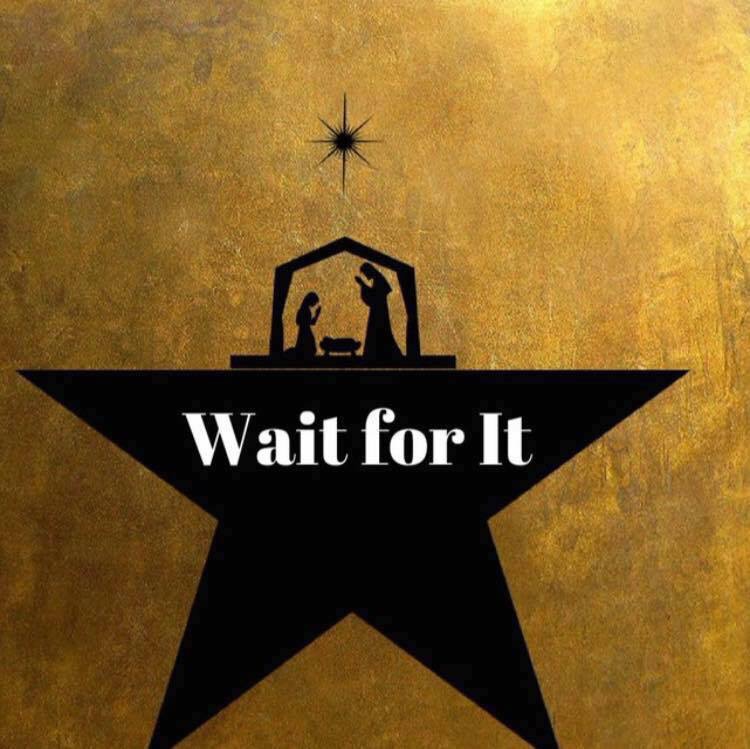
advent-waiting-img_1492[This was our Advent Candle lighting for today at Northwest UMC. The opening monologue was written by Rev. Mebane McMahon and performed beautifully by Heather Sherrill. I wrote the candle lighting liturgy and prayer.]

(Talking on a cell phone) I understand I just had the test yesterday. I know you said, “Make an appointment with your family doctor next week. She’ll have the results by then.” I heard you say that, but do you have any idea how hard it is for me to wait until NEXT week. You told me that my blood work came back with some elevated levels. What exactly does that mean?

As I said, “I have this pain in my side, but last night I could barely sleep. (gesturing) the pain moved to my back!! What could that mean? (A little hysterically) It’s spreading!? This infection, inflammation, this blockage, this rupture or CANCER. It’s spreading. I know it is.

Christmas is 2 weeks away. I have two small children. I DON’T HAVE TIME FOR PAIN. How long do I have to wait? (Apologetically) I’m sorry. It’s not your fault. (sighing) I guess I’ll just have to wait. (hangs up call)

(Pacing and thinking out loud) Stay positive Heather. It might NOT be a life-threatening disease. Wait, she says. WAIT. (Takes a deep breath, Silence. Reflection.) I’m not good at this. Is there anybody who will wait with me? And pray for me? And help me when I can’t help myself?….And….And (softening and calming down. Breathing deeply) huh. I wonder if there is someone I can help in the meantime. Is there anybody else I know who is having to wait like this?

(Praying) O God, how long? How long do I have to wait for a diagnosis, for treatment and recovery? How long do I have to wait for healing and what exactly will that look like? How long? How long O Lord? (exits)

Candle Liturgy:
We are on our way to Bethlehem and the Advent journey gives us time to prepare our hearts and make room for the gifts of compassion, patience and joy that God wants us to have. But time moves so slowly when we’re waiting—waiting for a text or phone call—for news that our kids are OK; for a doctor to give us good news or bad news. Either way, it’s better to know than to be left hanging in the unknown where our imaginations can drive us crazy. As people of faith we know where we are and whose we are. Scripture and carols and prayer are the signposts on our journey that give us hope and peace. And today we light the third candle, the candle of Joy. The light is growing and Joy shines from our hearts to those who need good news.

Prayer:
O Holy God, waiting is exhausting and every year we seem to need the good news of Christmas more than ever. Help us wait with patience for the promised Joy of the season, but remind us that our waiting is not passive. Forgive us when we get so concerned about ourselves that we fail to see the needs of those around us. When we are anxious give us again the assurance that “Weeping may linger for the night, but joy comes with the morning.” Remind us once more that “those who wait for the Lord shall renew their strength” so we can share your joyful good news for the world. Renew our hearts, O God, with your eternal love and help us be the joy we long for in the way we live and in how we relate to those who wait with us. In the name of the coming Christ we pray. Amen.

Advent I, Candle of Hope

advent-waiting-img_1492How long, O Lord, how long? Are we there yet? We know the journey to Bethlehem is long, but we need your presence in our broken world right now. We can’t wait any longer. Yes, we know your time is not ours. “1000 years in your sight are like yesterday when it’s gone.” We know, but we still wait like anxious children, full of hope and anticipation.

Advent rituals help us wait and prepare our hearts. So today even as the days grow shorter and shorter, we light the candle of hope to help us find our way to you.

Let us pray:
Gracious God, you know we aren’t very good at waiting. OK, we aren’t good at it at all. We live in a world of instant gratification. We spend money we don’t have in pursuit of stuff that promises satisfaction. We wait exasperated in long Black Friday lines. Forgive our foolish impatience, Lord. Remind us again that the one we are waiting for will come at just the right time because you always deliver on your promises in your time not ours. Our time is one of much anxiety and fear, but because we also live in your time, we live in hope as we wait. In the name of the Christ, hear us we pray. Amen

Is It Well with your Soul?

“It is Well with My Soul” has long been a favorite hymn of mine, but it has taken on a new twist for me in this year of apocalyptic election scenarios. Twice in recent months I have been in worship services where that great old hymn has been part of the liturgy. All of the lyrics to that hymn are powerful statements of faith, but the verse that has caught my ear in this election year is the last verse which says:
“And Lord, haste the day when the faith shall be sight,
the clouds be rolled back as a scroll;
The trump shall resound, and the Lord shall descend,
Even so, it is well with my soul.”

In particular I’m referring to the phrase, “The trump will resound, and the Lord will come down.” Sorry, but I can’t hear the word “trump” without being reminded of the Republican Presidential candidate. And the eschatological imagery in that line reminds me that many on both extremes of the political spectrum are feeling like the world may come to end if the “other” candidate is elected. I don’t really expect the end of the world on November 9, but regardless of your feelings about Trump or Clinton, most of us would agree the outcome of this election will have serious consequences for the future of our nation and the world. As an antidote to our anxieties about that, Horatio Spafford’s great hymn repeats the refrain, “It is well with my soul.”

If you don’t know the story behind this hymn, it was written in 1873 by Horatio Gates Spafford, a prominent American lawyer, after he had experienced multiple tragic events, including the death of a son in the great Chicago fire, financial ruin, and a storm at sea in which four of his daughters died. (More details at https://en.wikipedia.org/wiki/It_Is_Well_with_My_Soul.) Knowing the history of Stafford’s Job-like tragedies, any one of which could undo most of us, we know lyrics like these are not merely pious platitudes.
“When peace like a river, attendeth my way,
When sorrows like sea billows roll,
Whatever my lot, thou hast taught me to say
It is well, it is well, with my soul”

At different times in my life words of faith like this speak more to me than others. This is one of those times, in part because of my grave concern over the deeply divided world we live in typified by the Presidential election rhetoric and the hate inspired violence from Syria to San Bernardino and far too many points in between. And on a more personal level I’m dealing with some chronic pain that makes it hard for me to function, including finding time and energy to write.

I was humbled and shamed about how easy I give into pain or despair over the state of the human condition the other day in physical therapy. A young woman was there who could barely walk, even with her cane. As she slowly made her way from the aquatic therapy pool through the main therapy room I noticed she is bald and wore a colorful bandana on her head. I assume she has lost her hair from chemo therapy. And beneath that colorful bandana she smiled at me, and that smile lit up the room as a powerful witness that though her body is betraying her, it is well with her soul.

This stranger’s smile and Spafford’s 143 year-old words, written out of tragedy and sorrow far greater than mine continue to comfort, challenge and inspire me. They remind me of a very helpful definition of faith I read many years ago by a Canadian theologian, Wilfred Cantwell Smith. At the risk of oversimplifying, my summary of Smith’s thought is that he delineates an important difference between belief and faith. We sometimes use those words synonymously, but they are not. Belief is an intellectual ascent to a proposition or idea, while faith is a deep trust in a power that can give us the “peace that passes understanding” (Philippians 4:7) no matter what external circumstances threaten to make us fearful and anxious, be they personal, existential or political.

One of my favorite stories that illustrate the difference between belief and faith as trust is this one by an unknown author about Charles Blondin, a famous French tightrope walker:

Blondin’s greatest fame came on September 14, 1860, when he became the first person to cross a tightrope stretched 11,000 feet (over a quarter of a mile) across the mighty Niagara Falls. People from both Canada and America came from miles away to see this great feat.
He walked across, 160 feet above the falls, several times… each time with a different daring feat – once in a sack, on stilts, on a bicycle, in the dark, and blindfolded. One time he even carried a stove and cooked an omelet in the middle of the rope!
A large crowd gathered and the buzz of excitement ran along both sides of the river bank. The crowd “Oohed and Aahed!” as Blondin carefully walked across – one dangerous step after another – pushing a wheelbarrow holding a sack of potatoes.
Then at one point, he asked for the participation of a volunteer. Upon reaching the other side, the crowd’s applause was louder than the roar of the falls!
Blondin suddenly stopped and addressed his audience: “Do you believe I can carry a person across in this wheelbarrow?”
The crowd enthusiastically yelled, “Yes! You are the greatest tightrope walker in the world. We believe!”
“Okay,” said Blondin, “Who wants to get into the wheelbarrow?”

The story says no one took Blondin up on that invitation. But when things are truly well with my soul I know it’s safe to get in God’s wheelbarrow, even if I have to muster my courage like the father whose epileptic son had just been healed by Jesus. He said, “I believe Lord, help my unbelief!” (Mark 9:24).

Which is to say that faith is a journey, not a destination. John Wesley, founder of Methodism, knew that well. He asked new clergy as United Methodist Bishops still do today at ordination, “Are you going on to perfection?” That’s a not too subtle reminder to walk humbly with God and other faith seekers who know that faith and doubt wage an eternal battle in us all. Wesley also advised preachers to “Preach faith until you have it.” I believe that’s why the word “retirement” does not appear in the Bible. We’re all still preaching and seeking that trusting faith that no matter what curve balls life throws sings out, “It is well with my soul.”

Musings of a Curious Introvert

inherit the wind
I am not by nature a curious person. Until recently I did not see that as a big problem. What sparked my interest in curiosity now is two-fold: 1) the Peace Ambassador Training I just participated in raised the issue a few weeks ago in two sessions, one on Nov-violent Communication and one on bridging cultural divides. The point was that curiosity is necessary for not being judgmental and fearful of things or people we don’t understand. Asking questions is an important part of active listening so others feel that one is genuinely interested in them, respectful of their point of view and willing to try and understand where they are coming from. The essential qualities for transforming a situation on an interpersonal or international level are self-awareness, nonjudgment, and curiosity. The speakers acknowledged that this is not a natural way to be for many of us and requires effort and courage. Especially in our polarized society, we need to remember that the basic human need is not to be right but to be heard and respected. To create a safe place for that kind of communication people need to know that we are willing to stay in connection with them, even if we disagree.

I can’t speak for extroverts, but I know for this introvert that kind of behavior feels risky. If I have to ask for information it means I have to admit I don’t know everything and I can’t figure it out in my own head. It means admitting that I need other people, and that means outgrowing the two-year old inside of me that still wants to say “do it self.”

2) My wife frequently comments on my lack of curiosity, e.g. when I fail to ask doctors important questions about my medical conditions, or when I am content to be unaware of what’s going on in the lives of friends and family members. She is much more of the “inquiring minds want to know” school while I often subscribe to the “ignorance is bliss” philosophy of life. I have often used my introverted personality as an excuse for not being curious, but when the Peace Ambassadors from the Shift Network made such a strong case for the value of curiosity to be a peacemaker, I got curious enough to explore that issue further.

My first question was why curiosity often has a negative connotation and that resulted in a quick Google search of the phrase “curiosity killed the cat.” I will summarize what I found but if you are curious and want more information the sites quoted from below are: http://www.phrases.org.uk/ and http://www.knowyourphrase.com/. The familiar proverb that curiosity can be fatal for felines began with a slight but very significant difference. “The ‘killed the cat’ proverb originated as ‘care killed the cat’. By ‘care’ the coiner of the expression meant ‘worry/sorrow’ rather than our more usual contemporary ‘look after/provide for’ meaning. That form of the expression is first recorded in the English playwright Ben Jonson’s play Every Man in His Humour, 1598: “Helter skelter, hang sorrow, care’ll kill a Cat, up-tails all, and a Louse for the Hangman.” One of the actors in that play was a chap by the name of William Shakespeare, and he borrowed the phrase for a line in “Much Ado About Nothing;” and the phrase stayed in that form for 400 years.

“The proverbial expression ‘curiosity killed the cat’, which is usually used when attempting to stop someone asking unwanted questions, is much more recent. The earlier form was still in use in 1898, when it was defined in Brewer’s Dictionary of Phrase and Fable: ‘Care killed the Cat. It is said that a cat has nine lives, but care would wear them all out.’” That same year, the earliest of the precise current form of the proverb in print is from The Galveston Daily News, 1898: It is said that once “curiosity killed a Thomas cat.”

The original phrasing seems to recognize the well-established negative impact of worry on the human spirit and body. Even felines with their nine lives can worry themselves to death. I get that, but why the switch to curiosity? I found no hard evidence to satisfy my curiosity about that question but I agree with The Phrase Finder, http://www.phrases.org.uk/ site when it says the phrase is “usually used when attempting to stop someone asking unwanted questions.” Anyone who has experienced a toddler’s persistent asking “why?” about everything from observing a stranger’s behavior to why the sky is blue understands that motivation.

When she was just learning about the differences in male and female anatomy our then three-year-old’s favorite question when seeing a male out in public was “Does he have a penis, Daddy?” Her curiosity didn’t kill any cats but it did create some embarrassing situations.

But stifling curiosity has much more serious ramifications, and while discouraging some curiosity may be for good reasons, e.g. sticking a metal object into an electric socket to see what happens, when we overgeneralize and frown on all curiosity the negative consequences outweigh the benefits.

Christian theology has been a major contributor to negative attitudes toward curiosity. As early as 397 CE Augustine wrote in “Confessions:” that, in the eons before creating heaven and earth, God “fashioned hell for the inquisitive”. John Clarke, in Paroemiologia, 1639 suggested that “He that pryeth into every cloud may be struck with a thunderbolt”. In Don Juan, Lord Byron called curiosity “that low vice”. That attitude is easily traced back to the dangers of temptation and resulting sin with its roots in the Genesis 3 account of the fall because of humanity’s access to the “knowledge of good and evil” (Gen. 3:5). It is interesting to note that the explanation of the tree’s appeal comes from the serpent, not from God. God just said, “Don’t eat from that tree.” It’s the serpent who convinces Eve they can become wise “like God, knowing good and evil” if they disobey and partake.

It’s not seeking wisdom that’s the problem; it’s trying to be like God. We are not like God. I have long been enamored with the other creation story in Genesis 1 where God creates humankind in God’s image (Gen. 1:27), but of late the overwhelming forces of human evil and cruelty in the world have forced me to seriously rethink what that doctrine of Imago Dei means. The divine spirit is within all of creation. It’s part of our genetic makeup, but that spirit has to be nourished to even begin to tap its potential. And curiosity and the pursuit of knowledge to be the caretakers and stewards of creation and of each other, seasoned with a healthy dose of humility, are all part of our human responsibility. (See my post from 12-13-15, “Fear of Knowledge.”)

My own experience with education and my family of origin was heavily influenced by the cat killer curiosity mentality. I didn’t learn to do any critical thinking till I got to grad school, and yet I was always praised as an excellent student. Why? Because I knew how to play the school game. I am blessed with a good ability to memorize, and I learned early on that “learning” what the teacher wanted on tests was the path to success in our educational system. Obedience to the rules kept me out of trouble at home and at school because I learned quickly to be accountable for what was expected of me. But there is huge difference between being accountable and being responsible. Responsibility requires critical thinking, adjusting to situations and applying knowledge and principles to new and unfamiliar circumstances. It means asking the right questions and pursuing where they lead rather than just obeying or repeating what we have been taught to do.

That reality struck me hard when I turned 18 and got ready to leave the safety of a well ordered, structured environment. My parents had always made it very clear what the rules were in our house and what was expected of us. Rarely did I test those limits but magically on my 18th birthday I was told it was now up to me to make my own decisions. It’s like handing the car keys to a kid and saying “here, you’re old enough to drive now” without providing any driver’s education.

When I got ready to enroll at the Methodist Theological School in Ohio some of our church members discouraged me because that school had a reputation for being too liberal. There was too much freedom of thought and curiosity there. But faith is strengthened by doubt. Our spiritual muscles or intellectual ones are strengthened by being exercised, just like other muscles. I didn’t know any of that 45 years ago. I wasn’t curious enough to ask good questions about the college and seminary I chose to attend. I went to Ohio State University and MTSO because they were close to home, i.e. not too far outside my comfort zone. Would I make different choices today about my education knowing what 69 years of life experience have taught me? Probably, but I am forever grateful for the grace of God or dumb luck that led me to both of those places where curiosity and inquiry were instilled in me.
Do I sometimes wish I could go back to not being curious? Sometimes I do because life was easier when the boundaries of my world were smaller and less filled with ambiguity. But curiosity is like toothpaste, you can’t put it back in the tube.

The other reason curiosity and non-violent communication seem especially important to me right now is the divisive and hateful tone of the political process in this country. It seems more and more people on both sides of the political spectrum are talking/yelling at each other and not much active listening is going on. Our instant gratification attention spans are much to blame. Curiosity takes time and a willingness to dig deeper than catch phrases, sound bites, and campaign slogans. Curiosity asks questions like what does “Make America Great Again” or “Hillary for America,” or “Feel the Bern” really mean? Curiosity requires working at understanding, not just reacting emotionally to grandiose promises.
Honest curiosity is not taking short cuts or settling for easy answers to complex problems. The Gospel of John (8:32) says, “You will know the truth, and the truth will make you free.” But that truth isn’t free and curiosity is the price tag.

One of my favorite quotes from literature about critical thinking and curiosity comes from “Inherit the Wind,” by Lawrence and Lee. The play depicts the Scopes evolution trial, but at a deeper level it’s about freedom of curiosity. Henry Drummond tells the following story near the end of the play in Act III to encourage the young teacher, Bert Cates, who is on trial for teaching evolution, to never lose his curiosity and zeal for seeking the truth. It’s about a toy horse in a department store window.

“I was seven years old, and a very fine judge of rocking horses. Golden Dancer had a bright red mane, blue eyes, and she was gold all over, with purple spots. When the sun hit her stirrups, she was a dazzling sight to see. But she was a week’s wages for my father. So Golden Dancer and I always had a plate glass window between us. But—let’s see, it wasn’t Christmas; must’ve been my birthday—I woke up in the morning and there was Golden Dancer at the foot of my bed! Ma had skimped on the groceries, and my father’d worked nights for a month. I jumped into the saddle and started to rock—And it broke! It split in two! The wood was rotten, the whole thing was put together with spit and sealing wax! All shine and no substance! Bert, whenever you see something bright, shining, perfect-seeming—all gold, with purple spots—look behind the paint! And if it’s a lie—show it up for what it really is!”

They say cats have nine lives, but we have only one; and this introvert is planning to use his one to look beneath some paint and show things for what they really are.

p.s. If you’re curious about the picture at the top, that’s a much younger me playing Bert Cates in “Inherit the Wind”.

Life as Improv

drama masks
As a retired pastor I have often joked that I cannot find the concept of retirement anywhere in the Bible, but not being employed by a church during busy and important seasons like Holy Week reminds me of both the benefits and challenges of being “retired.” It is certainly nice to be more relaxed and not put in an extra-long work week with preparation for 3 or 4 worship services on top of dealing with routine responsibilities and any pastoral emergencies. It’s great to have more time for personal and family activities that pastors sacrifice even more than usual during the busiest times of the church year.

On the flip side retirement often lends itself to a feeling of being less relevant and important, maybe like being the maid of honor or mother of the bride, though I confess I’ve never been in either of those roles. And speaking of roles, I was reminded today of Shakespeare’s line from “As You Like It”: “All the world’s a stage, and all the men and women merely players; they have their exits and their entrances, And one man in his time plays many parts…” Some days retirement for me feels like I am still on stage but I no longer have a script. Some days I have trouble remembering which act or scene I’m in or even what play. I miss cues and interactions with other actresses and actors who are no longer in the cast.

When I was a child I had a blind trust in my parents and others in authority to direct my life and give me wise counsel. I made my way through much of my education playing the part quite well of one who learned my lines and fed them back to teachers on exams. With age comes an increasing realization that life is more improv than memorizing lines or taking direction. Many of my mentors have made their final exit from this stage of life, and the need to write my own script and take responsibility for the meaning and purpose of my life without a boss or other authority figure directing my play is both intimidating and liberating.

Sometimes we fall into the trap of thinking of God as the great director or playwright of our lives. It sounds comforting to think God has predetermined our fate and knows the outcome of our lives. But then we realize the terrible cost we pay for that escape from freedom and responsibility. If we surrender our free will to a notion of such a controlling God or any false gods we become more like puppets than actors and lose the very essence of our humanity.

Life as improv means cutting the puppeteer’s strings that bind and control us, being open to new challenges as adventures to be embraced instead of wasting our time looking for a script to tell us what we should be doing at any given stage of life. We humans don’t come with an owner’s manual. Lots of people try to usurp the role of producing and directing our lives for us, but ultimately the stage lights go up again every day and we get to improvise.

Unfortunately religion is often used as a tool to stifle creativity and freedom. Yes, we need guidance and direction from a higher power, but we do not need a micro-manager for a God. The Judeo-Christian Scriptures can be viewed as a guide book or a rule book, but in reality they are really a collection of scripts from the lives of those who have gone before us in the faith journey. We can learn from the lives of the heroines and heroes of faith in the Hebrew and Christian Scriptures (and also from the villains who show us what not to do). But their lives and contexts are not the same as ours. We have to write our own scripts that account for the unique circumstances of the scenes we are called to perform in the 21st century. That does not mean we start from scratch. The basic guidelines for living a faithful life of integrity don’t change. Very few of us can memorize a long script or recite multiple chapters and verses from the Bible. But the essence of God’s direction for our lives is neatly summarized in key verses. Among the favorites that I fall back on when I can’t remember my part or all my lines are these:

“He has told you, O mortal, what is good; and what does the Lord require of you but to do justice, and to love kindness, and to walk humbly with your God?” Micah 6:8

“In everything do to others as you would have them do to you; for this is the law and the prophets.” Matthew 7:12

“Which commandment is the first of all?” 29 Jesus answered, “The first is, ‘Hear, O Israel: the Lord our God, the Lord is one; 30 you shall love the Lord your God with all your heart, and with all your soul, and with all your mind, and with all your strength.’ 31 The second is this, ‘You shall love your neighbor as yourself.’ There is no other commandment greater than these.” Mark 12:28-31

Those words do not dictate stage directions for what I should do in a particular situation, but they describe the quality of the character we are all called upon to play no matter what our role is. The roles change from time to time as Shakespeare tells us, but how we are to play our parts is very clear. God as director says, “Love me and love your neighbor.” The details and nuances of how we do that is where we get to improvise.

The Unbroken Circle of Life II

IMG_1150 I have rarely reposted a previous blog here, but in searching for some inner wisdom to cope with life today I was drawn to one I wrote just 3 months ago in October of 2015. It still sounds good and maybe even more relevant now than it did then; so it is copied as written below. My only additional preface is a comment I made in my journal recently as 2016 has gotten off to a bumpy start for me, my family, and the world: “The cycle of life keeps turning and there are no stations to get off till you get to the terminal.”

Will the Circle Be Unbroken?
I attended a Bluegrass Festival with some friends a few weeks ago and have been singing or humming “May the Circle Be Unbroken” ever since. Bluegrass is not my music of choice; so I’ve been pondering why that song has stuck in my head. There are good memories of singing that song around campfires when I was a youth minister many years ago. But it has taken on a deeper more pervasive meaning lately. Some of that became clearer to me this week after a depressing visit with my 94 year old father who has outlived his mental and physical faculties and is miserable. Is there a better day coming for him and his wife suffering from dementia?

I don’t think it’s in the sky but where? What? How? Those questions become more relevant as morality pounds harder on my door each day, in aches and pains, friends in surgery, cancer diagnoses and biopsies, longer list of things I can no longer do. I’ve toyed with the lyrics of that song by changing the “e” to an “i” in “better,” i.e., “There’s a bitter day a coming….” That’s what happens when we turn in on ourselves, we get bitter and go victim. “Why me?” “It’s not fair!” “Why didn’t I take better care of myself?” “Let’s try one more miracle supplement that flows out of the fountain of youth!” Fear springs from the unknown “in the sky” or in some place of darkness, from regrets over a lifetime of sin or just dumb mistakes we can never erase.

Fear is epidemic in our society. I was at a wedding reception recently where I was told one of the men at my table was carrying a concealed weapon “because you never know what might happen.” The next week my relatives at a family gathering were discussing preparedness drills for an active shooter at their little country church and in their schools where children are being taught to throw anything they can find at a shooter ala David versus Goliath–only Goliath didn’t have his NRA sanctioned AR 15.

A father was shot dead last Friday in front of his six kids and wife in a burglary in our affluent “safe” suburb. And today Ted Koppel was on the morning news talking about his new book Lights Out, about the coming cyber-attack that will paralyze our society. The temptation to buy some guns and a generator and become a survivalist is so strong even I feel it tugging at me. There is a little solace for me that I’m old enough I may not have to deal with the worst of the Hunger Games scenario, but I fear for my kids and grandkids and feel hopeless and helpless to do anything significant to help them.

Will the circle be unbroken? Or has human depravity and selfishness reached epic proportions that strain the bonds of civility beyond the breaking point? Is Jesus’ pacifist advice to turn the other cheek and put away our swords just naïve idealism? Those are not verses that fearful Christians cite when they turn to Scripture for comfort. I quoted Isaiah (2:4) and Micah (4:3) once to a life-long Christian, the verses about “beating our swords into plowshares and our spears into pruning hooks,” and she said that in 60 years of going to church she didn’t remember ever hearing those words! Unless prophetic voices stand up to the fear mongers and proclaim a message of hope and reason to a world gone mad, the circle may indeed be broken.

I remember being this depressed about the state of the world back in 1972 after Nixon’s landslide victory in spite of Watergate and the protests about the Vietnam War. I wrote a letter to the editor saying that all we could do now was “wait for the inevitable judgment of God.” 43 years later we are still here. We’ve survived that war in SE Asia, the resignation of Nixon and his Vice President, 9/11 and a host of other terrorist attacks, too many mass shootings to count, a huge economic recession, and at least so far several ill-advised wars in the Middle East that have only fanned the flame of hatred in that cauldron of religious and ideological conflict that is the eternal flame of human strife and animosity.

The circle is frayed and contorted out of shape, but it is still unbroken; and that last paragraph is a micro-second in the eternity of the cosmic circle viewed from God’s perspective. As we scroll backward in time through Holocaust, Civil War, Slavery, Genocide of native people, the Dark Ages, the Crusades, Roman, Greek, Syrian, Egyptian, Ottoman Empires, the rise and fall of numerous Dynasties in China and Japan, Exile and Exodus, Stone Age and Ice Ages, and all the other eras of our planet’s history that I missed in history class, our current fears and woes are put in better perspective.

In every generation there have been concerns about the elasticity and tenacity of the circle, and it is still unbroken. That is not an excuse to blithely bury our heads in the sand or in our parochial platitudes. We must counter the fear mongers with words and lives of hope and visions of peace in any way we can. And remembering the great circle maker and sustainer gives us the courage to witness to our faith even when fear and doubt threaten to overwhelm us.

[originally written October 27, 2015]

THE PERSISTENT PRINCESS OF PEACE

As the season of Christmas continues into a new year, my hope for the birth again of God’s messengers of peace in unexpected times and places, even here and now, lives on in spite of all the bad news 2015 has been able to muster. And to that end I share a short story I wrote years ago and included in my book, Building Peace from the Inside Out.

“Blessed are the Peacemakers, for they shall be called Children of God.” Matthew 5:9

Sally was sitting next to the window over the left wing of a 737. The lights of the city would have been pretty as they left O’Hare, but a snowstorm was brewing and the clouds quickly engulfed the plane. Sally was going to spend Christmas with her grandmother in Richmond, Virginia. She was a little scared. She was 14, and this was her first flight by herself. In her nervousness, she had neglected to use the restroom at the airport; so as soon as the seatbelt light went out, she was out of her seat.

In her haste Sally bumped against the brief case of the man in the aisle seat, knocking it off his lap. She reached down politely to pick it up for him, but he grabbed it quickly and gruffly warned her to be more careful. When Sally returned from the restroom she apologized again for the brief case incident. She tried to strike up a conversation with her seat mate. He was in no mood to talk. Sally put her IPod headphones on and turned to the window. There was nothing out there in the darkness but one blinking red light, way out on the end of the wing. Sally thought it was bouncing up and down way too much.

“What makes grownups so darn grumpy, especially at Christmas?” she wondered. But her thoughts were rudely interrupted by an explosion in the rear of the plane. They began to lose altitude rapidly. Everyone panicked and screamed. NO one heard the captain’s voice over the P.A. system urging everyone to “please remain calm.”
The next thing Sally remembered was coming to in a snow covered field. She was 300 yards from the flaming wreckage of the plane. She seemed to be OK except for some cuts and bruises. The man who had been sitting next to her was a few yards away. He was badly hurt and calling for help. Sally was tempted to ignore him but knew she couldn’t. He was barely able to talk, but Sally understood that he was still concerned about his brief case. Wondering what could possibly so important about that stupid brief case; she half-heartedly began to look for it as she searched the area for other survivors. The fire was too intense to get close to the plane. She saw no other signs of life.

Sally found a briefcase. She took it back to the man, but it was the wrong one. She was about to just leave and go for help, but the man pleaded with her. He was desperate. So she looked again. This time she found the briefcase under a piece of the fuselage. She took it to the man, and he motioned for her to bend down so she could hear him. He said he had a very important letter that had to get to Washington. He stressed how urgent it was, begging her to promise him she would see that was delivered. He fell back unconscious before she had time to respond. She took the letter and put it in her coat pocket, half wondering if he was on the level.

Ambulances came. Sally was taken to a hospital where she learned she was in Bellefontaine, Ohio. Her cuts were cleaned and bandaged. The doctors said she had suffered a mild concussion. The next morning she remembered the letter. It was still in her coat pocket. Sally decided she would try and find the man before she opened it. When she asked about him, the nurses told her there were only two other survivors. They were both women.

Back in her room, Sally opened the letter. It was a very official looking dispatch from the CIA in Los Angeles, warning the President about a plot to assassinate several foreign heads of state when they visited Camp David for a summit conference after Christmas. If the assassins were not stopped the possibilities for starting World War III were staggering. Sally was overwhelmed. She didn’t know what to do. She wasn’t sure who she could trust. If the letter fell into the wrong hands…. She wasn’t sure what might happen. But she did know that she had been charged with delivering it, and she would.

Sally asked the nurses when she could leave the hospital. She discovered that because she was a minor, they would not release her without parental consent. Sally tried in vain to convince the charge nurse that she had to leave. Seeing that was hopeless, she simply went back to her room, got dressed and left after the night shift came on duty.

Sally’s cell phone had a GPS on it that would have been really helpful had she not lost it in the crash. So resorting to older technology, she picked up a map at a convenience store. She discovered she was 60 miles from Columbus, the state capital. There must be an airport there, right? She had also lost her purse and had no money; so she decided to hitch a ride. Being young and attractive, she didn’t have to wait long for a ride. She was really glad to get out of the sub-freezing weather when a man in a Beamer stopped for her. She would have been more comfortable with a woman or a couple but was in no position to be picky.

The man seemed friendly enough. In fact he had ideas of being a lot friendlier than Sally wanted. A few miles down the highway, he turned off on a county road and tried to force himself on her. Sally resisted so fiercely that he finally just slapped her hard across the face, called her a bitch, and pushed her out into the cold. Sally didn’t mind at all. She was just glad to be rid of him.

Two hours later, nearly frozen from wandering in a blinding snow storm, she saw car lights coming toward her. She flagged the car down and discovered it was a sheriff’s deputy. The deputy, of course, wanted to know what Sally was doing there. She told him that she needed to get to Columbus. He insisted on taking her to the hospital to make sure she was OK. She protested but to no avail.

Sally didn’t realize she had gone far enough to be in different county. She was relieved to discover that she was not going back to Bellefontaine, but to another town called Marysville. The ER staff there treated her for frostbite and gave her a good meal. They could not understand why she was in such a hurry to be on her way. Sally tried making up a story about a sick uncle in Columbus who needed her. Didn’t fly. Finally, she decided she would just have to tell them the truth. She did. They laughed. So, reluctantly, she decided she had no choice but to show them the letter. That would convince them. But the letter was gone. It had fallen out of her pocket somewhere in the snow.

Sally began to feel trapped. The trauma of the crash, the cold, the exhaustion—all began to get to her. She had to get that message to Washington. The peace of the world depended on her, and these stupid people wouldn’t even listen to her. She began to scream at them hysterically.

The next morning, Sally woke up staring at the cold, barren walls of a Columbus psychiatric hospital. She was confused and scared. She tried the door to her room. It was locked. She pounded on the door. No one came. She was about to cry when she suddenly became aware of another person in the room. Sally had not noticed her roommate sleeping in the other bed—an African American girl, about Sally’s age. The sign on bed said “Paula.” As soon as she was fully awake, Paula gave Sally some very important advice: “Hey, girlfriend. You keep that up and they’ll put you on the back ward for keeps. You gotta play it cool if you ever want out of here.”

Sally was still frightened, but she recognized the truth in Paula’s words. Sally told her story to Paula. For the first time she found someone who believed her. Paula suggested that Sally try to call Washington; since there was no way of knowing how long they might keep her here. Paula told Sally she would show her where there was a pay phone when they went down to the dining room for breakfast.

Paula introduced Sally to some of her friends at breakfast, and Sally began to feel a little less scared and alone. But her frustration soon returned. When she tried to make her call, an attendant pulled rank on her—said she had an important call to make. And the attendant was still there talking when it was time for the patents to go back on the ward. Sally tried to convince the nurses to let her go back down that morning, or to let her use the phone in the nurse’s office. They refused. They laughed at her and said they were sure the president could wait until lunch time to talk to her.

Sally was about to lose her temper again, but Paula managed to calm her down. They spent the morning talking. Sally was surprised how quickly the time passed. After lunch she hurried back to the phone. She got as far as a White House operator who dismissed her as a crank call. She tried the local FBI office—same response.
Sally was ready to give up. She was beginning to question her own sanity. But Paula had been hard at work. She figured Sally would have a better chance if she could get to D.C. in person. Sally agreed but had no hope of making it in time. Paula did. She got the nurse to let Sally go with her to Occupational Therapy that afternoon. Paula told Sally what she had planned. They had to go outside to get to OT. Paula said she would distract the attendant so Sally could slip away. Sally begged Paula not to do anything foolish. Paula gave her the address of a friend who would help her get to the airport.

There was not time for further discussion. The only good-bye and thank you Sally could give Paula was a squeeze of her hand as they walked downstairs. As soon as they were outside, Paula screamed and took off running. The attendant went after her. Sally froze. She wanted to know what was going to happen to Paula. But one of the other patients knew what the plan was. She gave sally a friendly shove and told her to get going while she could.
Sally left reluctantly, trying to look as nonchalant as possible as she walked toward where Paula had told her the front gate was. She was still worried about Paula. She was also amazed at the lack of security. There were no guards, just as Paula had promised. Sally got on a city bus, trying hard to act calm. She knew for sure that everyone would recognize her as an escaped mental patient—even though she didn’t look a bit different than two days before—it seemed like two years—when she left Chicago.

The bus driver told her where to change buses to get to the address Paula had given her. It was in the University district, which was nearly deserted during Christmas break. Sally had forgotten all about Christmas. She found the apartment on 11th Avenue. It was in a run-down neighborhood, and Sally was uneasy. It seemed to be getting dark awfully early, but then she had lost all sense of what time it was. A huge African American man answered the door. He was about half drunk and Sally started to leave. But then a much friendlier face appeared.

As soon as Sally mentioned Paula’s name, Billy, the sober one, invited her in and asked what he could do to help. Sally told him her story. Billy agreed it did sound far-fetched. But like Paula, he sensed something in Sally’s eyes and her voice that made him trust her, in spite of his doubts. In a matter of minutes, Billy called the airport and Sally booked on a flight leaving for Reagan National in two hours. He said he knew someone who worked for United Airlines who pulled some strings for him. Otherwise things were all booked up with Christmas travelers.

After sharing some warmed-over pizza, Billy drove Sally to Port Columbus in his ’92 Cavalier. It was better than walking, but not much. Billy’s friend, Tracy, met them and produced a one-way ticket under an assumed name since Sally was not a fugitive in 3 counties. Tracy also used her airport ID to get Sally around the security check point. Billy slipped her a little cash to live on when she got there. Sally promised she would come back and repay him when she could. She was also hoping to see Paula again.

This flight was uneventful. Sally relived the nightmare of the last two days. For the first time since the crash she thought about her parents and her grandmother. They would be worried sick! But there was nothing she could do about that now. She would call them as soon as her unbelievable mission was over. And then she fell into a deep sleep of exhaustion.

Sally woke up as the plane was on its final descent over the Potomac. For a scary minute she thought they were going to land in the river and said a little prayer of appreciation when the wheels touched down safely on the other side. She was in Washington at last—exactly 48 hours later than her original flight should have been…. But that was all past now. She was here. Surely somebody here would listen to her. They just had to.

Peace that Passes All Understanding

So many competing emotions in Advent 2015! Consumerism has almost ruined the holiday season for me in a “normal” year, but the epidemic of fear fed by the recent wave of terrorist attacks makes it especially challenging and necessary for me to dig deep and find the bedrock of faith and gratitude in 2015.

I struggled for days with what, if anything, to say about the attacks in Paris on November 13, partly because so much has already been said, both wise and foolish, but mostly because I have been very depressed about the state of the world and not sure what to say that can make any contribution. I finally gave up and said nothing.

That Friday the 13th for me was a metaphor for the tug of war between hope and fear. One of our beautiful grandchildren spent that day at our house. I’m very biased, of course, but little things she did that day made my papa pride swell for what a sweet, caring, smart little girl she is.

Shortly after I took her home I heard the first reports about the attacks in Paris on a TV in a fast food restaurant. Unlike 9/11 when the world stopped to watch the horror unfold, I seemed to be the only one in the McDonald’s paying any attention to the news. Everyone else was chatting and carrying on as usual because these kinds of events have become chillingly commonplace.

That evening I went to a meeting to watch a film entitled “Climate Refugees,” which in painful detail describes how millions of people have been driven from their homes by storms, floods and draughts related to climate change. The whole film, which was made long before the current refugee crisis in Europe, was alarming, but one segment especially so given the chaos in Paris that very evening. That segment talked about how desperate, frightened refugees are easy prey for sex traffickers and terrorist organizations looking for new recruits. I was so overwhelmed by the scope of the problem that I couldn’t bring myself to stay for the discussion after the film.

The level and frequency of violence in our world since then has shaken the foundations of my faith. I am questioning my long-held belief in humans being created in the image of God. I am afraid for my family and for the future of the planet. And my first reaction to that fear and anger was to join the chorus of politicians who want to bomb our way out of the ISIS problem and arm ourselves and close our borders. I know better, but it scares me even more that some of our “leaders” or wannabes don’t. Instead they see these tragedies as an opportunity to sell more guns and generate more fear and fan the flames of their own political fortunes with abhorrent ideas borrowed from Hitler’s playbook.

On the bright side there have been wonderful statements of faith and hope from those with a greater understanding of human history and a better vision of human potential. One of those reminded me that love is ultimately the victor over hate. I believe that’s true in the long run, but for now hate has a big lead and the clock is ticking.

The paragraphs above were written during Thanksgiving week, and wisely, I believe, I chose not to share them then because they felt too hopeless and negative. Then yesterday came news of the biggest U.S. mass shooting since Sandy Hook. I was still wrestling with depression and feared this latest killing spree would only deepen my despair. Much to my surprise I am not as pessimistic 24 hours after San Bernardino as I have been for 2.5 weeks. I am very sad and determined to do more to be the solution to the dis-ease strangling our nation and world. But I am not depressed, and that feels very strange.

On the one hand I feel a bit guilty for not being discouraged, and on the other I am afraid to analyze my hopeful feeling for fear I will awaken from a dream and it will be gone. But unlike Ebby Calvin “Nuke” LaLoosh in my favorite baseball movie “Bull Durham,” I am cursed with self-awareness. And most days that’s a good thing – and today is one of those.

I had noticed ironically yesterday that the last thing I posted in this blog was a piece about being “content in whatever state I am in” based on the words of St. Paul in Philippians 4. I posted that 4 days before the Paris terrorist attacks. How quickly I forgot those words to live by when the chips were down.

But tonight, several mass shootings later, some other words from that same 4th chapter popped into my awareness as I was pondering why I was not as depressed by these latest killings much closer to home. In particular verse 7 came to mind, and I had a warm feeling because what had been just words and ideas 3 weeks ago was actually a reality for me. I was experiencing the “peace that passes all understanding,” and it was very good.

So I revisited Philippians 4, and here’s the context for verse 7: “Rejoice in the Lord always; again I will say, Rejoice. 5Let your gentleness be known to everyone. The Lord is near. 6Do not worry about anything, but in everything by prayer and supplication with thanksgiving let your requests be made known to God. 7And the peace of God, which surpasses all understanding, will guard your hearts and your minds in Christ Jesus. 8 Finally, beloved, whatever is true, whatever is honorable, whatever is just, whatever is pure, whatever is pleasing, whatever is commendable, if there is any excellence and if there is anything worthy of praise, think about these things. 9Keep on doing the things that you have learned and received and heard and seen in me, and the God of peace will be with you.”

How relevant and practical those old words are for this particular Advent. Rejoice, in spite of our fear. Be gentle to everyone, including ourselves. Know that Emmanuel (“God with Us”) is near. Replace worry with prayer and supplication and thanksgiving. Prayer is not enough in our struggle with death and destruction and violence, but it is the foundation, the source of strength that sustains us when “our arms are too weary” to be carriers of hope to a frightened world.

And Paul gives attitude adjustment advice better than the best self-help guru. He says to focus on what is good and true and excellent and worthy of praise. Because even in the dark days of Advent 2015 there is much goodness in the world. We may just have to work a little harder to find it, but it is more necessary than ever to find it and share it.

One such image for me that is stronger than the non-stop horrific news coverage from California is that of a simple gesture by my granddaughter that Friday the 13th. She came down to my office that morning with two juice boxes in her hands that she had gotten from the lunch box she brought with her. When I asked her if she was going to drink them both she said, “No, this one’s for you.” A simple pure act of caring and sharing, unprompted and natural. It was the best juice box I’ve tasted in a long time!

She was doing in her six-year-old way what the final advice is in that passage from Paul. It says, “Keep on doing the things that you have learned and received and heard in me, and the peace of God will be with you.” Don’t abandon the ways of love and peace. Don’t fall into the temptation to fight fire with fire. Be forgiving and compassionate, even when those things make no sense and seem impossible. There is no peace in following the ways of King Herod, another mass murderer. The peace of God came “not with swords loud clashing, nor roll of stirring drum, but with deeds of love and mercy” in a helpless refugee child born in a barn.

No matter how loud our leaders and our hearts want to shout fear and hate, the still small voice of God says, “Fear not, I am still bringing you good news of great joy.” Don’t miss it!

Peace and Contentment No Matter What

Being content in whatever state I am in, and that’s not a geography question by the way, has been getting more challenging for me for the last 6 years. I have been a glass-half-full kind of guy for most of my life, but the natural aging process seemed to kick into high gear for me in the fall of 2009, just before my 63rd birthday. Since then I’ve had two major surgeries and a laundry list of old people medical issues that aren’t life-threatening and not worth itemizing. But they are a pain, literally and figuratively.

I know the uselessness of going into victim mode, and I cringe when I catch myself and my peers devoting the lion’s share of our conversations to medical reports. But self-pity is an occupational hazard for later life, and I do fall into the thrall of its siren song far too frequently.

All of that provided a helpful existential and personal backdrop for a Bible Study I just led for my church. We studied an excellent book by Adam Hamilton entitled The Call: The Life and Message of The Apostle Paul. My theological bias has led me to focus most of my attention on Jesus and the Synoptic Gospels for most of my career; so this study of Paul was an excellent refresher course for me that helped me take a serious look at Paul’s life and what shaped his theological perspective.

I have quoted Paul in sermons, at weddings and funerals, and frequently used his dramatic conversion as an example of the unlimited power of God to transform and redeem any life. But not since seminary 40 plus years ago have I done a systematic study of the context and circumstances that inspired Paul’s writing and teaching and his absolutely unstoppable devotion to his call to share the Christian Gospel with the world at any and all personal cost and sacrifice.

I have been as guilty as most preachers of cherry picking and proof texting verses of Scripture out of context, and two of those verses I refer to often from Paul have taken on a deeper level of meaning for me as a result of studying Paul’s life again. One is the aforementioned verse about being content in whatever state I am in (Phil. 4:11), and the other is from Romans 8 where Paul assures us that “nothing in all creation can separate us from the love of God in Christ Jesus.”

Those verses are powerful statements of faith even taken out of context, but when we realize that Paul wrote Philippians, a letter of joy and rejoicing, from one of the several prison cells where he spent 4-5 years of the last decade of his life they take on a deeper meaning. Earlier in Philippians 4 Paul says, “Rejoice in the Lord always; again I will say, Rejoice. 5Let your gentleness be known to everyone. The Lord is near. 6Do not worry about anything, but in everything by prayer and supplication with thanksgiving let your requests be made known to God. 7And the peace of God, which surpasses all understanding, will guard your hearts and your minds in Christ Jesus.”

Those are strong words from a man who describes the trials of his life this way in II Corinthians: “Five times I have received from the Jews the forty lashes minus one. 25 Three times I was beaten with rods. Once I received a stoning. Three times I was shipwrecked; for a night and a day I was adrift at sea; 26 on frequent journeys, in danger from rivers, danger from bandits, danger from my own people, danger from Gentiles, danger in the city, danger in the wilderness, danger at sea, danger from false brothers and sisters; 27 in toil and hardship, through many a sleepless night, hungry and thirsty, often without food, cold and naked. 28 And, besides other things, I am under daily pressure because of my anxiety for all the churches.” (11:24-28)

Paul was a man of passion and perseverance. Someone has defined “passion” as something one is willing to suffer for. Paul was willing and determined to share the Gospel, and he experienced great hardship and pain for his efforts. But did he suffer? If he learned to be content with whatever he had and therefore found the peace that passes all understanding, I would argue he did not suffer. There is a popular self-help statement that says, “Pain is inevitable but suffering is optional” which is often attributed to Buddha. It is consistent with the Buddhist philosophy but no one knows for sure where it originated. Regardless of the source, that advice applies to Paul and to anyone who achieves the attitude of acceptance toward circumstances, tragedies, pain, and other problems that one cannot control.

Paul is able to rise above the “slings and arrows of outrageous fortune” when Hamlet cannot because of his faith and absolute trust in the goodness and mercy of eternal God. Given the hardship he endured and triumphed over to almost single-handedly spread the Gospel of Christ across the Roman Empire, the words of Romans 8 echo like a climactic crescendo to the symphony of his life.

“Who will separate us from the love of Christ? Will hardship, or distress, or persecution, or famine, or nakedness, or peril, or sword? 36 As it is written,
“For your sake we are being killed all day long;
we are accounted as sheep to be slaughtered.”
37 No, in all these things we are more than conquerors through him who loved us. 38 For I am convinced that neither death, nor life, nor angels, nor rulers, nor things present, nor things to come, nor powers, 39 nor height, nor depth, nor anything else in all creation, will be able to separate us from the love of God in Christ Jesus our Lord.” (Romans 8:35-39)

Paul has been there, done that. He’s not a bystander to the forces of opposition. He doesn’t just believe in the love of God, he’s felt it and been sustained by it in the most difficult and hopeless situations imaginable. If he’s content and at peace, who am I to be discouraged or undone by the minor difficulties and challenges life puts in my way?

Will the Circle Be Unbroken?

I attended a Bluegrass Festival with some friends a few weeks ago and have been singing or humming “May the Circle Be Unbroken” ever since. Bluegrass is not my music of choice; so I’ve been pondering why that song has stuck in my head. There are good memories of singing that song around campfires when I was a youth minister many years ago. But it has taken on a deeper more pervasive meaning lately. Some of that became clearer to me this week after a depressing visit with my 94 year old father who has outlived his mental and physical faculties and is miserable. Is there a better day coming for him and his wife suffering from dementia?

I don’t think it’s in the sky but where? What? How? Those questions become more relevant as morality pounds harder on my door each day, in aches and pains, friends in surgery, cancer diagnoses and biopsies, longer list of things I can no longer do. I’ve toyed with the lyrics of that song by changing the “e” to an “i” in “better,” i.e., “There’s a bitter day a coming….” That’s what happens when we turn in on ourselves, we get bitter and go victim. “Why me?” “It’s not fair!” “Why didn’t I take better care of myself?” “Let’s try one more miracle supplement that flows out of the fountain of youth!” Fear springs from the unknown “in the sky” or in some place of darkness, from regrets over a lifetime of sin or just dumb mistakes we can never erase.

Fear is epidemic in our society. I was at a wedding reception recently where I was told one of the men at my table was carrying a concealed weapon “because you never know what might happen.” The next week my relatives at a family gathering were discussing preparedness drills for an active shooter at their little country church and in their schools where children are being taught to throw anything they can find at a shooter ala David versus Goliath–only Goliath didn’t have his NRA sanctioned AR 15.

A father was shot dead last Friday in front of his six kids and wife in a burglary in our affluent “safe” suburb. And today Ted Koppel was on the morning news talking about his new book Lights Out, about the coming cyber-attack that will paralyze our society. The temptation to buy some guns and a generator and become a survivalist is so strong even I feel it tugging at me. There is a little solace for me that I’m old enough I may not have to deal with the worst of the Hunger Games scenario, but I fear for my kids and grandkids and feel hopeless and helpless to do anything significant to help them.

Will the circle be unbroken? Or has human depravity and selfishness reached epic proportions that strain the bonds of civility beyond the breaking point? Is Jesus’ pacifist advice to turn the other cheek and put away our swords just naïve idealism? Those are not verses that fearful Christians cite when they turn to Scripture for comfort. I quoted Isaiah (2:4) and Micah (4:3) once to a life-long Christian, the verses about “beating our swords into plowshares and our spears into pruning hooks,” and she said that in 60 years of going to church she didn’t remember ever hearing those words! Unless prophetic voices stand up to the fear mongers and proclaim a message of hope and reason to a world gone mad, the circle may indeed be broken.

I remember being this depressed about the state of the world back in 1972 after Nixon’s landslide victory in spite of Watergate and the protests about the Vietnam War. I wrote a letter to the editor saying that all we could do now was “wait for the inevitable judgment of God.” 43 years later we are still here. We’ve survived that war in SE Asia, the resignation of Nixon and his Vice President, 9/11 and a host of other terrorist attacks, too many mass shootings to count, a huge economic recession, and at least so far several ill-advised wars in the Middle East that have only fanned the flame of hatred in that cauldron of religious and ideological conflict that is the eternal flame of human strife and animosity.

The circle is frayed and contorted out of shape, but it is still unbroken; and that last paragraph is a micro-second in the eternity of the cosmic circle viewed from God’s perspective. As we scroll backward in time through Holocaust, Civil War, Slavery, Genocide of native people, the Dark Ages, the Crusades, Roman, Greek, Syrian, Egyptian, Ottoman Empires, the rise and fall of numerous Dynasties in China and Japan, Exile and Exodus, Stone Age and Ice Ages, and all the other eras of our planet’s history that I missed in history class, our current fears and woes are put in better perspective.

In every generation there have been concerns about the elasticity and tenacity of the circle, and it is still unbroken. That is not an excuse to blithely bury our heads in the sand or in our parochial platitudes. We must counter the fear mongers with words and lives of hope and visions of peace in any way we can. And remembering the great circle maker and sustainer gives us the courage to witness to our faith even when fear and doubt threaten to overwhelm us.