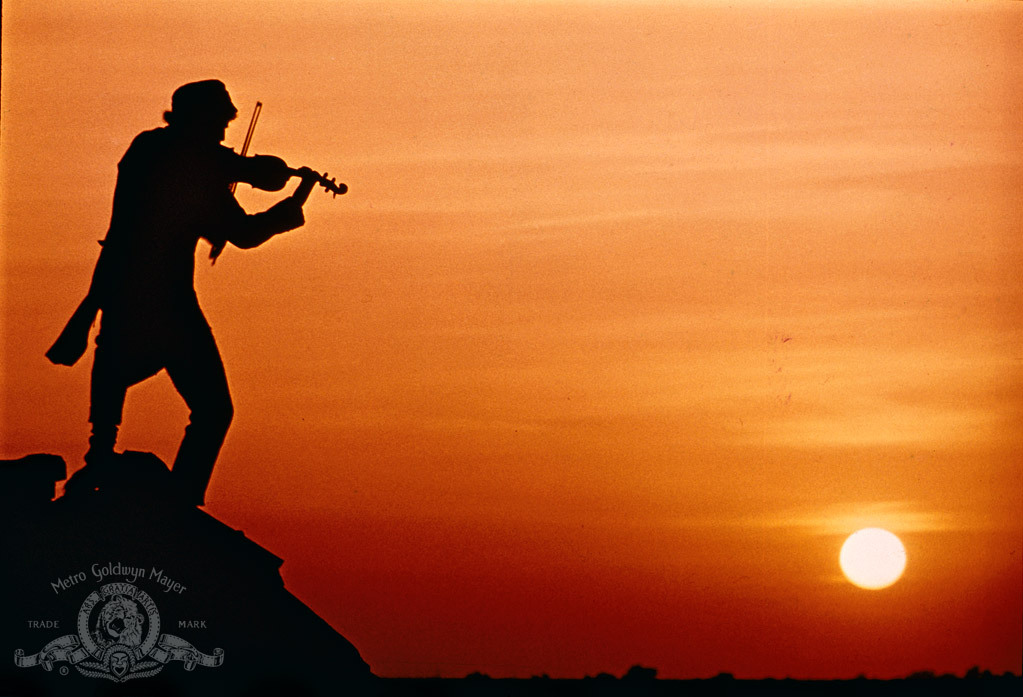
Pastoral Prayer, July 13, 2025

Great and gracious God, as we worship today we all come with personal cares and burdens.  And on top of those we have been shaken by images we can’t unsee from the horrendous floods in Texas.   The innocent children killed trouble our hearts the most, but we also pray for all the others who have lost loved ones, homes, businesses, and livelihoods. 

In times like these we can’t help but ask the question people have been struggling with since the days of Job – where are you, Lord, when walls of water sweep little girls away?  Why do you let things like this happen? Why do you let cancer, war, and human cruelty destroy innocent lives?  If you are all-powerful and all-loving, why is there so much pain and suffering in our world?

As much as we wish you were a helicopter parent who would sweep in and protect us from anything terrible happening, we know that is not who you are, God.  You are a heavenly parent who has given us the freedom to make choices.  When we mess things up with selfish or short-sighted decisions, we would often like to give that freedom back to you. 

But like earthly parents you know there is a time when children must be set free to make their own choices.  Hindsight is always 20/20, but no amount of blaming, no law suits can undo the consequences of our mistakes.  We can only learn from them and try to do better in the future. 

So we humbly ask, Merciful God, that you would forgive us where we have misused our freedom to choose.  Help us accept things we cannot change, and in our experiences empower us to be your presence through prayer and acts of service for those who are hurting next door, and in Texas, and around the world.

When we wonder where you are in the midst of tragedy, Lord,  remind us that you are always there in the form of helpers who comfort those who mourn, weeping with those who sob uncontrollably, in the form of first responders and volunteers tirelessly searching for the lost and missing. 

Thank you for being with us in every time of need, for being, as the Psalmist says, “close to the brokenhearted and saving those who are crushed in spirit.”  For all your mercies we offer our thanks, and especially for Jesus, who lived your presence as one of us, teaching us how to live, how to love, and how to pray.  Our Father ….

Northwest United Methodist Church, Columbus, Ohio, July 13, 2025

Where Oh Where is God?

As I have been shaken by the Texas flood tragedy this week my mind has wandered back to all the times I was responsible for a group of young people at camp or on mission trips. I keep wondering if I would have had the courage, composure, and strength to help save those children and youth entrusted to me by their parents if I awoke in a horror movie of rushing flood water filling our cabin?

I hear people asking as I do where is God in tragedies like this? Why did God let this happen? Why does God let cancer, war, and gun violence destroy innocent lives? Of course, I really don’t know any definitive answers to those age-old questions scholars categorize as theodicy, i.e. how do we explain how an all-powerful, loving God allows evil and suffering to exist in the world.

My answer for this week is that God is not a helicopter parent who swoops in to protect and prevent anything bad from happening to us, God’s children. There comes a point in every parent’s life where you have to let your children make their own mistakes and suffer the consequences. No amount of advice or warning or sharing our own past failures will stop a grown child from blazing their own path.

God has gifted us mortals with free will. Oh how many times I have wished I could return that gift which has allowed me to screw up so many times by pursuing my own pleasure, desires, and goals instead of a higher path.

I’m sure there were many times God wished people would not house innocent young girls in cabins on a flood plain. I’m sure God would have wanted and may have urged people in positions of authority to better prepare for floods like those on the Guadalupe River last week. I’m sure God shook her head in dismay when arguments prevailed that sirens and warning systems were too expensive.

I heard on the news tonight that some people who regularly camped in RV’s along the Guadalupe ignored warnings of potential flooding last week saying, “It floods here all the time.” Basing present precautions on past experience can be dangerous. We don’t live in pre-climate change times, and those of us who trust science know that we are living in a new normal where extreme weather events are more frequent and much more severe.

There will be finger pointing and blaming and many law suits filed because of this tragedy. None of those things will bring back any of the victims or ease the trauma of the survivors. The only redeeming quality of this disaster is that our free will enables us to learn from our past experiences. We can ask what would have helped make this tragedy less horrific? What needs to be in place to prevent or limit future flooding occurrences and to improve rescue and recovery operations?

Where is God in all this? Not zooming in like a master puppeteer to prevent the consequences of poor free will choices; not picking and choosing who will survive and who will not. No, God is there comforting those who mourn, weeping with those who sob uncontrollably, and giving strength to the brave first responders and volunteers who are doing the horrible/wonderful work of searching for those who are still missing.

God is there offering hope to the hopeless, absorbing the hate and pain of the angry, and sitting peacefully and patiently with those for whom there simply are no words – at least not yet.

“The Lord is close to the brokenhearted and saves those who are crushed in spirit.” Psalm 34:18

Prayer for a Dying 401-K

O God of the universe, my retirement funds are in the dumpster, they’re dropping faster than that first big stomach-churning drop on those big roller coasters. I’m so old I don’t know if those funds will have time to recover even if the market does, and I’m scared.

The other stuff I depend on for my well-being, e.g. Medicare and Social Security is also under attack from rogue billionaires in Washington who have no idea what life is like for us common folks. Without medicare I would not have been able to get the life-saving cancer treatment I just finished, and things are much worse for others who are uninsured or underinsured.

But you know all that already, O Holy One, and you know I’m better off than millions of others who are living in fear of real poverty or arrest and/or deportation to a hell hole in El Salvador just because they are the wrong color or dare to exercise their right to free expression.

My friends are losing their jobs as the economy craters. Public and higher education are under attack. I know you don’t intervene directly in human affairs. You have blessed (or cursed) us with free will; so I just pray for strength, courage, and faith for all of us to support and love one another no matter how deep this economic hole becomes.

No matter what happens to our standard of living our standard of loving can thrive and grow because it is not founded on the whims of human greed, but on the bedrock of your eternal love that nothing in all creation can ever take from us.

Clinging to that assurance our fears for the temporary stuff of this life fade as we affirm our real confidence in what it says on the money we used to have, “In God We Trust.” Amen

Fiddling While Democracy Burns: A Modern Parable

Art often speaks more profoundly about the challenges of life than ordinary words can convey.  And just as often most of us don’t have ears to hear what the artists and visionaries are trying to tell us, at least until fiction becomes our reality.  Among other dystopian prophets I am thinking of George Orwell’s “1984,” Suzanne Collins’ “The Hunger Games,” and Margaret Atwood’s “The Handmaid’s Tale.”

Or from the Judeo-Christian Scriptures Amos and other prophets pronounce judgment on their own people for their violation of their covenant with Yahweh.  Here’s a sample from Amos:

“Thus says the Lord: For three transgressions of Judah,
    and for four, I will not revoke the punishment,
because they have rejected the instruction of the Lord
    and have not kept his statutes,
but they have been led astray by the same lies
    after which their ancestors walked.
So I will send a fire on Judah,
    and it shall devour the strongholds of Jerusalem.

Thus says the Lord:  For three transgressions of Israel,
    and for four, I will not revoke the punishment,
because they sell the righteous for silver
    and the needy for a pair of sandals—
they who trample the head of the poor into the dust of the earth
    and push the afflicted out of the way;” (Amos 2:4-7)

Anyone tempted to bow down to the idol of Christian Nationalism would do well to ponder these warnings. 

One of my favorite musicals has always been “Fiddler on the Roof.” Its theme of love conquering oppression never seems out of date and is all too relevant today. In fact when I thought about the symbolism of Fiddler I discovered that I wrote about it, not coincidentally, in 2019 during Trump’s first term.  The parallels today are even more stark.  In “Fiddler” the Jewish village of Anatevka is being forced to flee their beloved home because of Russian persecution.  We are living through such terrifying times right now in our once beautiful democracy.

Here’s what I wrote about Fiddler during Trump 1.0:  “Some of Fiddler’s insights are so good I am tempted to call it the Gospel according to Tevye. I was in a discussion the other day about praying for President Trump, and all of us present agreed we should and he certainly needs it. His erratic and delusional Messianic references to himself since then only confirm that conclusion.

One of the first things that came to my mind about praying for the President is a line from Fiddler where a Rabbi says this prayer: “God bless and keep the czar—far away from us.” On a more serious note I think one of the best parts of Fiddler is the opening where the title and its metaphor for life are explained.

“Away above my head I see the strangest sight
A fiddler on the roof who’s up there day and night
He fiddles when it rains, he fiddles when it snows
I’ve never seen him rest, yet on and on he goes

{Refrain}
What does it mean, this fiddler on the roof?
Who fiddles every night and fiddles every noon
Why should he pick so curious a place
To play his little fiddler’s tune

An unexpected breeze could blow him to the ground
Yet after every storm, I see he’s still around
Whatever each day brings, this odd outlandish man
He plays his simple tune as sweetly as he can

{Refrain}

A fiddler on the roof, a most unlikely sight
It might not mean a thing, but then again it might!”

And then Tevye says, “A fiddler on the roof. Sounds crazy, no? But here, in our little village of Anatevka, you might say every one of us is a fiddler on the roof trying to scratch out a pleasant, simple tune without breaking his neck. It isn’t easy. You may ask ‘Why do we stay up there if it’s so dangerous?’ Well, we stay because Anatevka is our home. And how do we keep our balance? That I can tell you in one word: tradition!”

Our traditions of love, compassion, hospitality and justice are under attack, but they are the solid rock and anchor we can cling to in each and every storm; and if we do we will still be around after the perils of this present age are no more.”

Today in 2025 when the prospects of anyone stopping the fascist overthrow of our democracy seem pretty slim I need to amend that last sentence.  I no longer am so confident “we will still be around” when this nightmarish storm is finally over.  I continue to hope that enough Republican members of Congress will find the courage to stop the carnage.  They are the only ones standing between us and a total dictatorship. 

Just this weekend Trump has begun ignoring court orders to stop illegal deportations.  He has also revoked pardons for some on his political enemies hit list that were issued by President Biden.  Can the Fiddler keep scratching out a simple tune or has that metaphor shifted to fiddling while our democracy burns?

And most tragic to me is that it is not just democracy burning.  Among his more than I can count acts of treason Trump has destroyed the departments and the international efforts dedicated to fighting climate change.  Mother Nature is no respecter of political ideologies.  Red and blue states are suffering the ravages of extreme weather disasters caused by climate change, and this administration simply doesn’t care.  Trump, Musk and their billionaire class only care about personal wealth and power.  But if we fail to preserve our only home in the universe nothing else is going to matter. 

So here we are, and so far there is a thread of hope symbolized by a bunch of courageous protestors who are individually and collectively fiddlers on the roof, and the question hangs in the air now as it did in Anatevka:

“A Fiddler on the roof, a most unusual sight…. It may not mean a thing, but then again it might.”

*music by Jerry Bock, lyrics by Sheldon Harnick

Eternal Love: A Journey Through Lent

I was not in the mood for Lent this year. With everything going on in the world and my own ever-nearing 80th birthday in just 19 months the last thing I wanted to hear was “You are dust, and to dust you shall return.” I already felt lost in the wilderness and didn’t think I needed to add any more of lostness to my weary soul.

But even good habits die hard and this annual tradition kept nagging at me; so my wife and I decided to attend our church’s Ash Wednesday service on line, and I’m very glad we did. On-line worship is not usually the best way to worship for me, but I am grateful for that option when I need it. The service at Northwest UMC on Ash Wednesday was an exception to the rule for both Diana and me. It was a very well done service that was contemplative, and being at our kitchen table with only candle light to illumine the room was ideal for that particular kind of worship.

Our church had provided packets for the service that included ashes and a small piece of clay. At one point in the service, after hearing the traditional Scriptures for Ash Wednesday read, we were asked to take the clay and form it into something symbolic that would have meaning for us during the 40 day journey of Lent.

We were give time to pray about that assignment while soft guitar music played. Thanks to the wisdom of several authors I’ve been reading in the chaotic days since January 20 (Richard Rohr, Kate Bowler, Diana Butler Bass, Nadia Bolz-Weber, Brian McLaren, and Sarah Bessey) my mind was led to think about the one constant and trustworthy thing in any time of crisis, namely God’s eternal love.

So I formed my clay into the symbol for infinity which always looks like an 8 lying down to me. Then as I had time to ponder that a little longer it came to me that what I was thinking and feeling was not just a mysterious concept of never-ending infinity or even in Buzz Lightyear’s famous quote “To infinity and Beyond.”

What I was trying to capture in clay was something quite tangible and real – Love. I’ve felt that love more powerfully than ever before through my family and friends who rallied around me during my health crises in the last 8 months. I discovered that my village is a lot bigger and deeper than I realized before. The ministry of presence took on a more beautiful meaning for me in the physical and spiritual companionship that surrounded me and got me through a wilderness journey of my own.

So I decided to shape one end of my clay infinity symbol into a heart (pictured above), and it is still sitting on the kitchen table to remind me several times a day that St. Paul got it right in I Corinthians 13:7-10 when he wrote: ” Love bears all things, believes all things, hopes all things, endures all things. Love never ends. But as for prophecies, they will come to an end; as for tongues, they will cease; as for knowledge, it will come to an end. For we know only in part, and we prophesy only in part, but when the complete comes, the partial will come to an end.”

That worship experience was a much needed reminder for me of that eternal love which is the constant, solid ground under our feet even when the foundations of everything we thought we could trust are shaking like an earthquake, to borrow a phrase from the great theologian Paul Tillich. The Ash Wednesday service I didn’t think I wanted helped me to surrender a lot of the anger and frustration I’ve been dealing with about our current political crisis, and I am very grateful.

Today I put that picture of my clay symbol on my watch and phone as wallpaper to be an even more frequent reminder for me the power of eternal love.

A funny thing happened after that Ash Wednesday service. When my wife Diana looked at my art work she said, “I like your fish.” After I explained to her what I intended my symbol to be I realized that the fish is also a great symbol for eternal love. I was also reminded that art is also mysterious and can mean different things to different people at different times.

The fish symbol has been a Christian symbol for 2000 years because the early Christians used it as a secret code to identify themselves as Jesus followers to one another in a way that they hoped would not be recognized by their Roman persecutors. The origin of the symbol came from the Greek word for fish, Ichthus. It was and still is used because the letters of the word ichthus are the first letters of the Greek phrase “Iēsous Christos theou hy ios sōtēr”, which translates to “Jesus Christ Son of God Savior”. 

So whether I see a fish or an infinity symbol when I see this piece of clay doesn’t matter. They both speak to me of God’s eternal love that will sustain me through these 40 days of Lent and through whatever the future holds until I return to dust and beyond. I hope it might do the same for you.

Searching for Calm in Crisis

I’ve been struggling a lot since January 20 to keep my sanity, and I know I’m not alone. No matter how many times I tell myself that I need to not dwell on the political mayhem I don’t seem to be able to stop myself from checking my phone or turning on the tv or radio to see what the latest chaotic news out of Washington is.

When a friend asked me recently how I was, my reply was something like this: “I’m dismayed, disgusted, depressed, disillusioned, displeased, despondent, and distressed. (Full disclosure – this was at the beginning of a zoom call and knowing I would probably be asked some version of “how are you” I had rehearsed my answer knowing that this friend would immediately understand what I was saying.

While I certainly intend no implication that my situation resembles what Jesus was dealing with in the Gospels, the need for finding peace and relief from my anxiety brought to mind two passages in Mark’s Gospel.

“In the morning, while it was still very dark, he got up and went out to a deserted place, and there he prayed.And Simon and his companions hunted for him. When they found him, they said to him, “Everyone is searching for you.” (Mark 1:35-37)

“The apostles gathered around Jesus and told him all that they had done and taught. He said to them, “Come away to a deserted place all by yourselves and rest a while.” For many were coming and going, and they had no leisure even to eat. And they went away in the boat to a deserted place by themselves. Now many saw them going and recognized them, and they hurried there on foot from all the towns and arrived ahead of them. As he went ashore, he saw a great crowd, and he had compassion for them, because they were like sheep without a shepherd, and he began to teach them many things.” (Mark 6:30-34)

Jesus can’t escape the demands on his time and healing power no matter where he goes. I bet he was glad he didn’t have a cell phone so people could text or call him 24/7 with their requests for help!

But seriously, how do mere mortals like you and me cope with a world gone mad. When there seems to be no end to the pain and suffering the Trump/Musk duo and their minions are willing to inflict on the most vulnerable people in our country and around the world, and we feel powerless to stop them, what can we do?

A friend recently shared a breath prayer from author Sarah Bessey: “Inhale: Show me who to be. Exhale: And what is mine to do.” (From “Field Notes from the Wilderness”). I find the prayer relaxing, but I still am searching for a clear answer to those questions for living my life in 2025.

Paul tells us in Romans that when we don’t know how to pray the Spirit intervenes for us with “sighs too deep for words.” But right now those sighs are too deep for me to understand.

I keep coming back to one of my go to verses in Micah 6:8 where we are told what God requires of us and number one on the list is “to do justice.” But what does that look like in a world where injustice seems to have all the power? Nothing new, of course. That’s the story of human history, but it’s not something I ever expected to have to deal with in my democratic country.

I should have known better. History is full of examples of civilizations and empires that have ceased to exist in any recognizable form. And God knows the United States in spite of many admirable qualities and achievements has an ugly underbelly of racism, genocide, and imperialism that never seems to go away. And here we are in 2025 with a would be dictator using all of those ugly sins of our fathers to try and destroy the foundations of our democracy from the most powerful position in our government.

In the Judeo-Christian Scriptures when God’s people build golden calves or pursue earthly power by putting their faith in monarchs or foreign alliances things never end well. The nation of Israel is split into two opposing countries, carried into exile, and overrun in succession by Assyrians, Babylonians, Greeks and Romans.

But in all of those biblical disasters somehow there is always a faithful remnant that survives the injustice to renew the covenant with God. If we are living in such a time I am haunted by doubts that I am brave enough to be part of such a faithful remnant. What price am I willing to pay to stand up to the forces of evil?

The good news about being in a time like this is that it is a crucible where the rubber of faith meets the road. All questions are laid bare. Do I really believe in resurrection, or in that moving verse in Romans 8 that I have quoted so often that nothing, “not powers or principalities, or life or death, nothing in all creation can separate us from the love of God?”

One of my favorite images of faith is the story of Jesus and his disciples caught in a storm out on the Sea of Galilee and these brave fishermen who make their living on the sea are scared to death. When they look around for Jesus to save them they find him sound asleep in the back of the boat. He is literally sleeping through the storm.

As much as I’d like to be that calm in this or any crisis, I am much more ore like the father in Mark 9 who brought his son to Jesus to be healed. When Jesus tells him all things are possible to those who believe the father cries out, “I believe Lord, help my unbelief!”

Or there is this example from American history. “These are the times that try men’s souls” is a quote from Thomas Paine’s “The American Crisis.” Paine wrote this during the Revolutionary War to encourage the American colonists to persevere and fight for victory. Well, we are in another American crisis 250 years later, and the question is will we persevere and keep the faith in the aspirational dreams of equality for all people written by Thomas Jefferson and signed by all the founding fathers who pledged “their lives, their fortunes and their sacred honor.”

The answers to all those questions for me and for our nation are yet to be revealed, but I want to close with a powerful statement from James Weldon Johnson that I read recently in “Sojourners” magazine. His words inspire me.

“I will not let prejudice or any of its attendant humiliations and injustices bear me down to spiritual defeat. My inner life is mine, and I shall defend and maintain its integrity against all the powers of hell.”

May it be so for me and thee.

Advent 2024, Hope

In the busy Advent season it is easy to lose sight of the purpose of this part of the Christian year.  Our calendars and to do lists are crammed full of important traditions and celebrations, and we don’t think we have any time or energy left to create housing for the Holy! 

On this first Sunday of Advent we are focusing on making room for Hope in a world that often looks hopeless.  In the short run where we live that may seem to be the case.  But here’s the thing; God doesn’t live in the short run but in the cosmic expanse of time and space.  And that’s where our hope comes from.

Emmanuel, God with us, isn’t just a December thing.  The one we are preparing for, the helpless baby born in a barn is with us for eternity.  Our hope is not in things or people that are here today and gone tomorrow, but in the God of all creation.  As Diana Butler Bass reminds us reminds us with this quote from Revelation, our hope is anchored in one “who is and who was and who is to come”–a mysterious presence that warms our hearts on the coldest and darkest seasons of our lives.

And so today we light the Candle of Hope, a tiny flame that represents the reason a weary world can still rejoice.

Please pray with me:

O Holy creator and sustainer God, remind us as we begin this Advent season that you can bring forth hope anywhere and everywhere.  You reveal your glory in a gorgeous sunrise, in a loving smile, and even in a humble stable.  Your holiness is all around us, in a cloud of witnesses who have gone before us, in a warm embrace when there are no words required, and in random acts of kindness that are contagious.  Our prayer today is that you will help us take time from our busyness to clear out some anger or doubt in our hearts and make room for the Holy, for our hearts are truly the only space you need to give birth to the gift of Hope.  We offer our prayers and our hearts in the name of the babe of Bethlehem who still gives hope to our weary world. Amen

Northwest UMC, December 1, 2024

Post Election Grief and Hope

I had a hard time dragging myself out of bed today as my attempts to deny what happened on Election Day increasingly fail. An old Peter and Gorden song written by John Lennon and Paul McCartney has been playing in my head since Wednesday morning:

“Please lock me away
And don’t allow the day
Here inside where I hide
With my loneliness

I don’t care what they say
I won’t stay in a world without love

Birds sing out of tune
And rain clouds hide the moon
I’m okay, here I’ll stay
With my loneliness

I don’t care what they say
I won’t stay in a world without love.”

That’s how much of me feels today, and I appreciate all the posts from friends that have affirmed the need to take time for self-care and grief. I’m still functioning, even though I feel like a zombie much of the time, going through the motions of life without much energy.

I don’t know how long this grief will last. It is what it is, and it is important to both embrace it and share it with others who need to know we are not in this mess alone.

In due time the sun will shine again. The birds will sing in tune once more, and together we will create communities of hope and love that can sustain resistance and defiance of a world without love.

Who Do You Say You Are? Reflections on Identity and Life’s Challenges

“I hope for nothing. I fear nothing. I am free.” Nikos Kazantzakis’ epitaph.

Those words from the Greek Author and philosopher, Nikos Kazantzakis, have both inspired and haunted me since I was first introduced to them as a twenty-something seminary student 53 years ago. Kazantzakis, most famous for his novel, “Zorba the Greek,” wrote many volumes full of such deep and baffling sayings. Many of them have stuck with me my entire adult life, and I was reminded of again of them when my wife and I had a chance to visit Crete on a cruise to several Greek Islands last spring. Crete is both the birthplace of Kazantzakis and where he is buried.

 The epitaph in particular has been on my mind recently as my awful, terrible, no good, horrible summer of 2024 has continued right into the fall. [Please read my posts from August 4th and 12th if you want all the details.]. Quite frankly I do know that my little problems the last 4 months can’t hold a candle to hurricane destruction, people living in war zones, people starving from famine and climate change, people suffering from chronic pain, grief, persecution, broken relationships, addiction, homelessness, and so many more. Is it possible for any of us to truly hope for nothing and fear nothing?

My most recent personal challenge is undergoing chemotherapy for a rare form of lymphoma in my blood. I’ve known this day was coming sooner or later since my oncologist has been tracking the slow increase of a monoclonal glutamate in my blood for over a decade. I was personally hoping for later, like much later. But of course this was the great summer of my discontent, and what better time for my IgM antibodies to set off a siren alerting my doctor that something was wrong. This alarm was as loud as our home security system when I accidentally set if off. When the IgM jumped from around 2000 in January to 6500 in July it was such a loud warning that even my denial mechanisms were overpowered.

Technically I have been a “cancer patient” for about 13 years now because I was diagnosed with a mild prostate cancer in 2011. But that cancer has never needed any kind of treatment. Being told I needed to start getting chemotherapy ASAP for this lymphoma was a whole different ball game. One of my first challenges after this diagnosis was a debate within about how I wanted to think about myself going forward. Naming something helps give us some agency over it.

I knew I didn’t want to think of myself as a “cancer patient” because I am so much more than any diagnosis or label or title can convey. We are complex and complicated beings who defy narrow definitions of ourselves. In other words, I have cancer; it doesn’t have me. But knowing what I didn’t want to identify as didn’t answer the harder question of finding a name for this new, added dimension of my being. I toyed with “victor” (maybe too ambiguous depending on how one defines what victory even looks like. Jesus certainly didn’t look like a victor on the cross, but how our ideas of victory change on Easter morning! Don’t like “survivor” either. I want more from life than just surviving. As an aside, it has taken me 6 weeks or so to reach sporadic bouts of peace where I can live into the words above. In fact I hadn’t been able to express those thoughts and feelings like this until I started writing them. One of the many reasons writing is so therapeutic for me.

At those many other times when I don’t feel good at all about my new blood brother, I have caught myself recalling the title of a 1995 movie, “Dead Man Walking.” As time goes on I have had fewer of those DMW moments and more of the positive ones. After writing this, I’m pretty sure that ratio will continue to improve. Because as I wrote this post I realized that I have a simple and maybe fun way to embrace and integrate my cancer into my “Stevenness.” You see, my cancer has a pretty cool name. It’s Waldenstrom, named after a 20th Swedish Doctor who first described it. But Waldenstrom is a very heavy handle for my little cancer. It sounds like a cousin to Frankenstein. So I have decided to christen my cancer with the nickname, “Waldy,” and that seems like a name I get arms around.

One final thought (or two): Throughout this naming/identity dialogue with myself there was a biblical scene that kept coming to my mind. All three synoptic Gospels (Matt. 16:15, Mark 8:29, Luke 9:20) recount the time Jesus gave his disciples a pop quiz. Like all good teachers Jesus starts with a safe, impersonal question. He asks, “Who do people say that I am?” After the disciples respond with several Hebrew heroes from the past, Jesus stops them and asks the zinger: “and who do you say that I am?’ Jesus went from preaching to meddling in a hurry.

Simon Peter as usual jumps in with the answer: “You are the Christ, the Messiah.” Peter knows the right words, he just doesn’t yet understand what those words really mean or will mean to him. Far too many of us today know “who” Jesus is, but that’s only half the equation. It’s one thing to answer the catechism, or recite the Apostles’ Creed, but quite another to know what those words require of us who claim the identity of Jesus’ followers.

It occurs to me that the unspoken question that Jesus leaves hanging in the air for his disciples to discover for themselves is this: “Who do You say that you are?” Have you wrestled with that question recently? Who do you identify with/as? What name do you give to the totality of the amazing God-created being you are? We humans are more than the sum of our parts. Be gentle with your being. But remember to ask yourself occasionally: “Who do You say that you are?”

The answer to that question is never final; it is dynamic and ever-changing. But the closer we get to an answer we can live with, the closer we are to fearing nothing—not even my new friend Waldy or whatever other demons with which we have wrestle.

Now What? A Car Wreck?

Come on, God. I don’t believe you micromanage our lives, but it sure seems like you are testing my faith and patience this summer. The fun began in May with an ugly family feud that is still going on. June brought my hiatal hernia surgery and recovery from that through most of July.

August’s first surprise literally began just after midnight on August 1st when I got so dizzy I couldn’t walk, stand, or even sit without falling over. That episode is described in detail in my recent post, “ICU Life Lessons” from last week. The upshot of that experience was a 6-day hospital stay for low blood pressure and low hemoglobin, both caused by a bleeding ulcer.

Three pints of blood and two endoscopies resolved those issues, and I have been recovering at home for the last four days, feeling stronger each day. And then tonight the next challenge to my patience came in a flash when another driver sideswiped my car by cutting into our lane too soon, wiping out my side mirror and knocking my front bumper askew. Dealing with that at 70 mph was scary, but we’re grateful that my Toyota Venza is much heavier than her Chevy Spark; and neither one of us lost control.

No one was hurt and the other driver stopped to exchange information with us; so things could have been much worse. But I know all too well the hassles of what comes next as I have to deal with insurance companies again. I say again because the claim on my last accident when someone failed to yield right of way, pulling in front of me and totaling my previous car has still not been totally settled. That accident occurred almost 3 years ago and for reasons beyond my comprehension my lawyer has not managed to close the case.

Dealing with insurance company stress is not what the doctor ordered for my recovery. But I will continue praying for the patience to be content in whatever state I am in. I do believe, Lord. Please help my unbelief. Amen