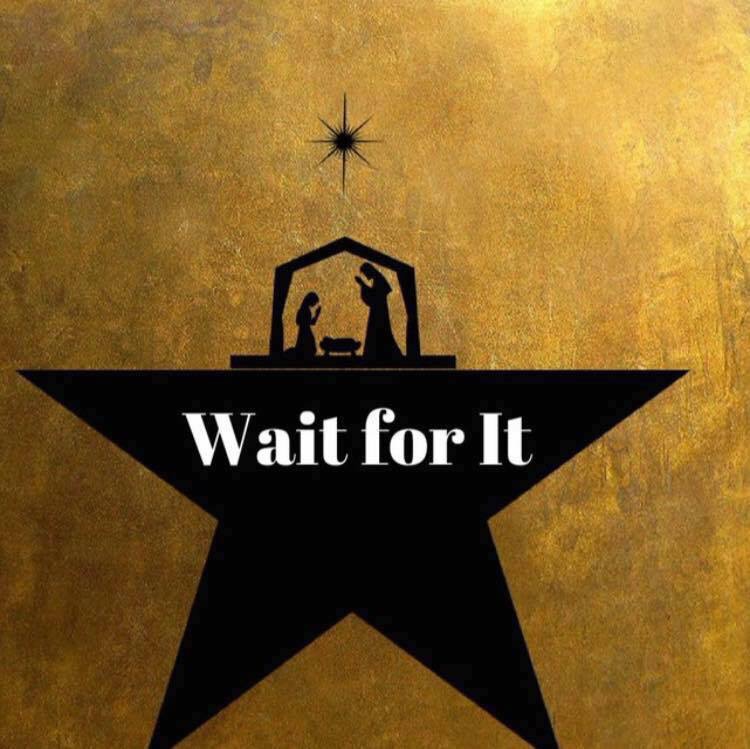
Myth Busters: Everything Happens for a Reason, I Corinthians13:8-13

When my son was in high school one of his friends was killed in a terrible car crash. Like most preachers’ kids Matt struggled with the expectations placed on him, especially in the small community where we lived. Unfortunately a well-intended preacher at his friend Shane’s funeral added to Matt’s frustration with the church by telling the folks at the funeral that “everything happen for a reason.”

Like all the myths we’re looking at in this sermon series this one contains some truth and is well-intended but not always helpful. There are several scriptures that can be used to support this myth: Ecclesiastes 3:1 “For everything there is a season, and a time for every matter under heaven.” Proverbs 16:4 says, “The Lord has made everything for its purpose,
even the wicked for the day of trouble.” Romans 8:28, where Paul says, “We know that all things work together for good for those who love God, who are called according to his purpose.” But as with all theological statement these verses need to be read in context and with the understanding that the biblical authors were all fallible human beings like us struggling to understand things that just don’t make sense.

At one level it is certainly true that everything happens for a reason. Actions have consequences and they are often unintended or unanticipated. Genetically engineering food and pumping animals full of antibiotics have increased our food supply which is good, but we are learning the hard way the unintended consequences are super bugs resistant to all known medications. Cancer is one of the most difficult plagues on humanity to understand, and we applaud the advances research has made. But we are still not doing enough to prevent various cancers by changing our lifestyles and especially the way we eat. Actions have consequences, and until we stop poisoning our food and air and water we will not find a magic bullet to cure cancer.

Health care in general is a hot topic, and again we can’t just blame God or fate for illnesses but must take proactive steps to live healthier lifestyles. Our aging population in particular is a big challenge. 30% of what is spent on our healthcare in a lifetime occurs in the last year of life, and that is often because our focus is too much on the quantity of life and not its quality. A friend told me recently about his mother. When she was 92 years old and in failing health some of her doctors wanted to amputate both of her legs to keep her alive a little longer. These kinds of costly and unnecessary procedures occur because we are afraid to face the reality that we are all dust and to dust we will return. We need to have important conversations about end of life issues based on values and not economics or fear of our inevitable death.

The good part of this myth that everything happens for a reason is that it is really about trust and faith. When our ability to make sense of things reaches its limits that’s when faith kicks in. The mysteries of life and death challenge us to accept our limitations and to make friends with ambiguity, but too easily accepting this myth short circuits that important process. It can be used to avoid taking a leap of faith into the unknowable mystery of God.

The beautiful words of I Corinthians 13 are most often heard at weddings couched in the romantic notion of love that bears all things and never ends, but that’s not what Paul was about when he wrote this beautiful passage. Remember Paul advised people not to get married if they could avoid it. The preceding Chapter 12 of I Corinthians sets the stage for chapter 13. In Chapter 12 Paul addresses jealousy and arguments the church in Corinth was having about which spiritual gifts were the best. Paul uses the metaphor of the human body to describe different spiritual gifts and challenges the church members to accept their own limits and value the gifts of others. And then at the end of that chapter about the body of Christ, Paul says I will show you a better way to achieve spiritual maturity, the way of love.

In chapter 13 Paul says all the spiritual gifts are temporary and partial. This earthly life, including all of our knowledge will pass away – but inquiring minds want to know now. We don’t to wait! We did the whole wait training thing in Advent and we’re tired of waiting. We want answers to life’s mysteries right now. The human search for knowledge and truth is good up to a point but it always gets us in trouble when we overreach our limits. Ever since Adam and Eve couldn’t resist the forbidden tree of knowledge of good and evil we’ve wanted to know more than our pay grade qualifies us to handle.

Look at what Paul says: “For we know only in part, and we prophesy only in part; but when the complete comes, the partial will come to an end. When I was a child, I spoke like a child, I thought like a child, I reasoned like a child; when I became an adult, I put an end to childish ways. For now we see in a mirror, dimly, but then we will see face to face. Now I know only in part; then I will know fully, even as I have been fully known. And now faith, hope, and love abide, these three; and the greatest of these is love.”

Now we see only in a mirror dimly, like when you get out of the shower and the mirror is so fogged up you can’t see a thing. But we don’t want to know in part, we want shiny clean mirrors. We want certainty not ambiguity especially when it comes to matters of eternal importance to us. The frustration is that it is those very questions about death and life after death that we cannot have certainty about.

Paul says that to be adults in our faith is to give up our need for certainty. Those who study human development know that at different stages of maturity we are capable of handling different levels of truth. Small children are helpless and need the certainty that concrete and solid answers to their questions provides. They need to know they are cared for and will not be abandoned by the important figures in their lives. They expect parents and other significant adults in their lives to know stuff they don’t understand. Who hasn’t experienced the inquisitive mind of a three year old who wants to know why the sky is blue, and why she needs to brush her teeth and how the dish washer works, and why grandpa is bald? There is no end to their questions. We have a gas fireplace at our house that has no chimney, and every Christmas our grandsons ask us again how Santa can get into our house if there’s no chimney.

A great deal of our education system is based on that same kind of concrete, factual pursuit of knowledge. In school the test questions usually have one correct answer. For instance, if I asked you which letter comes after the letter A in the alphabet, what would the correct answer be? If you said “B” that is correct, but it is only one of 25 correct answers. Young Albert Einstein was asked that question by one of his teachers early in his life, and the teacher was not pleased when he replied, “They all do.” Most of us are not encouraged to think outside the box of concrete certainty as children, but when we become adults we need to adopt grown up thinking which sometimes means admitting we don’t know and can’t know some things yet.

What Paul is telling us is that when it comes to matters of theology a mature faith is one that can look into the ambiguity of a cloudy mirror and still be at peace with the uncertainty of faith. The statement that everything happen for a reason is meant to provide peace of mind by telling us that God is in charge and everything will be ok in the end. But we don’t live at the end of God’s drama when things make sense, we live in the confusion of the present and those words meant to comfort often backfire. Let’s look at some of the reasons that’s the case.

Number 1: If God’s in charge of everything, then we have to blame God for both the good and bad stuff too. This problem is a cousin to the myth that Mebane covered two weeks ago, namely that “God won’t give you more than you can handle.” Both myths imply that God makes bad things happen for some reason we can’t understand. When we are scared and feel out of control, we need assurance that God is, but the downside of that is we have to hold God accountable for all the bad stuff too and there goes any comfort we get from God. Even Wesley’s familiar Covenant service prayer we used here just 3 weeks ago to begin the new year falls into that trap when it says “I am no longer my own, but thine. Put me to what thou wilt… Put me to doing, put me to suffering.”

Does God cause suffering? There are certainly places in the Bible that indicate that’s the case, for example the whole book of Job, or God’s punishment by death of Ananias and Sapphira for cheating on their church pledge in Acts 5. Some people are sure God is responsible for the election of Donald Trump, and others of us are wondering if this is God’s punishment for the sins of our nation. It obviously can’t be both. Did God give Clemson a victory in the Fiesta Bowl and cause the agony of defeat for OSU? Is God causing the unbelievable suffering in Syria or for the refugees trying to escape that mayhem?

Of course not. We worship a God of love, and the biblical accounts of God’s direct intervention in punishing people were the best answers the people in biblical times could give to some of the most mysterious and difficult questions in creation. We still struggle with those same questions today, and will until we see God “face to face.” Until then we can only know in part.

Number 2: The second problem with this myth is that if we surrender all control of everything that happens to God we absolve ourselves of all responsibility for human causes of suffering or injustice. Rev. Adam Hamilton who has written about these myths in his book “Half Truths” says a friend sent him this comment from a Facebook meme: “Yes, everything happens for a reason, but sometimes the reason is you’re stupid and make bad decisions.” Our actions have consequences. My son’s friend died not because an all-powerful God willed it so, but because of poor judgment and excess speed by a teen aged driver.

Blaming God or the devil or someone else for all our problems pushes us into the dangerous territory of going into victim mode. Woe is me, everybody hates me! The world is against me! We cannot control external events that happen to us, but with God’s help we can control how we react. Do we learn from our mistakes and those of others or waste a learning opportunity? To go victim robs us of chances to reflect and learn and to use adversity to strengthen instead of weaken our faith. It’s hard to increase our faith when we’re angry and blaming the very God who could be our greatest source of strength in time of trouble. That’s not to say we can’t be angry at God or our circumstances. Anger is one of the natural stages of grief. God can handle our anger and isn’t going to abandon us or punish us for being mad. It’s just when we stay angry too long that we multiply our suffering.

Blaming God for our suffering is also costly because it robs us of one of the greatest gifts God has given us, our free will. Sure, sometimes it feels like we’d be better off without free will if we could avoid suffering, but that’s not true. We cannot achieve our full humanity if God is just a puppeteer and we are robots or marionettes. God gives us freedom of choice so we can experience the joy of growth and doing good. Without freedom there is no ability to choose love, and as Paul teaches us, Love is the greatest gift of all that lasts when knowledge and prophesy are no more.

Number 3: And that brings us to the 3rd problem with the myth that everything happens for a reason. When we see knowledge and the ability to explain everything as our purpose in life we are treading on the thin ice of wanting to be like God. We want answers and we want them right now. Adam and Eve had everything they could ever need in the Garden of Eden, but their desire to be like God cost them everything. Worshipping absolute answers makes it impossible for us to live by faith and put our trust in the God who is beyond all human comprehension.

So what do we do instead of telling people in pain that “everything happens for a reason?” We recently attended a funeral for a 33 year old army vet who got hooked on pain meds because of a back injury he got in the service. On New Year’s Day Alex finally lost his battle with addiction. He left a young widow and a sweet four-year-old daughter named Hope. How do you tell his friends and family that all this happened for a reason and expect that to help? You don’t. It was the first Jewish funeral I’ve ever attended and I was impressed with what the Rabbi said instead. He quoted Rabbi Harold Kushner who published a book entitled “When Bad Things Happen to Good People” 20 years ago. It’s still the best thing I’ve ever read on this subject.

The title of the book is not WHY bad things happen but WHEN because they happen to everyone sooner or later. And essentially what Kushner says is that “Why” is not really a question in these cases, it is a cry of pain. And we all know what to do when someone is in pain. They don’t need answers, they need comfort. They need someone to love them, to walk with them through the valley of the shadow of death. We don’t have to say anything; we just have to love.

If we had the answers to suffering we could use them, but we don’t. We are not God. We see in a mirror dimly, and that’s ok, because Paul assures in Romans 8, just us as Jesus did, that God is with us always and nothing in all creation can ever separate us from that love. So “faith, hope and love abide these three, but the greatest of these is love.”

In his play “J.B.” based on the book of Job, Archibald McLeish puts it this way. J.B.’s wife is trying to help him struggle with the why question about his unbelievable suffering, and she says to him “The problem J.B. is that you are looking for justice and there is none. There is only love.” When we are hurting or those close to us, that love is all we need, and it lasts forever.

Northwest UMC, Columbus, Ohio, January 22, 2017

A Requiem for Truth?

Every pastor has had one or more difficult funerals to preach where it is hard to find something good to say about the deceased. As we bury 2016 that’s how I’m feeling. So many celebrity deaths, so much death in Aleppo and the Sudan, in Orlando and Brussels and Berlin that we are in danger of becoming numb to grief as a survival mechanism. While Prince and Princess Leia made the headlines, there was another casualty last year of greater magnitude than all of the other losses combined, and we are in grave danger of that death causing a plague that could bring about the demise of democracy in the U.S.

I’m talking about “truth.” The date of death is unclear because truth died a slow death by inches as 2016 progressed (or regressed). It may have been on November 8 or early on the 9th, or maybe Truth was taken off life support on December 19 by the Electoral College.

Saturday Night Live was one of first to recognize it on November 12 with a brilliant tribute to Leonard Cohen who died that week with Kate McKinnon’s mournful singing of “Hallelujah.” There’s a multitude of things the exegesis of that song could include, but the phrase that refuses to let go of me is “Love is not a victory march; it’s a cold and broken Hallelujah.” At the end of the song McKinnon, speaking both for herself and the character she portrayed during the election campaign, looked into the camera and said, “I’m not done fighting and neither should you.”

Perhaps like Mark Twain the reports of Truth’s demise are greatly exaggerated. As a pastor I said all the right words during the Advent season about hope, and light shining in the darkness, even as my heart was breaking for my country and for those who were so blinded by their fear and anger that they watched Truth die and didn’t raise a finger to help.

The Gospel of John (8:31-32) addresses Truth this way: “Then Jesus said to the Jews who had believed in him, “If you continue in my word, you are truly my disciples; 32 and you will know the truth, and the truth will make you free.” Truth will set you free? Free from what, sin? Free from false religiosity? If we read further in that chapter we find that Jesus leaves the temple at the end of John 8 – not just physically but spiritually. He shakes the dust off his feet and walks away from liars who cannot handle the truth of his Messiahship.

There’s been a lot of talk in the political arena about conflict of interests, and it’s a bipartisan issue. It includes not only the President Elect and his cabinet nominees, questions about the Clinton Foundation, and a Democratic Governor Elect, Jim Justice, the richest man in the state with deep investments in the coal and gas industry just to name a few. But there is also a huge issue of conflicts of interest for clergy and other faith leaders. We are called to perform both priestly and pastoral functions, to do the impossible job of simultaneously comforting the afflicted while afflicting the comfortable with words and actions that speak truth to ecclesiastical and secular power in the name of God’s reign of justice. In some situations speaking truth may set a faith leader free from a paycheck, a parsonage, and a pension or even from life itself. The reason that calls to ministry require such courage and faith are seen comfortably from a distance in the early Christian martyrs, but when more recent prophets like Martin Luther King Jr. and Dietrich Bonhoeffer come to mind the cost of discipleship and truth become much more challenging. We don’t like to be reminded that the same word in Greek is translated as both “witness” and “martyr.” As we celebrate his birthday this weekend there is no more fitting or powerful tribute to the power of Truth than Dr. King’s “Free at last, free at last. Thank God Almighty, I’m free at last.”

I also find hope for Truth in the young. We often hear Isaiah’s words at Christmas that “a little child shall lead them” and apply them to Jesus. But there’s another child in the Christmas story, and without her courage and faith the story would be drastically different. Mary the mother of Jesus was just a teen when she accepted God’s outlandish news about her impending pregnancy. And once the unbelievable news is confirmed by the witness of her kinswoman Elizabeth, it is in the mouth of this innocent youth that Luke puts the powerful words of truth we have come to know as the Magnificat: “God has shown strength with his arm; he has scattered the proud in the thoughts of their hearts. He has brought down the powerful from their thrones, and lifted up the lowly; he has filled the hungry with good things, and sent the rich away empty. He has helped his servant Israel, in remembrance of his mercy, according to the promise he made to our ancestors, to Abraham and to his descendants forever.” (Luke 1:51-55)

That is Truth, and it is ignored at great peril by those in power who fail to heed its warning. It is ignored at great peril by Christians who focus their attention only on the cross and resurrection and ignore the prophetic teachings and actions of Jesus that got him crucified.

Everyone knows churches are packed on Christmas and Easter and much less so the other 50 Sundays of the year. That is unfortunate for many reasons, but the one that bothers me the most is that C & E Christians miss out on the whole truth of the Gospel that can truly set us free from the idolatries of worldly materialism and the refusal to face the truth of our individual and corporate sins. People who hear only the stories of Easter and Christmas either consciously or not skip the passion and just show up for the resurrection – celebrate the birth of sweet little Jesus boy, and then drop out for the rest of the story about the slaughter of innocents, and the flight into Egypt to avoid the assassins of truth. (Read or reread the rest of the Christmas story in Matthew 2:7-18.)
And it’s not just an old story but one that is as relevant as today’s headlines. The Magi today would show up at Trump Tower, and God knows we don’t need more gold there. We worship false gods of power like those of King Herod when we threaten to restart the nuclear arms race. Sure making more weapons of death is good for Wall Street, but at what cost? Over 50 years ago a Republican President and World War II hero warned us about the death-dealing military-industrial complex: “In the councils of government, we must guard against the acquisition of unwarranted influence, whether sought or unsought, by the military-industrial complex. The potential for the disastrous rise of misplaced power exists and will persist.” Dwight D. Eisenhower.

It’s not easy but we must search hard for hope in the ashes of Truth’s funeral pyre. When I look hard enough I see a few embers still glowing in the rubble – young colleagues and elders still willing to fight for truth at all costs. Too often it seems to me that liberal Christians are hamstrung by our sense of ethics. The religious right has no scruples about broadcasting a false prosperity gospel of hate and fear, but when truth tellers walk the fine line of non-partisanship we contribute by omission to the death of Truth itself. We are not free. Perhaps it’s time to give up our tax-free status as non-profits in order to be prophets of truth?

I am still hopeful that a renewed and stronger prophetic voice will be awakened by the rattling of nukes and the building of divisive walls. The great hymn’s words are truer than ever, “O young and fearless prophet, we need your presence here.” And some old prophets too that are set free by no longer having conflicts of interests that silence our voices.

Cohen’s lyrics about a “cold and broken hallelujah” sound forlorn if we focus only on the “cold and brokenness” around us, but they are not the final word. Even as we acknowledge the brokenness of our lives and our world, the final word, the refrain is still HALLELUJAH, praise to God from the depths to give us wisdom and courage for the living of these days. Truth will survive if those who can handle it dare to proclaim it even when and especially when we feel cold and broken.

Good riddance 2016, and praise God for a new year full of promise to those who refuse to bow the knee to Herod.

Lighting the Christ Candle:

During the Advent season, we have waited like expectant parents for God to deliver – to show up in the big brown truck with the promised gifts of hope, peace, joy and love. We wait in a world that has never needed those gifts more. And God hides the gifts in plain sight, in Bethlehem, right where the prophets told us they would be. And like every year, we’re surprised, still not convinced that God’s Messiah should be born in a barn.

Tonight our waiting is rewarded as we celebrate again the eternal gift of unconditional love and the marvelous ways God leads us to the Light of the World. God showed the shepherds and the magi the way to Bethlehem. And tonight God is showing us the Way again.

We light the Christ Candle on this holy night to celebrate the birth of Jesus Christ, the Light of the World. He has led us here and calls us to follow him on a marvelous journey of seeking, finding, waiting, hoping and growing.

Prayer:

O eternal God, forgive us when we doubt that a peasant boy of low estate could possibly overcome our fearful and divided world. When our skepticism threatens to overwhelm us, wrap us in the warm swaddling cloths of hope, peace, joy and love. We have waited and prayed for your Messiah. Now it’s time for us to receive the most precious gift ever and to be the light of Christ to warm and heal broken lives and our darkened world. In the holy name of the one we celebrate this night, Amen.

Advent IV, Unextinguishable Love

advent-waiting-img_1492 The decorations are up, the stockings are hung with care, and children are bursting with anticipation. The nativity scene is set in its special place, but the manger is still empty. The nursery is stocked by Babies R Us, but the guest of honor has not yet arrived. Like expectant parents we can’t wait to cuddle the tiny new life in our arms. We are so close we can feel the baby kicking in the womb, and we are filled with a rich mixture of joy and anxiety. As we wait, let’s remember how different Jesus’ arrival was from birth today, and yet how similar. Parenting is a universal gift of love. In a birthing suite or a stable, to hear that first cry melts our hearts with instant love. Birth is worth every second of the long wait. And so today we light the 4th Advent candle, a light no darkness can extinguish, the candle of Love.

Prayer:
O God, our heavenly parent, we are so close we can see the lights of Bethlehem reflecting on icy roads. Forgive us when we get distracted from the destination of our Advent journey. With trees and houses and malls ablaze with Christmas decorations, it’s easy to get lost on our way to the manger. Disturbing news from inhumane places like Aleppo threaten to extinguish our hope for humankind. Winter storms cancel much needed Sabbath worship services. Remind us again O God that even in the shortest, darkest of days the light of the world awaits us in Bethlehem’s modest manger, and that light is constant and unfailing. It is the light of love; a love that makes room for a mother in labor in a strange place; a love that hears angels sing of peace on earth and joy to the world. As the lights from on the Advent wreath grow brighter, help us welcome the gift of love into our hearts; so we can be midwives in a dark and weary world, helping give birth to the miracle of love. In the name of the one who is Love in human form we pray. Amen.

Wait Training: Third Sunday in Advent

advent-waiting-img_1492[This was our Advent Candle lighting for today at Northwest UMC. The opening monologue was written by Rev. Mebane McMahon and performed beautifully by Heather Sherrill. I wrote the candle lighting liturgy and prayer.]

(Talking on a cell phone) I understand I just had the test yesterday. I know you said, “Make an appointment with your family doctor next week. She’ll have the results by then.” I heard you say that, but do you have any idea how hard it is for me to wait until NEXT week. You told me that my blood work came back with some elevated levels. What exactly does that mean?

As I said, “I have this pain in my side, but last night I could barely sleep. (gesturing) the pain moved to my back!! What could that mean? (A little hysterically) It’s spreading!? This infection, inflammation, this blockage, this rupture or CANCER. It’s spreading. I know it is.

Christmas is 2 weeks away. I have two small children. I DON’T HAVE TIME FOR PAIN. How long do I have to wait? (Apologetically) I’m sorry. It’s not your fault. (sighing) I guess I’ll just have to wait. (hangs up call)

(Pacing and thinking out loud) Stay positive Heather. It might NOT be a life-threatening disease. Wait, she says. WAIT. (Takes a deep breath, Silence. Reflection.) I’m not good at this. Is there anybody who will wait with me? And pray for me? And help me when I can’t help myself?….And….And (softening and calming down. Breathing deeply) huh. I wonder if there is someone I can help in the meantime. Is there anybody else I know who is having to wait like this?

(Praying) O God, how long? How long do I have to wait for a diagnosis, for treatment and recovery? How long do I have to wait for healing and what exactly will that look like? How long? How long O Lord? (exits)

Candle Liturgy:
We are on our way to Bethlehem and the Advent journey gives us time to prepare our hearts and make room for the gifts of compassion, patience and joy that God wants us to have. But time moves so slowly when we’re waiting—waiting for a text or phone call—for news that our kids are OK; for a doctor to give us good news or bad news. Either way, it’s better to know than to be left hanging in the unknown where our imaginations can drive us crazy. As people of faith we know where we are and whose we are. Scripture and carols and prayer are the signposts on our journey that give us hope and peace. And today we light the third candle, the candle of Joy. The light is growing and Joy shines from our hearts to those who need good news.

Prayer:
O Holy God, waiting is exhausting and every year we seem to need the good news of Christmas more than ever. Help us wait with patience for the promised Joy of the season, but remind us that our waiting is not passive. Forgive us when we get so concerned about ourselves that we fail to see the needs of those around us. When we are anxious give us again the assurance that “Weeping may linger for the night, but joy comes with the morning.” Remind us once more that “those who wait for the Lord shall renew their strength” so we can share your joyful good news for the world. Renew our hearts, O God, with your eternal love and help us be the joy we long for in the way we live and in how we relate to those who wait with us. In the name of the coming Christ we pray. Amen.

Patience and Perspective: Why Thanksgiving and Advent Matter More than Ever

“For a thousand years in thy sight are but as yesterday when it is past, and as a watch in the night.” Psalm 90:4

The joke says “Wisdom comes with age, but sometimes wisdom comes alone.” There’s some truth in that, but as one who is learning the hard way, I can attest that age does come with some perspective and experience. I am going to resist the temptation to do a general rant about the rush to Santa Claus that turns the time between Halloween and December 25 into a blur. But I do regret the de-emphasis of Thanksgiving and Advent. We need more than ever times of gratitude and patience in this anxious age of instant gratification that doesn’t satisfy. Gratitude and patience are what Thanksgiving and Advent are all about, or should be.

I heard from several disenchanted voters and analysts of all persuasions that the recent election was all about a desire for change because of voter frustration with the current political situation. While I understand that sentiment and agree that much of what goes on in government is corrupt and broken, I was struck by a phrase I heard several times from Millennials and Gen Xers who said “nothing has changed in 50 years.”

I can’t begin to address the solution to what’s ailing our democratic system, but since I’ve voted in the last 13 Presidential elections beginning in 1968 I do feel somewhat qualified to address what’s changed in the last 50 years. In the 90th Congress, elected in 1966, there were only 11 women in the House of Representatives and 1 in the Senate. In this year’s election those numbers are 83 in the House and 21 in the Senate. I have not found exact data on racial minorities for 90th Congress, but one source said there were fewer than 10 until 1969. By contrast the new Congress in 2017 will have the greatest racial diversity in the history of the republic – 102 members of color in the House and 10 in the Senate. Those numbers equal an 867% increase for women and 1120% for racial minorities in the last 50 years.

Does that mean we have achieved equality in D.C. or in our nation? Of course not; we all know we are a very long way from achieving the high ideals of “liberty and justice for all” that we all profess to believe in, but where we are today on the long journey to equality for all is a far cry from saying nothing’s changed in 50 years.
There are many examples of progress toward social justice if we take time to look for them, and gratitude requires an intentional commitment to focus our attention on what there is to be thankful for, especially in this 24/7 news cycle and social media world where we are bombarded with mostly bad news constantly and can overreact to something and make it viral before bothering to check it’s veracity. Isn’t it interesting that the word “viral” comes from a term that used to mean something contagious that makes us sick?

We can all do something about the virus of untrue and biased information besides just complaining. There have been times in the last 2 weeks that I have simply had to turn off the TV and all my devices (de-vices?) to keep from being overwhelmed and depressed about the “news” coming at me from all directions. A fast from consuming the viral spread of anger, hate and fear is good preventative health from time to time. Perhaps more importantly, we can all stop and verify information before we spread it around by reposting or retweeting. Social media makes it far too easy to just hit a button and spread a virus before we have time to evaluate the information and its source. In the heat of political conflict it is not always easy to remember that, but if we would all pause and reflect on what the consequences might be and how images and words might affect others who become our unintended audience when we hit that button we can all help in a small way to heal the growing divisions in our nation and world. If we aren’t part of the solution we are part of the problem, and if we aren’t helping create positive change in our nation we shouldn’t expect our elected leaders to do it for us.

Mr. Rogers’ has been quoted a lot lately about “looking for the helpers” in a bad situation. Please, in this week of overeating and overshopping and overfootballing, let’s all take time to look for the positive signs of change in our world and be thankful. To do that requires backing up to get a better perspective on the big picture instead of focusing entirely on our problems. Yes, health care costs and jobs and our own civil liberties are important, and we must keep working as fast and justly as possible to change those situations. But to do so requires patience and perseverance and an appreciation of how far we’ve already come. The big picture gives us a better perspective on progress while at the same time reminding us that there are millions of other people in the world who are homeless and refugees and orphans, addicted and incarcerated that we must not ever forget. From Cain’s question “Am I my brother’s keeper?” in Genesis 4 to the lawyer’s question “Who is my neighbor?” to Jesus in the Good Samaritan story (Luke 10), God’s answer is “What you do to the least of these you do to me.” (Matt. 25)

As we have seen this week in the Trump vs. Hamilton tweet storm, artists and artistic works have great power to give us a glimpse of the bigger picture. Good drama and fiction can transport us out of our own swamp of alligators for a time and move us emotionally in ways that pure “facts” or logical arguments never will. It is no coincidence that the musical “Hamilton” celebrating diversity has taken Broadway by storm in this season of division and bigotry. And it is likewise no coincidence that the movie “Loving” began showing in theaters 4 days before the 2016 election. I haven’t seen it yet, but “Loving” is based on a landmark Supreme Court case, yes 50 years ago, in 1967. It’s the story of Mildred and Richard Loving who were sentenced to prison for violating a Virginia law against interracial marriage. In a unanimous decision (imagine that?) the US Supreme Court ruled that “the freedom to marry, or not marry, a person of another race resides with the individual, and cannot be infringed by the State.”

Yes, a great deal has changed in the last 50 years, and much of it for the better. But here’s where patience and Advent come into play, and the turmoil and anxiety about what a Trump presidency may do to impede the cause of justice and equality only underscores this point. We’re not sure who actually coined the phrase “eternal vigilance is the price of liberty” but it is certainly true. A major reason for the necessity of patience and vigilance in our democratic system is that what is seen as progress by some is always seen as a threat to others. The balance between individual liberty and universal justice is in constant tension, and that tension is usually part of the creative process. When the tension becomes bitter and partisan, when one or both sides want to be right more than they want justice for all, when the tension becomes more like a competitive tug-of-war instead of a cooperative teeter totter the tension can become destructive. We have had cycles of both productive and destructive tension throughout our history, and keeping the total picture in mind helps us to be patient with the process and not resort to oppressive or violent means to demand change to get our way.

The truth of the matter is that some people, not all, who voted for Trump and Pence under the banner of change do not want change at all. That minority of white voters really want to undo the changes we’ve made in the last 50 or 100 years that don’t benefit their privileged status. The reality is that in addition to seasons of gratitude and patience the USA desperately needs a season of reflection and repentance to remember all of our history. Only when we admit that this nation was built on a foundation of racism and genocide can we appreciate how far we’ve come and why we’ve got so far to go before “liberty and justice” for all is more than a pious platitude.

The struggle we are now in for the heart and soul of our democracy is so difficult because it is so old and so deeply ingrained in our history and DNA that we don’t recognize it. We learn at an early age about the early European immigrants coming to America in search of liberty and freedom, but most of our schools, families, churches and other civic organizations fail to teach white Americans the rest of our history. We don’t learn about the evils of slavery or we naively think it is a nasty little problem that was resolved by President Lincoln. We don’t learn about the founding fathers being slave holders. We don’t learn about the rape and pillage of Native American lands from people who were here for centuries before the first Europeans “discovered” America.

Why? Because our parents and their parent before them didn’t learn those lessons either because to learn the whole truth about who we really are is too painful. But ignorance is more painful in the long run. Without knowing our past we are condemned to repeat it generation after generation. Our lack of knowledge and the successful use of fearmongering racist tactics to win an election are an indictment of our education system, but even more they are an indictment of the church of Jesus Christ for being co-opted into a conspiracy of silence instead of proclaiming a John the Baptist Gospel of repentance for our sins. John and Jesus told it like it really is. Contrary to Jack Nicholson’s famous line in “A Few Good Men,” not only can we handle the truth only truth and the whole truth can set us free. As Frederick Buechner said so well in “Telling the Truth: The Gospel as Tragedy, Comedy and Fairy Tale,” “The Gospel is bad news before it is good news.”

Ironically the bad news of the Gospel and of our current political state is something that we should be thankful for. I’m not one bit thankful for hatred and racism ever, but as one commentator pointed out nothing new happened on November 8. The anger and divisions have always been a part of our history, clear back at least to the Continental Congress. The silver lining in the Trump election is that the dark underbelly of hate and anger is out in the open where it can be dealt with.

The struggle for liberty and justice is never easy, but when we look at the big picture and understand why change is so hard and how long it has been going on, we can appreciate and be thankful for the progress we’ve made; and we can be confidently patient that from God’s perspective the outcome of the battle between justice and evil is not in doubt. The road to justice is not linear but full of curves and detours and switchbacks, but we have a roadmap from a God who is always on the side of the oppressed and downtrodden. Justice probably won’t happen in our time, but because we also live in God’s time where a thousand years are but as yesterday, we live in gratitude and hope even as we continue to wait and work for liberty and justice for all.

Preaching to the Choir

What’s wrong with preaching to the choir? Someone commented recently that she thought most political ads at this point in the campaign are just “preaching to the choir.” Whoever the intended targets are most political ads are a terrible waste of money that could be used to actually do some good, and I just want them to stop! I plan to vote early this week and how I wish that would somehow trigger a magic switch somewhere in cyber space that would exempt me from hearing or seeing any more hateful negative ads.

But my friend’s comment got me wondering about “preaching to the choir.” We all know it means unnecessarily trying to persuade people of something when they are already convinced. Anyone can sell a product or an idea to those who have already decided to buy, I get that. But consider “preaching to the choir” more literally. With all due respect to musicians who faithfully give of their time and talent in church or elsewhere, I would argue that choir members need to hear the Gospel just as much as anyone else, preachers included. In fact I’ve known both choir members and preachers who need to hear God’s Word more than other folks.

That understanding of what preaching to the choir or those already converted reminds me of something Dr. Everett Tilson, one of my seminary mentors often told us many years ago. He said, “You can’t understand the Scriptures until you are willing to stand under them.” Both the judgment and grace of God are for all of us, saints and sinners alike and we need to hear it early and often, especially in campaign season. As St. Paul put it, “For there is no distinction, since all have sinned and fall short of the glory of God” (Romans 3:23). And “all” means all, no exceptions, no deferments. Christ died for all of us fallible human beings, and we are in great danger if we ever forget that. When we are tempted to judge others as more sinful or less worthy of God’s love, we are treading on very thin ice.

Humility is a very basic requirement of faith. As any regular reader of mine knows, Micah 6:8 is my default summary of what is required of a faithful follower of God, and the final item in that verse is “to walk humbly with your God.” (See my 10/4/15 post “Finding Our Way Back to God: The Search for Meaning” for a discussion of that text in more depth.) The same advice from a negative perspective is given in the familiar adage that “pride goes before a fall.” But if you check out the biblical source of that proverb, the consequences of pride are much worse than a just a fall. What Proverbs 16:18 says in full is “Pride goes before destruction and a haughty spirit before a fall.” Pride is such a serious problem that it comes in at number 4 on the Roman Catholic list of seven deadly sins.

Wouldn’t you think with all those dire warnings there would be less ego and more humility around? But just the opposite seems to be the case in our selfie-crazed society. Dare I say especially in campaign season there is a plethora of hubris in the air? One of the big problems with pride is that it often gets expressed not by building ourselves up but by putting others down so we look better by comparison. If truth be told most of our visits to eye doctors would include a reminder that part of the trouble with our vision is that we can’t see the logs in our own eyes because we are too busy criticizing others for the tiny specks in theirs. (Matthew 7:3-5 and Luke 6:42).

I could go on showing off my biblical prowess by proof texting many other references to pride, but that doesn’t seem wise at this point. An image of stones and a glass house comes to mind! And yes, in this age of digital transparency where all of our actions can be captured on cell phone video and all of our tweets are fair game for public exposure, we all live in glass houses, including the choir. The prescribed antidote for pride is a regular reminder for all of us that the peace of mind and heart we crave never comes from the fame and recognition worldly values tempt us to pursue. It comes only to the humble who know that “the greatest of all is servant of all.” (Mark 10:44).

By the way, that bit about the glass houses isn’t biblical, but it’s close to Jesus’ daring those of us who are without sin to cast the first stone. (John 8:7).

Humbly yours, as one who can’t sing a lick, but I know I belong in that chorus who need to stand under the Scripture.

Prayer for a 70th Birthday

O God. All of my friends are turning 70 this year. And my turn is coming very soon. Just two years ago we celebrated 50 years since high school graduation with a big reunion, but this milestone has spread through us first wave of boomers like a thief in the night, picking us off one at a time on a steady march from January to October and the toll keeps climbing.

Our 50’s and 60’s came and went with “Over the Hill” jokes and some solemnity, but being 70 seems much more serious. Denying our aging gets harder every year, but 70 has the extra power of biblical authority. “The days of our life are seventy years, or perhaps eighty, if we are strong; even then their span is only toil and trouble; they are soon gone, and we fly away” (Psalms 90:10). OK, maybe the Psalmist was just having a bad day when those words were written, but they still are hard to shake for those of born in 1946 or sooner, no matter what the actuarial tables say about our increasing life expectancy.

For me there’s an added omen. My mother died of brain cancer when she was 70. It was only 3 months between her diagnosis and her death. She didn’t have much time to make a bucket list, but then Morgan Freeman and Jack Nicholson didn’t popularize that term until 14 years later. Even though that 2007 movie highlighted the most serious of topics in a comic fashion, it’s not such a laughing matter as my peers and I hit the big 7 0.

Yes, I know, we have birthdays every year, but those ending in zero always seem bigger. Reflecting on being 70 reminds me of the Christian practice of giving up something for Lent, a good spiritual discipline. But Lent only lasts 40 days, Lord. The things we give up at 70 are often forever. At 60 I could finish first in my age group in a 5K race. Yes, I know there weren’t many in that age group running, but now I read the morning paper on line because my aging body rebels at walking 500 feet to the end of the drive to pick up the newspaper. I would love to play softball or football with my grandkids, to ski some moguls again, or to chase down those difficult tennis shots the way I used to. Lord, I’d even like to be able to mow my grass without pain or to stay up all night reading a great book. Alas, the mind and spirit are willing, but the flesh gets weaker every day!

What’s that Lord? Yes I know it is much too easy to get turned in on my aches and pains. Even when I vow not to do it my conversations with my peers seem to inevitably turn to recent medical tests and how much time we lose going to the doctor. We often lament, “I don’t know how I ever had time to work.” Forgive my little pity parties, Lord. Remind me I have a choice about where I focus my attention. Lead me not into the temptation to bemoan what I’ve lost to the aging process and deliver me from the evil of criticizing the “younger” generation. When I find myself saying those things my parents said that I swore I wouldn’t ever say, gently nudge me to live in the now, free from regrets about the past I cannot change and liberated from the fear of what lies ahead.

Help me live in gratitude for the things I can do that would have been impossible a generation or two ago – travel opportunities, world-wide information available 24/7 anywhere I am (unless I forget my smart phone), medical advances that enhance and extend the quality of life for those of us who are privileged to have access to them, mind-boggling discoveries about the infinite mysteries and marvels of the universe we live in, and the freedom in a comfortable retirement to reflect on it all.

Lord, it breaks my heart to know how many of your children lack the basic necessities of life that I take for granted. Even as I give thanks for all I have, remind me that even in my advanced years that “from everyone to whom much has been given, much will be required; and from the one to whom much has been entrusted, even more will be demanded” (Luke 12:48). Remind me that the word “retirement” is nowhere to be found in the Bible. Discipleship is a lifetime commitment. If we stop growing in our faith at any age we cannot maintain the status quo but regress.

Let me not, O Lord, rage against the realities of age, but instead to faithfully embrace the present as the gift it is. Knowing that negativity and fear immobilize, let this birthday teach this old dog to treasure every day because they are finite. Adjust my trifocals to focus on the joys of life so I can make the most of what is instead of regretting what was or is no more. Blessed with 70 years of life experience, let my prayer be “For all that has been, thanks; and for all that is yet to come, Yes!”

Is It Well with your Soul?

“It is Well with My Soul” has long been a favorite hymn of mine, but it has taken on a new twist for me in this year of apocalyptic election scenarios. Twice in recent months I have been in worship services where that great old hymn has been part of the liturgy. All of the lyrics to that hymn are powerful statements of faith, but the verse that has caught my ear in this election year is the last verse which says:
“And Lord, haste the day when the faith shall be sight,
the clouds be rolled back as a scroll;
The trump shall resound, and the Lord shall descend,
Even so, it is well with my soul.”

In particular I’m referring to the phrase, “The trump will resound, and the Lord will come down.” Sorry, but I can’t hear the word “trump” without being reminded of the Republican Presidential candidate. And the eschatological imagery in that line reminds me that many on both extremes of the political spectrum are feeling like the world may come to end if the “other” candidate is elected. I don’t really expect the end of the world on November 9, but regardless of your feelings about Trump or Clinton, most of us would agree the outcome of this election will have serious consequences for the future of our nation and the world. As an antidote to our anxieties about that, Horatio Spafford’s great hymn repeats the refrain, “It is well with my soul.”

If you don’t know the story behind this hymn, it was written in 1873 by Horatio Gates Spafford, a prominent American lawyer, after he had experienced multiple tragic events, including the death of a son in the great Chicago fire, financial ruin, and a storm at sea in which four of his daughters died. (More details at https://en.wikipedia.org/wiki/It_Is_Well_with_My_Soul.) Knowing the history of Stafford’s Job-like tragedies, any one of which could undo most of us, we know lyrics like these are not merely pious platitudes.
“When peace like a river, attendeth my way,
When sorrows like sea billows roll,
Whatever my lot, thou hast taught me to say
It is well, it is well, with my soul”

At different times in my life words of faith like this speak more to me than others. This is one of those times, in part because of my grave concern over the deeply divided world we live in typified by the Presidential election rhetoric and the hate inspired violence from Syria to San Bernardino and far too many points in between. And on a more personal level I’m dealing with some chronic pain that makes it hard for me to function, including finding time and energy to write.

I was humbled and shamed about how easy I give into pain or despair over the state of the human condition the other day in physical therapy. A young woman was there who could barely walk, even with her cane. As she slowly made her way from the aquatic therapy pool through the main therapy room I noticed she is bald and wore a colorful bandana on her head. I assume she has lost her hair from chemo therapy. And beneath that colorful bandana she smiled at me, and that smile lit up the room as a powerful witness that though her body is betraying her, it is well with her soul.

This stranger’s smile and Spafford’s 143 year-old words, written out of tragedy and sorrow far greater than mine continue to comfort, challenge and inspire me. They remind me of a very helpful definition of faith I read many years ago by a Canadian theologian, Wilfred Cantwell Smith. At the risk of oversimplifying, my summary of Smith’s thought is that he delineates an important difference between belief and faith. We sometimes use those words synonymously, but they are not. Belief is an intellectual ascent to a proposition or idea, while faith is a deep trust in a power that can give us the “peace that passes understanding” (Philippians 4:7) no matter what external circumstances threaten to make us fearful and anxious, be they personal, existential or political.

One of my favorite stories that illustrate the difference between belief and faith as trust is this one by an unknown author about Charles Blondin, a famous French tightrope walker:

Blondin’s greatest fame came on September 14, 1860, when he became the first person to cross a tightrope stretched 11,000 feet (over a quarter of a mile) across the mighty Niagara Falls. People from both Canada and America came from miles away to see this great feat.
He walked across, 160 feet above the falls, several times… each time with a different daring feat – once in a sack, on stilts, on a bicycle, in the dark, and blindfolded. One time he even carried a stove and cooked an omelet in the middle of the rope!
A large crowd gathered and the buzz of excitement ran along both sides of the river bank. The crowd “Oohed and Aahed!” as Blondin carefully walked across – one dangerous step after another – pushing a wheelbarrow holding a sack of potatoes.
Then at one point, he asked for the participation of a volunteer. Upon reaching the other side, the crowd’s applause was louder than the roar of the falls!
Blondin suddenly stopped and addressed his audience: “Do you believe I can carry a person across in this wheelbarrow?”
The crowd enthusiastically yelled, “Yes! You are the greatest tightrope walker in the world. We believe!”
“Okay,” said Blondin, “Who wants to get into the wheelbarrow?”

The story says no one took Blondin up on that invitation. But when things are truly well with my soul I know it’s safe to get in God’s wheelbarrow, even if I have to muster my courage like the father whose epileptic son had just been healed by Jesus. He said, “I believe Lord, help my unbelief!” (Mark 9:24).

Which is to say that faith is a journey, not a destination. John Wesley, founder of Methodism, knew that well. He asked new clergy as United Methodist Bishops still do today at ordination, “Are you going on to perfection?” That’s a not too subtle reminder to walk humbly with God and other faith seekers who know that faith and doubt wage an eternal battle in us all. Wesley also advised preachers to “Preach faith until you have it.” I believe that’s why the word “retirement” does not appear in the Bible. We’re all still preaching and seeking that trusting faith that no matter what curve balls life throws sings out, “It is well with my soul.”

Intimacy and the Meaningful Life, Genesis 3:1-8

One childhood game that seems to have survived from one generation to the next, even in this age of multiple electronic devices, is hide and seek. All of my grandchildren have enjoyed that game at some point in their childhood, including one who cracked me up by hiding her little brother in the clothes hamper and then proudly announcing to us that she put Ryan in the hamster! The game is fun – but only up to a point. The late great preacher Fred Craddock told a story about a great hiding place he found at his grandparents’ farm. He hid under the front porch of the old farm house and proudly told himself “They’ll never find me here.” Minutes went by, which began to seem like hours. The seeker ran by the front porch several times without ever looking under it, and Craddock says he suddenly found himself saying, “They’ll never find me here!!!”

The solution to that problem is figured out even by young children who start making subtle or not so subtle noises to reveal their presence. As adults however it is often much harder to be “found” when we are hiding from each other and even from ourselves. Why do we do that? To be able to live out the other qualities of a meaningful life we need the confidence that comes from being fully known and affirmed by one or more other people and ultimately by God. That’s intimacy.

Intimacy is a tricky word in our culture. It is laden with overtones of sexuality. We talk about undergarments as “intimate apparel.” Being intimate with another person is often code for having sex. For that reason I struggled with whether should use the Genesis 3 account of the fall for this sermon. We know the story: Adam and Eve disobey God and eat of the forbidden fruit of the tree of knowledge of good and evil. And suddenly they realize they are naked and make loin cloths for themselves. Next they hear God walking in the garden and they try to hide themselves.

This story is a way to explain why human life is full of sin and difficulties, but the reference to nakedness has confused people for centuries about “original sin. I want to suggest this story is really about a loss of intimacy. In order to understand that I invite you to make a mental leap to a deeper understanding of nakedness beyond the literal meaning. On an emotional and spiritual level nakedness is about being vulnerable and defenseless. It’s about being uncovered and unhidden in the eyes of God. Adam and Eve were playing hide and seek with God and of course they were quickly found. When it comes to God that old adage is especially true – “you can run, but you can’t hide.”

Adam and Eve are afraid and try to hide from God, but not because they have no clothes. We know that because they have already made their figgy loin cloths before this encounter with God. Their nakedness is of a much more serious variety. They are ashamed and afraid because they are naked and defenseless before God in their disobedience to a direct order. They now know the prime evil, which is not about sex, but is alienation from their creator. They are afraid and ashamed. And so they try to hide from God, which of course is foolish. We live in a cyber society where our location is tracked 24/7 by GPS and countless apps in our phones that are smarter than we are. We leave a trail of where we’ve been and what we value every time we use a credit card. But from day one there has been an even more powerful force in our lives that knows where we are and what we do all the time. It’s not GPS but G-O-D. We cannot hide our mistakes from God. Just ask Ryan Lochte how well trying to cover up a stupid mistake with a lie can turn into an international incident! We all make mistakes because we are all fallible. And yet how much time and valuable energy do we spend trying to hide who we are from God, others and even from ourselves?

My friend Mebane McMahon recommended an excellent book on intimacy to me and I highly pass that recommendation on to you. The book is “The 7 levels of Intimacy” by Matthew Kelly. Relax, I am not going to try to cover all 7 levels of intimacy today and can only begin to scratch the surface. But the fact that Kelly identifies 7 levels and has written a whole book on the topic is an indication of what a complex subject intimacy is.

We like to simplify complex topics, which is one of the reasons that it is tempting to just equate intimacy with sexuality. But being in a relationship, even a sexual one, does not guarantee the safety and security we feel in a truly intimate relationship where we feel loved and affirmed unconditionally. We can all be lonely in a huge crowd or sitting in a church service if we are hiding from God and others.

When I was much younger and even more naïve than I am now I had no idea of the difference between sex and real intimacy. I still believed the fairy tale notion of finding one true love that would meet the need I couldn’t even yet identify as intimacy. When I fell in love in college with the woman who became my first wife there was a popular song, “The Theme from a Summer Place,” that seemed to capture what we were expecting and hoping to find in our relationship. The song lyrics say this about that summer place:

“There are no gloomy skies
When seen through the eyes
Of those who are blessed with love
And the sweet secret of
A summer place

Is that it’s anywhere
When two people share
All their hopes
All their dreams
All their love.”

Isn’t that what we all hope from in our most significant relationships – whether they are sexual or not? Someone with whom we can share ALL of our hopes and dreams and love. And yet how often are we disappointed because most relationships don’t live up to that ideal? Ironically, when I recently googled the movie for which that song was written, I discovered that it is all about broken relationships and extramarital affairs, things that happen when we start looking for love in all the wrong places.

Intimacy, like all the marks of a meaningful life, requires work and a lot of it. That’s because love is not a feeling, it’s a choice. We can learn to control how we deal with feelings and impulses, but we can’t determine when they appear, often in unexpected and uncomfortable situations. Intimacy with others and with God requires conscious choices and actions. Like Michael Phelps or Simone Biles have to work hard and dedicate themselves for years to their goals for Olympic gold, intimacy is a quality of life that requires discipline and determination. Too many relationships fall short of gold medal status because we lack the discipline to work on the relationship when it gets difficult and uncomfortable.

The same is true of having an intimate relationship with God. Jesus’ followers are called disciples and that word comes from the same root as the word discipline. All disciples of Christ in 30 A.D. or 2016 must make a choice to follow Jesus each and every day. It’s not a one and done deal. The forces of worldly temptations for material rewards or cheap pleasures all pull us every day toward the wide and easy road that leads to destruction.
I decided to use the Genesis 3 story to talk about intimacy primarily because Kelly points out in “The 7 Levels of Intimacy” that shame is one of the greatest enemies of intimacy that must be overcome. Chapter 3 of Genesis, commonly called “The Fall,” describes what happens when Adam and Eve disobey God and get caught. Unlike a game of hide and seek, the stakes here are existentially higher. Eve and Adam make the classic mistake we often resort to when we screw up; they play the blame game. Adam blames Eve, Eve blames the serpent. Instead of simply confessing their transgressions and asking for forgiveness, they continue to try and hide, and the consequences are severe. Because of their disobedience they are evicted from paradise – where everything they needed was provided in abundance. Instead they are forced to grow their own food and survive by the sweat of their brow. The pain of childbirth is greatly increased for womankind forever and she is made subservient to the rule of her husband. And finally they are made aware of their own mortality. Ouch!

Pretty gruesome stuff if the story ended there, right? Unfortunately many of us get stuck in our spiritual development with that image of a judgmental God, and when we do we cannot ever achieve true intimacy with God because we are afraid of the consequences if we have to come before God naked and defenseless. Worse yet, the shame and guilt we all carry in some degree also gets in the way big time when it comes to human relationships. If we are using up a lot of psychic and emotional energy playing hide and seek from God, we simply to do not have enough gas left in our tanks to create and maintain an intimate relationship with other people, no matter how much we love them or they love us.

But here’s the Good News – the Judeo-Christian salvation story doesn’t end with Genesis 3. The rest of our Scriptures tell a glorious story of redemption. Like a parent ticked off with disobedient children, God puts Adam and Eve in time-out. He stations Cherubim to guard the gates of paradise so the naughty children can’t sneak back in. But like disappointed parents or partners or true friends, God can’t and doesn’t give up on the wayward ones. Genesis doesn’t say this, but I’ll bet this is the first time it was ever said, “This hurts me more than it does you.” And so the other 1986 chapters of the Bible tell the story of God’s persistent, faithful efforts to redeem and restore an intimate relationship with humankind. Why1986 chapters? Because we are slow learners. We keep trying to play hide and seek to cover our nakedness while God bails us out of one mess after another.

Intimacy is the key that unlocks the gate to paradise and salvation. Intimacy with God is the truth that sets us free to be open and vulnerable and honest with ourselves, with others and with God. This truth is described repeatedly in different ways in the Bible, but it boils down to the same basic ingredients – trust, honesty, confession, and forgiveness and grace.

Ephesians 4 puts it this way: “But speaking the truth in love, we must grow up in every way into him who is the head, into Christ.” Intimate relationships are those where we trust each other enough to speak the truth in love. That’s different than brutal honesty that flows when we allow our emotions to rule our tongues. It’s different than “telling it like it is,” without regard for the other person’s feelings or perspective. Balancing honesty with the sensitivity and compassion of love is sorely lacking in many social media postings and much of our political discourse, but it is absolutely necessary for the most important relationships we have with loved ones and with God.

That kind of openness and honesty is not a New Testament creation – even in the Hebrew Scriptures where God is often portrayed as a judge to be feared there are glimpses of grace. The prophet Isaiah in the very first chapter has God speaking to his rebellious children and says, “Come now, let us argue it out, though your sins are like scarlet, they shall be like snow; though they are red like crimson, they shall become like wool.” In other words, don’t play hide and seek – come to me, no matter what your sins and they can be forgiven. My favorite New Testament verse about the power of confession is in I John 1:9. “If we confess our sins, God who is faithful and just will forgive us our sins and cleanse us from all unrighteousness.” No sin is bigger or wider than God’s mercy; so what are we hiding from?

I wonder how different Adam and Eve’s story would have turned out if they had known that simple truth about intimacy. We’ll never know – but what we do know is the sacred truth that sets us free to live meaningful lives. That doesn’t’ mean it is simple or easy to live it. The world still is playing one giant game of hide and seek based on deceit, manipulation and false pride. But God will provide us with the faith and courage and discipline to play a different game–to stop hiding and trust God enough to confess each time we fall short of the gold medal. God will pick us up and dust us off to try again, but we have to be brave and honest enough to ask for help.

So my friends, church is not a place to play hide and seek. It’s safe to be real here without fear of judgment. So blow your friends minds – tell them next Sunday you’re going to church to be intimate with a few hundred of your friends!