From my pastor, Chris Rinker: “Giving up something is not punishment but making a space for God to create something new in us.” He followed that with a question I will be pondering for awhile: “What can I do or not do for Lent that will make space for God in my life?”
I read this one from a fellow pastor in a Facebook group responding to a question about what words to use while imposing ashes. I’m sorry I don’t remember his name, but his words have stuck with me. He suggested saying “You are dust, but remember what God can do with dust!”
That got me thinking. We are dust of the earth but also star dust spewed forth billions of years ago by the Big Bang that is still creating and expanding God’s universe. Ash Wednesday is a reminder to accept our mortality so we, like Buzz Lightyear, can leap into the future and go to “infinity and beyond.” We chuckle at a Disney toy making that kind of foolish leap, but on the days we believe** we know that it is exactly what we are called to do—to trust without fear, even when the foundations of our world are shaken by rockets and bombs; even when we fear what a madman with nuclear weapons could do to life as we know it; even when we fear that human kind is hell bent on destroying Mother Earth with our pursuits of greed and power.
To trust God in such a time as this is to surrender all that we rely upon to give us security—all of that earthly stuff because to quote Kerry Livgren of the rock band Kansas, “all we are is dust in the wind.” But that wind is the Holy Spirit/Wind that breathes life into dust, that shapes star dust into us who are, on the days we believe and on those we don’t, truly created in the image of Being itself. Our current form goes from dust to dust, but our essence, our being is eternal. When this mortal life is over we trust that we will be forever in the heart of God who is love itself. Amen
** “On the days we believe” is a phrase I have adopted from Rachel Held Evans’ book “Wholehearted Faith” where she dares to write what I have often been afraid to say out loud. I will be forever grateful to her for her gift of honest vulnerability and helping me claim that I too have good days when I believe and many others when I’m really not sure.
O My God, the long anticipated and feared war in Ukraine seems to have finally begun. What a sad thing it is that humankind cannot give up it’s addiction to violence. Why do we keep doing the very things we know we ought not do? Why do we insist on labeling some of our sisters and brothers our enemies? My heart is broken that again we have turned our backs not only on lessons we should have learned from centuries of history but also again on your will for peace and justice for all of your children.
And my heart is laden down with regrets and feelings of futility. What can this old tired and retired preacher say or do that I have not done for decades? Did we not learn anything from the other two bloody wars in Europe in just over 100 years ago? How can partisan blinders keep so many American leaders from seeing that Putin is reprising Hitler’s playbook? How can support for Putin from an American former president not be treason? How can I love these enemies foreign and domestic when I want to damn them all?
I’m wrestling with a desire to speak out but fear the political backlash I may get from family and friends who want to keep me in the straight jacket of an apolitical and irrelevant pastoral stereotype? Is not your heart also breaking, loving one? Has it not been broken too many times to count since Cain killed Abel? Massacres, crusades and genocides often waged in your holy name have filled whole chapters of human history. We build monuments and deify military and violent heroes, but we crucify and assassinate messengers of peace. How in your name, O God, can we keep our faith when the forces of evil and darkness seem to be gaining thousands of blind followers each and ever day?
The Christian season of repentance is coming in just a week. Please may we celebrate a solemn and holy Lent this year and call upon the power of your Holy Spirit, the one force stronger than violence and human evil, to save us from our own sinful ways. Christ have mercy! Amen
“Swimming is the trifecta for me – exercise, meditation and alone time.” Brene Brown, “Atlas of the Heart,” p. 18
I had been thinking the same thing about swimming lately, and it was so good to have those feelings affirmed by someone whose work I admire so much. As some of you know I took up swimming as my primary form of exercise about a year ago. It happened almost accidently when I began doing some of my physical therapy for recovery from back surgery in the water. One of the blessings of the pandemic is that our YMCA’s began letting people reserve a lane in the pool to control numbers of swimmers and maintain social distance. The reservations are for 45 minutes; so the first time I went to the pool it only took me 15 minutes to do my PT exercises, and I still had 30 minutes left in my allotted time in the pool. So I decided I might as well see if I could swim a few laps – with the emphasis on “a few.”
That first time I managed 3 laps before I was exhausted. I have never been a strong swimmer. When I was in Boy Scouts many decades ago I needed to earn merit badges in both swimming and lifesaving in my pursuit of becoming an Eagle Scout. I passed both of those, but just barely. I was literally a 98 pound weakling in those days and also had a very hard time passing the requirement for running ¾ of a mile in under 6 minutes. My 13 year-old self would never believe that as a 40 something I could actually run 5 miles in 37.5 minutes; nor would he believe that I can now swim 900 yards in less than 45 minutes.
Because of several health concerns swimming is the ideal low-impact aerobic exercise for me. And over the last 12 months I have not only increased my endurance but have come to truly enjoy swimming. Dr. Brown captures some of the reason for that when she says, “When I’m swimming laps you can’t call me or talk to me, it’s just me and the black stripe.” As an introvert I need solitude, and especially since I got a new mask and snorkel and can actually do most of my laps under water where I can’t see or hear anything that solitude has been like icing on the cake.
Even though I was a fairly serious runner for 25 years I never experienced what others describe as the “runner’s high.” Running was always work for me, I think in part because I ran most when I was going through some particularly rough patches in my personal, professional, and married life. I wasn’t running for fun but literally running away from problems I didn’t know how to handle. But I realized today as I set a personal record of 900 yards that I am feeling a swimmer’s high. The water supports me, relieving pressure on my joints, and I truly felt like I could have gone much further today. Today I was in a pool that does not reserve lanes; so I had no time limit on how long I swam. I enjoy being in the pool so much now that I can even do it without resistance or hesitation even on very cold winter days.
The meditation aspect of swimming has taken the form for me of repeating a couple of mantras that resonate with where I am now in my faith journey. Those phrases include several Hebrew and Greek words for God (Yahweh, Elohim, and Abba), spirit (ruach), justice (mishpat), and love (agape). I hope my seminary professors will forgive me for my awkward combinations of several languages, but my current mantras are: Ruach Abba, Ruach Elohim, and Yahweh Mishpat. I especially like using “Abba or Daddy” for God as Jesus did because my other inspiration for swimming is remembering the 12 frightening hours my dad spent in the cold North Atlantic waiting to be rescued from the crash of his B-17 at the end of WWII.
Everyone needs to experiment and find what works for you, and that can change as we change. Today I added a new combination inspired by our congregation singing “We Are Called” in worship yesterday. That hymn is based on my very favorite summary of faithful living in Micah 6:8; so I swam several laps today repeating “Do Mishpat, love Agape, and swim humbly with Abba.” I have had trouble creating a regular meditation practice on land—too many distractions, but in water, which has so many theological conotations for me, I feel especially focused, close to, and sustained by the mystery we call God.
“They shall beat their swords into plowshares, and their spears into pruning hooks; nation shall not lift up sword against nation, neither shall they learn war any more.” Isaiah 2:4
“Blessed are the meek for they shall inherit the earth. “ Jesus, Matthew 5:5
Are Isaiah, Jesus and pacifists simply naïve optimists, or are they visionaries making a theological statement and not an historical one, a warning more than a prediction? By worldly standards such comments by Jesus are not taken seriously because most of us cannot begin to entertain the notion, let alone understand, that meekness and vulnerability can be and are the ultimate signs of strength.
Three of my favorite authors, namely Matthew Fox, Richard Rohr, and Brene Brown have addressed the important topic of toxic masculinity in their recent writings, and those words could not be more timely and critical. Toxic masculinity is nothing new, but seems to be as rampant and contagious as the Omicron variant of Covid. The standoff over Ukraine, the January 6 insurrection, the epidemic of gun violence in our cities, violent conflicts over masks on airplanes, and the populist posturing of Donald Trump and his merry band of followers are just a few examples from today’s headlines caused by the “might makes right” way of life.
My wife and I went to see the new “West Side Story” movie last weekend, and as you probably know the whole plot of the movie centers on gang violence and turf wars between the Sharks and the Jets. I knew that of course going in to the theater, but this version of that story seems to make the violence and tragedy more realistic and painful than the 1961 version. Or maybe it’s just that I know a lot more about the futility of violence now than I did when watching the original movie through the rose-colored glasses of my youth.
For my 15 year-old self West Side Story was just a tragic love story. I didn’t notice anything in the film about racism or social injustice because I knew nothing about racism or pacifism. I grew up in a pure white community playing cowboys and Indians and war games with my neighbor Jim Shockey. When I couldn’t be outside my bedroom floor was often covered with little army men on the floor (our video game violence then). My life ambition as a 4th grader was to be a marine and I dreamed of attending one of the military academies. My worldview was so narrow that I had no contact with any people of color until I was 20 years old.
Since West Side Story is more than 60 years old I don’t think I’m giving away any secrets when I say the movie’s tragic ending is a perfect and very moving depiction of how absurd and futile trying to solve conflicts through violence is.
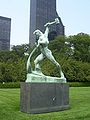
Toxic masculinity is as old as the Genesis 4 story of Cain killing his brother Able. And in all the millennia since we have made almost no progress at learning to beat our swords into useful implements of peace. The statue depicting that verse from Isaiah that stands in front of United Nations Headquarters in New York City was erected just three years after the Holocaust, Hiroshima, Nagasaki and all the other horrors of World War II ended. Hitler and Mussolini and Emperor Hirohito were defeated through force the likes of which the world had ever seen.
The world had been naive or gullible enough to believe WW I as “the war to end all wars,” but only 20 years after the Treaty of Versailles ended that war the sequel debuted with Nazi Germany’s invasion of Poland! Sound familiar? I do not mean to cast any dispersion on those who joined forces to oppose the Axis armies. My father was part of that greatest generation who risked and/or lost their lives to stop the evil personified in Hitler.
Force was met with greater force, but to what end? History continues to repeat itself. Hitler and Mussolini are replaced almost immediately by Stalin, the Kim Un gang, Pol Pot, Mao, and the brothers Castro just to name a few 20th century despots.
We have cold and hot wars, guerrilla and urban warfare almost continuously all over the planet. We have spent obscene amounts of money on deadlier and deadlier weapons of mass destruction, and greedy American capitalists lead the world in profiteering from making and selling those killing machines.
How long will the human race pursue this madness? Until we destroy ourselves and the planet we live on? One can certainly offer plenty of evidence that our systems of patriarchy have failed to produce a world where we don’t learn war anymore. I still hope that the emergence of more women in important leadership roles will help diffuse the toxic love of violence and force that has been the human race’s taken-for-granted business as usual for millennia. But my hope is seriously tempered by the likes of Marjorie Taylor Greene and Lauren Boebert who are just as power hungry, paranoid and militant as their male counterparts.
This is not just a gender issue; it is a moral and existential threat to the human race itself, and it must change because there will be no WW IV. The U.S. 2022 defense budget is $700,000,000,000, and have you ever heard of any great debates in Congress about passing it? We have huge partisan wrangling over what we spend on education, the arts, health care and other social programs which cost a small fraction of the defense budget. The best way to start beating our swords into plowshares is to simply stop making bigger and more deadly swords and spears! We have enough atomic fire power to destroy the world dozens of times over. Why do we need more and more?
Another example of toxic versus heathy masculinity can be seen by comparing these two statements: 1) “Happy is the one who seizes your enemy’s infants and dashes them against the rocks.” 2) “You have heard that it was said, ‘An eye for an eye and a tooth for a tooth.’ But I say to you, Do not resist an evildoer. But if anyone strikes you on the right cheek, turn the other also; and if anyone wants to sue you and take your coat, give your cloak as well.”
Most people may recognize the latter words as part of Jesus’ Sermon On the Mount in Matthew 5. But you may be surprised to learn that the first statement is also biblical (Psalm 137:9). The two could not be more diametrically opposed and are exactly why when conflicts arise between Jesus and other biblical writings, as they often do, I choose Jesus. Not because the way of Jesus is easy but because it is true and the only way to real peace. As the world teeters on the brink of another cold or, heaven forbid, hot war over Ukraine, we better learn the difference soon.
Here we are, nine days into a new year. We’ve changed the numbers on the calendar, but things look the same as year one and two of what one young child calls the Pandamnic. We’re still wearing masks, the Omicron numbers are scary high. New Year’s used to be more a time of out with the old and in with the new, but 2022 feels a lot like the movie Groundhog Day, like we’re stuck in a very deep rut.
You may have seen the cartoon of a baby talking on a cell phone about her baptism. She says, “I tell you this guy in a dress tried to drown me, and my family didn’t do anything but stand around and take pictures!” I saw another one where Jesus is complaining to John the Baptist that he was trying to drown him. John replies, “Sorry, if you wanted to be sprinkled you should have gone to John the Methodist.”
How many of you were baptized as infants or as a small child? For that many of us at least we have no conscious memory of that important event that was a major force in shaping our faith journey. That’s one reason this Sunday after Epiphany is called the Baptism of the Lord; so we can all reflect on the promises that we made or were made for us at our baptism.
One of the best things about studying the Scriptures to prepare to preach or doing Bible study is noticing things we’ve not seen before in familiar stories. All of us are somewhat guilty of making what a friend of mine calls Gospel Stew. We take the different accounts of Jesus’ life and mix them all up together into one almost Bible narrative. But each of the Gospels is a unique testimony by its author, and it’s important to take time to focus on each one to see what treasures we can find when we do just that.
For example the account of Jesus’ baptism in the Gospel of Luke we read today has one big difference from the other three Gospels. Did you notice it? Listen again to these words from verses 19-21: “…because of all the evil things that Herod had done, added to them all by shutting up John in prison. [pause] Now when all the people were baptized, and when Jesus also had been baptized…”
In the three other accounts in the Gospels John plays a much more central role in baptizing Jesus. John’s role is implied here, but Luke seems to make a point of getting John out of the spotlight in prison before Jesus hears the heavenly voice proclaiming his belovedness.
Luke gives John a lot of time on stage prior to this, but now it’s time for a new beginning for putting away the old wine skins that can’t contain the Gospel of Grace that God has come in Jesus came to proclaim. Now, it’s a new year and time to clean out the old to make room in our hearts for the incarnation of God’s spirit. The Holy Spirit comes not just in Jesus, but in all of us who have been claimed as God’s beloved.
When I was teaching a preaching class at the Methodist Theological School in Delaware one of my students, Mike Doak, dug into this text and did a really creative look at this story from the perspective of John the Baptist who is cooling his heels in jail when Jesus emerges as the Messiah John has been proclaiming.
My student imagined what it might look like if John the Baptist wrote us a Letter from the Jerusalem Jail:
“Stunned… I tell you I was stunned as these events unfolded. You could have heard a single drop of rain fall at that moment, in the midst of that gathering. As for me, one touch of a feather would have keeled me over. Where was the winnower, fork in hand, striding onto the threshing floor? What of the fire, the unquenchable fire, into which the chaff was to be cast? Was there no axe to be laid to the root? We expected a Messiah, a ruler grown from the tree of David would Lord it over Israel with a strong hand and a mighty arm. Why were there no trumpets to announce the coming king; why did thunder not clap as heavens rent open? What manner of king is coroneted with a dove in place of a crown? If I may appropriate a few of your own symbols, I preached Rambo but behold Gandhi. I expected God’s unparalleled judgment yet beheld God’s unparalleled grace. I preached unquenchable fire, but witnessed unquenchable hope. Self-doubt overtook me as days passed into weeks in the solitude of my prison cell. Though I had thrived in the wilderness all my grown life, I was then never so alone. How was it that one called “forerunner” could become “forlorn.”
John has been the star of the show. Huge crowds have come to hear him preach. Some people even think he might be the Messiah himself. That’s pretty heady stuff. But Luke makes it clear John is the forerunner, the warm up act, not the featured attraction. It’s time for a changing of the guard.
Have you ever resented someone who made the team while you got cut? Or some whippersnapper got the promotion you thought you deserved? Or becoming a big sister or brother and all of sudden not getting attention from Mom and Dad or your grandparents who only have eyes for this new little stranger who has invaded your home? If so we can understand how John might have felt.
John says he is preparing the way for Jesus, but Jesus doesn’t turn out to be the Messiah John and most of the Jews were expecting. John was a hell fire and brimstone preacher, a little on the wild and crazy side. He preached a Gospel of repentance based on fear of God’s wrath. He expected the bad dudes to get their comeuppance and the chaff of society to be burned and the sooner the better. We all have our own list of who those bad dudes and dudesses are don’t we!
But John didn’t find in Jesus what he hoped for and expected. This most unlikely carpenter’s son is named God’s beloved son, the one with whom God is well pleased. Baptism is all about new beginnings, but John’s new beginning is a stark reminder that God is the boss and we aren’t. No matter how much we want to pass judgment on people we think are sinners, that’s not our job. Our job is to be messengers of repentance and hope, the good news of new beginnings, and leave the judgment to God.
Baptism is still a sacrament of new beginnings, even in yet another Covid year. But it’s important to see baptism as a beginning and not the end of a journey. Baptized children are preparatory members and it’s the job of all of us– parents, teachers, grandparents, fellow church members – to be their village and help prepare them for full membership and claiming their belovedness for themselves. Now don’t go guilt tripping yourselves about your shortcomings or failures as parents because your kids or grandkids haven’t turned out as you hoped they would. Imagine how Elizabeth and Zechariah felt about this miracle child of theirs living in the wilderness eating locusts and wild honey! Our job as role models for the younger generation is to show them they are beloved even if they are covered in tattoos and have green hair. The rest is up to them and God.
I want to pause here to acknowledge everyone involved in the amazing children’s ministry here at Northwest. I’ve been part of 8 different congregations in my life and the amazing job Doris Ing and all her servant leaders do with our kids here is by far and away the best I’ve ever seen. Our children get a balanced spiritual diet of hearing the stories of the Bible, and then they practice those values by living them out working in the children’s garden alongside adults and a whole host of other service projects that teach them to treat all of God’s children as the beloved people they are.
Those kids grow up before our eyes oh so fast. Diana and I have been part of the Northwest family for almost 8 years now, and I am amazed when I see children who were toddlers back in 2014 who are now singing in the children’s choir, and teaching us elders what love in action looks like. They grow in wisdom and stature like Jesus to help deliver brown bag lunches and go on youth mission trips. One of my favorite projects in recent months came out of the concern from youth in our confirmation class about climate change. They’ve helped us implement new recycling opportunities and designed these wonderful reusable cups so we can stop adding to the problems Styrofoam cups cause for mother earth. And best of all they put on these cups words that remind us whenever we drink from it that “Love Has No Zip Code.”
I already knew in my head how unjust our society is based on which zip code you happen to be born into. But I really learned about that in a heartfelt way when I was working at Ohio State several years back. I was helping facilitate a partnership between OSU and Columbus City Schools. Many of us at OSU volunteered to be tutors and my school was Medary, one of the elementaries in the University District. At the same time my grandkids were in elementary school in the Olentangy School District. I loved working with the kids at Medary, but it hurt my heart when I would go from there to visit the Olentangy schools on grandparent’s day or other occasions. The differences between the new school buildings and the resources available to my grandchildren were like visiting another planet.
I am grateful for the amazing experiences my grandkids have had at Olentangy, but very troubled that the urban kids are not getting the same benefits.
I’m using Olentangy as an example, but we know the same stark differences apply to Dublin and Hilliard and other suburban schools. The way we fund education via property tax, i.e. by zip code, is inherently unjust. That system has resulted in the resegregation of our schools and perpetuated and widened the gap between the privileged and the marginalized. And those disparities have only been multiplied by Covid.
Climate change and education are just two of many injustices we are called to address. None of us can make a big difference in any or all of them, but we can start by asking God how we can make a difference wherever we are. Luke describes the baptism of Jesus in 2 verses and then devotes 12 verses to the temptation of Jesus in the wilderness that immediately follows. This warns us that we are all tempted forever as Jesus was to cave in to the seduction of worldly comfort and power, but because we are followers of Christ we can say no to Satan’s clever sales pitches.
I don’t know about you, but when we baptize cute babies up here I don’t pay much attention to the words of the baptism ritual. I’m just oohing and aahing over a precious beloved child of God. Babies are such a miracle that they melt our hearts. But there are important words in the ritual that we all need to hear. As a congregation we promise to help raise those children in the faith; so we shouldn’t just sign on for that important job like we click agree without reading all the fine print on a new app.
Listen to what one of those vows asks us to agree to: “Do you accept the freedom and power God gives you to resist evil, injustice, and oppression in whatever forms they present themselves?” That’s a heavy promise, and it comes before the next promise where we are asked: “Do you confess Jesus Christ as your Savior and put your whole trust in his grace…?” We can’t renounce and resist the forces of evil on our own. We can only do that through the power of the Holy Spirit descending on us and declaring we are God’s beloved children.
The last line of the baptismal vow says we “promise to serve him as our Lord, in union with the Church which Christ has opened to people of all ages, nations, and races?” Brothers and sisters, all means all. Just as we can’t choose our relatives, even the crazy uncles and the weird cousins, we can’t exclude anyone from the body of Christ. I know how hard that is. The partisan paralysis in our government that has made this pandemic last so much longer than it needed to and taken so many beloved family members and friends from us makes me furious. But the Gospel message is that even those I vehemently disagree with about vaccines and masks, yes, even those people are God’s beloved children.
Baptism means we all belong to a great and mysterious God who created this vast universe long before any humans ever set foot on this tiny planet. God created us, male and female, and declared us good and blessed from day one. And no matter how badly we or anyone else screw things up, our blessedness doesn’t expire.
In one of those special God incidents, I got a wonderful idea for how we can all practice our baptismal vows and celebrate our blessedness every day. It came just yesterday in a daily devotion I get from Father Richard Rohr, and it suggests this simple practice.
The exercise goes like this; looking, really looking lovingly, not staring or seeing any flaws, look at yourself in a mirror or at another person, and as you breathe in and out pray silently these words:
Breathe in: I see you with love
Breathe out: gifted, cherished.
Breathe in: Grateful
Breathe out: for who you are. [Repeat this with congregation, looking at another or imagining someone]
And here’s the best part–Father Rohr goes on to say,
“We can also bring this practice out into the world. How often do we really see another person beneath their role, under our expectations? What if we paused at the grocery store and for a moment brought eyes of love to the stock clerk or the cashier. They don’t have to know what you’re doing. You don’t have to stare, just take in their image, then close your eyes for a moment, breathe, and bathe them with love. Pause and see the other person as beloved and beautiful as they indeed truly are.”
My beloved sisters and brothers, this is a day of new beginnings because God’s “Belovedness Knows No Zip Code.” Amen
Preached at Northwest UMC, Columbus, OH, January 9, 2022
John, the wild forerunner of the Messiah calls us out of our comfortable sanctuaries and living rooms into the wilderness of our weary world. Our mission is to level the playing field where our poor sisters and brothers struggle to survive. We are called to be peacemakers who do justice, not peacekeepers who protect the status quo.
John foresees the birth of a new day when the first will be last and the last first. He calls us to comfort the afflicted and afflict the comfortable, even when we are the latter. And we are invited to be the bearers of that good news, welcoming Christ to transform our lives; so we can build peace from the inside out and be prepared whenever the Messiah returns.
In that hope we light this second Advent candle, the Candle of Peace. [Light Candle]
Let us pray: Holy God, We light the candle of peace to say, yes, we accept your invitation to be bearers of light into the dark places where there is no justice and no peace. We do so with grateful hearts for the example of Christ who came to dwell among us to show us the true way to a world of inner and outer peace for all creation. We will proclaim your peace from the housetops and our laptops until all flesh shall see your salvation as a new day dawns to usher in the peaceable reign of your universal love and grace. We pray in the name of the Prince of Peace, Amen.
What do tennis, hiking, golf, biking, jogging, working on a ladder, and skiing all have in common? They are all things I have had to give up in the last 10 years due to the aging process. I was talking to a friend my age who has given up even more things than I, and when I described my emotional state as “feeling empty” and not having anything to fill the space left by all I’ve lost. The words were barely out of my mouth when my friend said, “That’s exactly how I feel!” Like all of my friends, we have often joked in years past about old people always complaining about their aches and pains all the time, but more and more as we navigate our 70’s we find ourselves doing exactly the same thing.
I remember about 12 years ago asking an “older” gentleman what he was doing in retirement. Without missing a beat he said, “Going to doctor appointments and funerals.” I thought that was funny back then, but I’m not laughing anymore. When I told my friend that I was seeing a counselor about my feelings of emptiness and depression his response surprised me. After asking if the therapy was helping he said, “Thanks for sharing that. I always thought you had it all together. But knowing you are feeling the same things that I am makes me feel not so alone.” That wasn’t a “misery loves company” response; that was the blessing of letting down our armor and being vulnerable.
I’m not patting myself on the back, mind you. I have been good friends with this man for over 50 years. We have gotten together for golf and/or lunch monthly for decades until old age took our clubs away. Now like many oldsters we just go to Bob Evans. We’ve developed a trust over the years, but the fact that he still thought I “had it all together” means I’m either a better actor than I thought or I’ve been much less honest with him than I wish I had. I’m hoping this recent conversation will help us stay on a more vulnerable level going forward.
Here’s the good news. In addition to my therapist I am also working with a spiritual adviser, and when I shared this story with him he reminded me that until we empty ourselves of all the busyness and activities that keep our minds off our pain God can’t fill us up with anything else. A light bulb went on for me when he said that because when you hear truth it illumines things around and within you. He helped me realize that instead of resenting the emptiness I am feeling I can choose to embrace it as a gift from God. That doesn’t mean the UPS is going to arrive at my doorstep with God’s gifts anytime soon, and no that’s not because of a supply chain issue. Spiritual growth takes time and a willingness to sit with pain or emptiness awhile.
The Hebrews were in the wilderness for 40 years, not because it takes that long to travel from Egypt to Israel or because Moses refused to ask for directions. Even Jesus spent 40 days in the wilderness wrestling with Satan because deep spiritual growth takes time to mature and ripen. The advice to “be still and know I am God” may sound really simple, but it’s not just a matter of shutting up for a few minutes so God can speak. It means prioritizing time for prayer and silence, and not the kind of prayer where we just tell God what we want or need.
Jacob wrestled with God all night long and was changed forever by that experience. Moses and Elijah both had to go up to Mt. Sinai/Horeb to hear God’s still small voice. I confess I am not good at silence. Even when writing these posts I frequently have a ball game on TV or music on some device. I know I write so much better when I am in a quiet place as I am while I write this, but like Paul I often fail to do the things I want to do and don’t practice what I preach.
The Gospel lesson for All Saints day this year is from John 11, the familiar story of Jesus raising Lazarus from the dead. There are many rich veins of truth to mine in that story, but two stand out for me just now. This chapter contains what every kid in Sunday School loves to memorize, namely the shortest verse in the Bible: “Jesus wept.” This is one of several times in the Gospel narratives that we see Jesus vulnerable and allowing his humanity to show through. Like us he grieves over a loss, even though we and he all know he’s going to restore Lazarus to life.
The second verse in that lesson that grabbed my attention this year was the last one where Lazarus emerges from the tomb all bound up like a mummy. He’s alive but not really. His movement and sight and vision are all hampered by his grave clothes???, and Jesus says, “Unbind him and let him go.”
What are the things that bind you and me and keep us from living abundantly in the reign of God? Are we so stuck in our old ways that as Martha so indelicately puts it in the King James Version, “He stinketh,”. My wife sells a very good air purifier that kills germs and removes odors, even in cars or houses that have been skunked. But even those machines will not remove the kind of stench that comes from us who are spiritually dead and don’t know it.
My prayer is for God to unbind me from the anger, fear and regret that I feel for all the things I’ve lost in this stage of my life. Unbind me, Holy one. Roll away the stone that keeps me trapped in a pity party for my past. Unbind me and let me embrace what is and what will be if I trust you to lead me.
“The lame I will make the remnant, and those who were cast off a strong nation.” Micah 4:7
Is it possible to be very pessimistic about the future of American democracy and simultaneously confident in the future of its ideals drawn from the best of Judeo-Christian values? It is on the horns of that dilemma I find myself as I near the end of my 75th orbit around the sun. The euphoria I felt a year ago when Donald Trump was soundly defeated in his bid to be re-elected dictator of the U.S. has given way to despair as I watch the democratic party described by Will Rogers when he said, “I don’t belong to any organized political party; I’m a democrat.” Now that inter-party warfare threatens to doom the Biden presidency and in the process throw open the doors of the US Capitol so the failed coup attempt of January 6 can be successfully completed at the polls in 2022 and 2024.
I have voted faithfully in every election since 1968, but this year I am so discouraged by the way the bitter politicization in our country has infected even local elections for school boards, city councils, and township trustees that I am tempted to throw up my hands and not even vote. Politicians have always exaggerated and lied about reality to get votes, but this year 90,000 Americans have died unnecessarily because political lies have become more deadly than the Delta variant of COVID-19.
As the news plays on my radio or TV I hear Amos warning against the sins of Israel. I see Jesus weeping over Jerusalem because she would not listen to his words of salvation and peace. I see shock on the faces of those who have bought the lie of American exceptionalism as they try to wipe the mark of the beast off their faces on the day of Armageddon.
But deeper than my despair I also know that the reign of God is not dependent on sinful mortals. I feel in my dry bones the salvation history revealed throughout the Scriptures that there has always been a faithful remnant preserved from any tragedy that rises from the ashes of earthly kingdoms to carry on the eternal torch of God’s holy shalom.
There are 82 references to “remnant” in the Hebrew Scriptures. These references are not about left-over pieces of fabric, but about those who are left out and powerless according to worldly ways. Through flood, slavery, exile and even execution of the Messiah the solid rock of truth has survived as the foundation of life itself. The earthly power of Pharaohs, Jezebel, Nebuchadnezzar, Herod, Pilate, Hitler, Stalin, Pol Pot, and all the others named and unnamed in our history books is as flimsy as the fakery of the Wizard of Oz.
The creator of our universe will still prevail with or without us, even if we succeed in our blind foolishness and destroy the earth itself. Dr. King was right that the arc of the moral universe is long, so long that we cannot see the end. It is as unattainable for mere humans as the pot of gold at the end of a rainbow. So just now we despair because that arc of morality seems twisted and malformed in our finite ability to envision the mystery of the future. But I still dare to believe that it bends toward justice, maybe not in the dwindling short term of my lifetime, but in God’s eternal kairos.
From the perspective of 3/4 of a century of life on this planet this much I know, maybe not in my feeble brain but “deep in my heart,” the great old protest song “We Shall Overcome” is true. That “someday” of justice may not be on any human calendar, but it will come in God’s good time; and on that hope I must hang my hat, especially in such trying days as these.
Oh My God, I am bone-tired weary. I am already physically and emotionally exhausted from personal challenges and the chaos in the world is more than I can even bear to hear about. 8000 plus new COVID cases in Ohio today, 240 COVID deaths Statewide just this week alone — all so unnecessary and down right stupid. Throw in a tsunami of gun violence and deaths, probably in part caused by the stresses of the pandemic that refuses to end. Are we stronger and smarter than this ever-changing corona virus? According to the overflowing ICU numbers and the number of foolish, misinformed people still refusing to get vaccinate it would seem the virus is definitely winning.
On a more cosmic scale I hear that the hole in ozone layer over the South Pole is now larger than the entire continent of Antarctica. Floods, fires, and hurricanes of epic proportions still cannot convince most of us to admit our addiction to fossil fuel that, like most addictions, is killing us in bigger numbers every year. Yes, I know you showed Elijah that you were not in the earthquake, wind, or fire* but in the still small voice. You tell us to be still and know you are God, but Lord, it is so hard to be still in the midst of chaos. Yes, I know Jesus slept through the storm in the boat, but I am like the disciples who were afraid and chastised Jesus for napping while they were in mortal danger.
There is no off switch on my worrisome brain. Yes, I can sometimes shut off all my devices and not listen to the 24/7 news, but it is so much harder to still my mind and soul. Speak to me, Lord of the universe. Reassure me you are walking through this difficult time with me, carrying me or (dragging me if necessary) when my legs are too weary to keep going. Speak to the storm and calm the turbulent sea within my heart. I believe O God, help my unbelief. Amen
PS: I’m grateful to report that as it often does when I “take it to the Lord in prayer” I feel much better. I can’t explain how that works. I just know it does.
*Bible references: I Kings 19:12, Psalms 46:10, Matthew 8:24, Mark 9:24
I walked our church’s new labyrinth this morning after church. I think it is the most beautiful one I’ve ever seen and am so grateful to those who worked to build it. I know it’s true of all labyrinths, but I was struck again today by how close one gets to the cross in the center on numerous occasions only to turn away and double back in the other direction. Isn’t that true of our faith journey? We feel especially close to God one minute, and the very next life hits us with a body blow we didn’t see coming; and all of a sudden God seems so distant that we feel lost and confused. That’s when spiritual discipline is needed to stay the course and trust that road less travelled will eventually lead us back to the cross.
There are no short cuts in our faith journey, only perseverance and trusting the Holy Spirit to lead us home. If you notice in the picture the entry path very quickly takes you within a few feet of the cross before it takes a sharp left turn that leads to the far side of the labyrinth. It would be so easy to step right over that blue line and in two steps be right at the foot of the cross. No one else was there to see if I cheated when I took my walk, but I knew that those who promise a short easy way to salvation are false prophets. To take a short cut would have robbed me of precious time for communion with God and defeated the whole purpose of being there.