Where Oh Where is God?

As I have been shaken by the Texas flood tragedy this week my mind has wandered back to all the times I was responsible for a group of young people at camp or on mission trips. I keep wondering if I would have had the courage, composure, and strength to help save those children and youth entrusted to me by their parents if I awoke in a horror movie of rushing flood water filling our cabin?

I hear people asking as I do where is God in tragedies like this? Why did God let this happen? Why does God let cancer, war, and gun violence destroy innocent lives? Of course, I really don’t know any definitive answers to those age-old questions scholars categorize as theodicy, i.e. how do we explain how an all-powerful, loving God allows evil and suffering to exist in the world.

My answer for this week is that God is not a helicopter parent who swoops in to protect and prevent anything bad from happening to us, God’s children. There comes a point in every parent’s life where you have to let your children make their own mistakes and suffer the consequences. No amount of advice or warning or sharing our own past failures will stop a grown child from blazing their own path.

God has gifted us mortals with free will. Oh how many times I have wished I could return that gift which has allowed me to screw up so many times by pursuing my own pleasure, desires, and goals instead of a higher path.

I’m sure there were many times God wished people would not house innocent young girls in cabins on a flood plain. I’m sure God would have wanted and may have urged people in positions of authority to better prepare for floods like those on the Guadalupe River last week. I’m sure God shook her head in dismay when arguments prevailed that sirens and warning systems were too expensive.

I heard on the news tonight that some people who regularly camped in RV’s along the Guadalupe ignored warnings of potential flooding last week saying, “It floods here all the time.” Basing present precautions on past experience can be dangerous. We don’t live in pre-climate change times, and those of us who trust science know that we are living in a new normal where extreme weather events are more frequent and much more severe.

There will be finger pointing and blaming and many law suits filed because of this tragedy. None of those things will bring back any of the victims or ease the trauma of the survivors. The only redeeming quality of this disaster is that our free will enables us to learn from our past experiences. We can ask what would have helped make this tragedy less horrific? What needs to be in place to prevent or limit future flooding occurrences and to improve rescue and recovery operations?

Where is God in all this? Not zooming in like a master puppeteer to prevent the consequences of poor free will choices; not picking and choosing who will survive and who will not. No, God is there comforting those who mourn, weeping with those who sob uncontrollably, and giving strength to the brave first responders and volunteers who are doing the horrible/wonderful work of searching for those who are still missing.

God is there offering hope to the hopeless, absorbing the hate and pain of the angry, and sitting peacefully and patiently with those for whom there simply are no words – at least not yet.

“The Lord is close to the brokenhearted and saves those who are crushed in spirit.” Psalm 34:18

Disunited We Stand

President Trump’s Big Budget and Policy bill recently passed in the House of Representatives by one single vote, and that was with the considerable power of the Administration advocating for its passage. A procedural matter on that same bill just yesterday passed in the Senate 51-49. These razor thin margins remind us how deeply divided we are as a nation right now. But those votes also reminded me of a piece of early Ohio history that I just learned about five years ago.

This was actually my second reminder of this critical moment in my state’s history. Just last week Bishop Hee-Soo Jung preached at a Juneteenth worship service at our church. Bishop Jung is new to Ohio having been assigned to the Ohio Episcopal Area just nine months ago.

So he has been studying the history of his new home state and reminded us in his sermon that in the 19th century enslaved people in the south thought of the Ohio River as the River Jordan and Ohio as the Promised Land because if they could make it to cross that river they were free.

I told the Bishop after the service of this critical incident in Ohio’s early history that could have changed all of that imagery and reality drastically.

I wrote about that chapter in our history which included a super close vote on approving the Ohio state constitution 222 years ago in an earlier blog post, and with our current political climate being what it is I decided to repost that piece to remind us all that we’ve been here before and that acts of solitary individuals can make a history-altering difference.

The post is from June of 2000 entitled “One Vote Really Matters.”

Until very recently if one of the most important names in Ohio history were to be a Final Jeopardy answer I would have been clueless. And I’m guessing that most of my fellow Ohioans who took the required Ohio History class in middle school would also not be able to identify Ephraim Cutler.

I would still have no idea of the critical role Cutler played in shaping the history of my state if a friend of mine had not recently moved to Marietta, the first white settlement in what became the Buckeye state. Because this colleague of mine now resides in Marietta she made mention on social media of David McCullough’s recent book about Ohio’s beginnings, “The Pioneers: The Heroic Story of the Settlers Who Brought the American Ideal West.”

I am a big fan of McCullough and am very glad to be reading this book. I must say it started slow and took me awhile to get into it, but it was worth the effort for one of the most relevant stories in the book that lit up for me like a Christmas tree because of our most recent unrest about the evil of racism in our nation.

Cutler and his father were prominent leaders in establishing the first settlement in the 1790’s in the newly acquired Northwest Territory and because of their prominence in Marietta Ephraim was elected in the early days of the 1800’s as one of two delegates to represent Marietta and Washington County at the convention responsible for creating a constitution for Ohio statehood.

I was surprised to learn that one of the most heated debates at that convention held in the Territorial Capitol at Chillicothe was over whether slavery would be permitted in Ohio. And even more shocking to my naïveté was how close the vote was on the provision about slavery.

Ephraim Cutler was one of the most vocal opponents of the slavery provision, but on the day of the critical vote on that item Cutler was so gravely ill that he could barely get out of bed. His friends pleaded with him and physically helped him to get to the chamber for the vote, and it was a very important thing they did; because the proposal for Ohio to be admitted to the union as a slave state was defeated by that one single vote.

My mind is still blown by that piece of history. I am shocked at how close my home state came to being a place where human slavery was allowed. I have been self-righteously smug that we Ohioans are better than that, but we came within the narrowest of margins of becoming a slave state.

That history has helped me understand better the depth of the political divisions in our state and our country even today. I knew there have always been deep-seated disagreements about race from day one in these United States — which have never been united on that issue. But realizing how heated that debate was at the very inception of statehood here in Ohio helped me understand at a deeper level why it is so hard to resolve this issue.

Ephraim Cutler also taught me again that one life and even one vote can make all the difference in the world. Imagine what Ohio history would look like if we had become a slave state. Would we have joined the Confederacy? Would we have statues of Robert E. Lee and Stonewall Jackson being removed here in our state capital?

I thank God that brave pioneer dragged himself out of bed to take a stand for justice that day in Chillicothe. His bravery and integrity inspires me to do my part in that on-going struggle for America’s highest ideals today. I hope I do not soon forget who Ephraim Cutler was, and I thank David McCullough for telling his story. It has never been more important to study and learn from our history.

Prayer for a Dying 401-K

O God of the universe, my retirement funds are in the dumpster, they’re dropping faster than that first big stomach-churning drop on those big roller coasters. I’m so old I don’t know if those funds will have time to recover even if the market does, and I’m scared.

The other stuff I depend on for my well-being, e.g. Medicare and Social Security is also under attack from rogue billionaires in Washington who have no idea what life is like for us common folks. Without medicare I would not have been able to get the life-saving cancer treatment I just finished, and things are much worse for others who are uninsured or underinsured.

But you know all that already, O Holy One, and you know I’m better off than millions of others who are living in fear of real poverty or arrest and/or deportation to a hell hole in El Salvador just because they are the wrong color or dare to exercise their right to free expression.

My friends are losing their jobs as the economy craters. Public and higher education are under attack. I know you don’t intervene directly in human affairs. You have blessed (or cursed) us with free will; so I just pray for strength, courage, and faith for all of us to support and love one another no matter how deep this economic hole becomes.

No matter what happens to our standard of living our standard of loving can thrive and grow because it is not founded on the whims of human greed, but on the bedrock of your eternal love that nothing in all creation can ever take from us.

Clinging to that assurance our fears for the temporary stuff of this life fade as we affirm our real confidence in what it says on the money we used to have, “In God We Trust.” Amen

Squads of Love

The following words of wisdom hit me today right where I needed them. I had another morning when I struggled to get out of bed because I didn’t want to face another day of the awful mess our world is in. And this message by one of my favorite spiritual guides quoting another of my favorites helped me face the day.

Father Richard Rohr shared this insight in his daily meditation from the Center for Action and Contemplation:

Religion scholar Diana Butler Bass ponders the crowd’s outrage after Jesus’ first sermon in Nazareth (Luke 4:18–30)—and the courage required to resist it:  

A preacher gets up, quotes scripture, and reminds the gathered congregation that God loves the outcast—those in fear for their lives—the poor, prisoners, the disabled, and the oppressed. 

In response, an outraged mob tries to kill the preacher…. 

Jesus spoke directly to the congregation saying that God loved widows and those stricken with leprosy—implying that his neighbors had not treated widows and lepers justly. They praised God’s words about justice but were not acting on God’s command to enact mercy toward outcasts. 

That’s when they “all” got angry and turned into a mob. At least, the majority of them didn’t want to hear this. They flew into a rage. 

When they heard this, all in the synagogue were filled with rage. They got up, drove him out of the town, and led him to the brow of the hill on which their town was built, so that they might hurl him off the cliff. But he passed through the midst of them and went on his way. [Luke 4:28–30] 

… What do you do when the mob turns ugly? When widows and lepers, when LGBTQ people and immigrants, are afraid and treated cruelly—and when a brave prophet calls out the self-righteous? What do you do when there’s a lynch mob or a cross-burning? 

I suspect the unnamed heroes of this story stepped outside of the “all,” not willing to be part of the totality, and made a way for the intended victim to pass safely. Did they spot one another in the angry throng? A furtive glance, seeing another hesitant face across the room? Maybe they moved toward one another, hoping to keep each other safe. Did a few others notice the two and the small band then began to multiply? The “all” was furious; the few didn’t understand how it had come to this. 

It was frightening for them; it must have been hard to go against their family, friends, and neighbors. As they followed the mob to the bluff, they must have worried that if they spoke up they could be thrown off, too. But instead of submitting to the tyranny of the “all,” maybe they formed a little alternative community in solidarity with each other. When Jesus was herded to the cliff, perhaps it was they who saw an opening—made an opening—and helped him escape. He passed through the midst of them and went on his way. 

That is, indeed, a miracle. The bystanders find the courage to do something. 

If Jesus needed that, so do we…. We must form squads of love and make a path through together … no matter how fearsome the mob. 

And that’s the overlooked miracle of Luke 4: Only a community—even one that goes unnoticed in the crowd—the band that refuses to join the rabble—can keep us from going completely over the edge.

Fiddling While Democracy Burns: A Modern Parable

Art often speaks more profoundly about the challenges of life than ordinary words can convey.  And just as often most of us don’t have ears to hear what the artists and visionaries are trying to tell us, at least until fiction becomes our reality.  Among other dystopian prophets I am thinking of George Orwell’s “1984,” Suzanne Collins’ “The Hunger Games,” and Margaret Atwood’s “The Handmaid’s Tale.”

Or from the Judeo-Christian Scriptures Amos and other prophets pronounce judgment on their own people for their violation of their covenant with Yahweh.  Here’s a sample from Amos:

“Thus says the Lord: For three transgressions of Judah,
    and for four, I will not revoke the punishment,
because they have rejected the instruction of the Lord
    and have not kept his statutes,
but they have been led astray by the same lies
    after which their ancestors walked.
So I will send a fire on Judah,
    and it shall devour the strongholds of Jerusalem.

Thus says the Lord:  For three transgressions of Israel,
    and for four, I will not revoke the punishment,
because they sell the righteous for silver
    and the needy for a pair of sandals—
they who trample the head of the poor into the dust of the earth
    and push the afflicted out of the way;” (Amos 2:4-7)

Anyone tempted to bow down to the idol of Christian Nationalism would do well to ponder these warnings. 

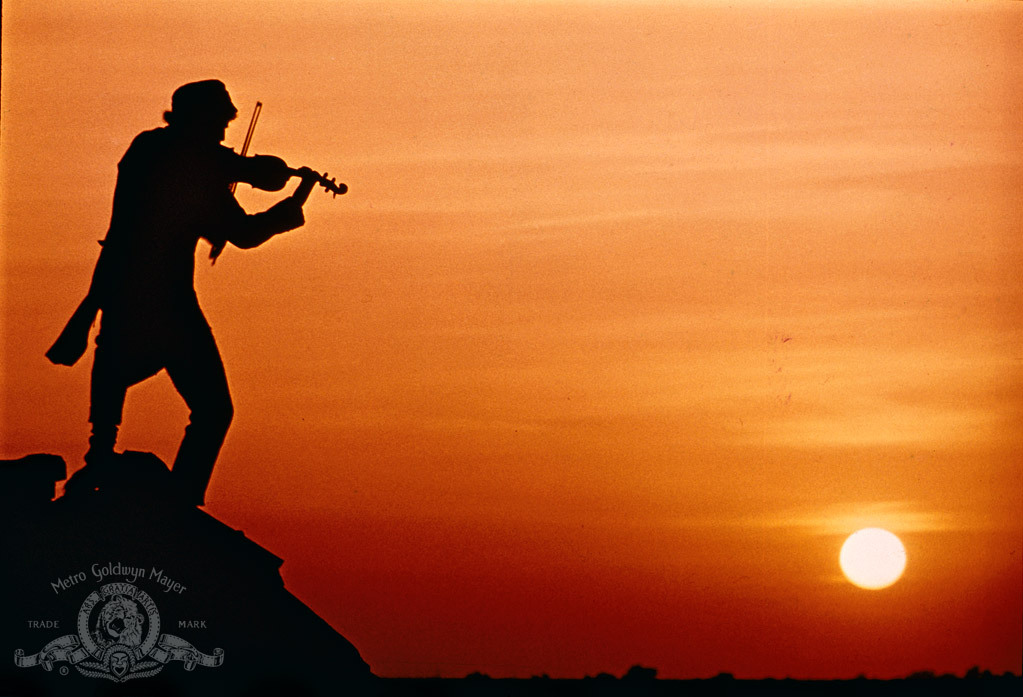
One of my favorite musicals has always been “Fiddler on the Roof.” Its theme of love conquering oppression never seems out of date and is all too relevant today. In fact when I thought about the symbolism of Fiddler I discovered that I wrote about it, not coincidentally, in 2019 during Trump’s first term.  The parallels today are even more stark.  In “Fiddler” the Jewish village of Anatevka is being forced to flee their beloved home because of Russian persecution.  We are living through such terrifying times right now in our once beautiful democracy.

Here’s what I wrote about Fiddler during Trump 1.0:  “Some of Fiddler’s insights are so good I am tempted to call it the Gospel according to Tevye. I was in a discussion the other day about praying for President Trump, and all of us present agreed we should and he certainly needs it. His erratic and delusional Messianic references to himself since then only confirm that conclusion.

One of the first things that came to my mind about praying for the President is a line from Fiddler where a Rabbi says this prayer: “God bless and keep the czar—far away from us.” On a more serious note I think one of the best parts of Fiddler is the opening where the title and its metaphor for life are explained.

“Away above my head I see the strangest sight
A fiddler on the roof who’s up there day and night
He fiddles when it rains, he fiddles when it snows
I’ve never seen him rest, yet on and on he goes

{Refrain}
What does it mean, this fiddler on the roof?
Who fiddles every night and fiddles every noon
Why should he pick so curious a place
To play his little fiddler’s tune

An unexpected breeze could blow him to the ground
Yet after every storm, I see he’s still around
Whatever each day brings, this odd outlandish man
He plays his simple tune as sweetly as he can

{Refrain}

A fiddler on the roof, a most unlikely sight
It might not mean a thing, but then again it might!”

And then Tevye says, “A fiddler on the roof. Sounds crazy, no? But here, in our little village of Anatevka, you might say every one of us is a fiddler on the roof trying to scratch out a pleasant, simple tune without breaking his neck. It isn’t easy. You may ask ‘Why do we stay up there if it’s so dangerous?’ Well, we stay because Anatevka is our home. And how do we keep our balance? That I can tell you in one word: tradition!”

Our traditions of love, compassion, hospitality and justice are under attack, but they are the solid rock and anchor we can cling to in each and every storm; and if we do we will still be around after the perils of this present age are no more.”

Today in 2025 when the prospects of anyone stopping the fascist overthrow of our democracy seem pretty slim I need to amend that last sentence.  I no longer am so confident “we will still be around” when this nightmarish storm is finally over.  I continue to hope that enough Republican members of Congress will find the courage to stop the carnage.  They are the only ones standing between us and a total dictatorship. 

Just this weekend Trump has begun ignoring court orders to stop illegal deportations.  He has also revoked pardons for some on his political enemies hit list that were issued by President Biden.  Can the Fiddler keep scratching out a simple tune or has that metaphor shifted to fiddling while our democracy burns?

And most tragic to me is that it is not just democracy burning.  Among his more than I can count acts of treason Trump has destroyed the departments and the international efforts dedicated to fighting climate change.  Mother Nature is no respecter of political ideologies.  Red and blue states are suffering the ravages of extreme weather disasters caused by climate change, and this administration simply doesn’t care.  Trump, Musk and their billionaire class only care about personal wealth and power.  But if we fail to preserve our only home in the universe nothing else is going to matter. 

So here we are, and so far there is a thread of hope symbolized by a bunch of courageous protestors who are individually and collectively fiddlers on the roof, and the question hangs in the air now as it did in Anatevka:

“A Fiddler on the roof, a most unusual sight…. It may not mean a thing, but then again it might.”

*music by Jerry Bock, lyrics by Sheldon Harnick

Searching for Calm in Crisis

I’ve been struggling a lot since January 20 to keep my sanity, and I know I’m not alone. No matter how many times I tell myself that I need to not dwell on the political mayhem I don’t seem to be able to stop myself from checking my phone or turning on the tv or radio to see what the latest chaotic news out of Washington is.

When a friend asked me recently how I was, my reply was something like this: “I’m dismayed, disgusted, depressed, disillusioned, displeased, despondent, and distressed. (Full disclosure – this was at the beginning of a zoom call and knowing I would probably be asked some version of “how are you” I had rehearsed my answer knowing that this friend would immediately understand what I was saying.

While I certainly intend no implication that my situation resembles what Jesus was dealing with in the Gospels, the need for finding peace and relief from my anxiety brought to mind two passages in Mark’s Gospel.

“In the morning, while it was still very dark, he got up and went out to a deserted place, and there he prayed.And Simon and his companions hunted for him. When they found him, they said to him, “Everyone is searching for you.” (Mark 1:35-37)

“The apostles gathered around Jesus and told him all that they had done and taught. He said to them, “Come away to a deserted place all by yourselves and rest a while.” For many were coming and going, and they had no leisure even to eat. And they went away in the boat to a deserted place by themselves. Now many saw them going and recognized them, and they hurried there on foot from all the towns and arrived ahead of them. As he went ashore, he saw a great crowd, and he had compassion for them, because they were like sheep without a shepherd, and he began to teach them many things.” (Mark 6:30-34)

Jesus can’t escape the demands on his time and healing power no matter where he goes. I bet he was glad he didn’t have a cell phone so people could text or call him 24/7 with their requests for help!

But seriously, how do mere mortals like you and me cope with a world gone mad. When there seems to be no end to the pain and suffering the Trump/Musk duo and their minions are willing to inflict on the most vulnerable people in our country and around the world, and we feel powerless to stop them, what can we do?

A friend recently shared a breath prayer from author Sarah Bessey: “Inhale: Show me who to be. Exhale: And what is mine to do.” (From “Field Notes from the Wilderness”). I find the prayer relaxing, but I still am searching for a clear answer to those questions for living my life in 2025.

Paul tells us in Romans that when we don’t know how to pray the Spirit intervenes for us with “sighs too deep for words.” But right now those sighs are too deep for me to understand.

I keep coming back to one of my go to verses in Micah 6:8 where we are told what God requires of us and number one on the list is “to do justice.” But what does that look like in a world where injustice seems to have all the power? Nothing new, of course. That’s the story of human history, but it’s not something I ever expected to have to deal with in my democratic country.

I should have known better. History is full of examples of civilizations and empires that have ceased to exist in any recognizable form. And God knows the United States in spite of many admirable qualities and achievements has an ugly underbelly of racism, genocide, and imperialism that never seems to go away. And here we are in 2025 with a would be dictator using all of those ugly sins of our fathers to try and destroy the foundations of our democracy from the most powerful position in our government.

In the Judeo-Christian Scriptures when God’s people build golden calves or pursue earthly power by putting their faith in monarchs or foreign alliances things never end well. The nation of Israel is split into two opposing countries, carried into exile, and overrun in succession by Assyrians, Babylonians, Greeks and Romans.

But in all of those biblical disasters somehow there is always a faithful remnant that survives the injustice to renew the covenant with God. If we are living in such a time I am haunted by doubts that I am brave enough to be part of such a faithful remnant. What price am I willing to pay to stand up to the forces of evil?

The good news about being in a time like this is that it is a crucible where the rubber of faith meets the road. All questions are laid bare. Do I really believe in resurrection, or in that moving verse in Romans 8 that I have quoted so often that nothing, “not powers or principalities, or life or death, nothing in all creation can separate us from the love of God?”

One of my favorite images of faith is the story of Jesus and his disciples caught in a storm out on the Sea of Galilee and these brave fishermen who make their living on the sea are scared to death. When they look around for Jesus to save them they find him sound asleep in the back of the boat. He is literally sleeping through the storm.

As much as I’d like to be that calm in this or any crisis, I am much more ore like the father in Mark 9 who brought his son to Jesus to be healed. When Jesus tells him all things are possible to those who believe the father cries out, “I believe Lord, help my unbelief!”

Or there is this example from American history. “These are the times that try men’s souls” is a quote from Thomas Paine’s “The American Crisis.” Paine wrote this during the Revolutionary War to encourage the American colonists to persevere and fight for victory. Well, we are in another American crisis 250 years later, and the question is will we persevere and keep the faith in the aspirational dreams of equality for all people written by Thomas Jefferson and signed by all the founding fathers who pledged “their lives, their fortunes and their sacred honor.”

The answers to all those questions for me and for our nation are yet to be revealed, but I want to close with a powerful statement from James Weldon Johnson that I read recently in “Sojourners” magazine. His words inspire me.

“I will not let prejudice or any of its attendant humiliations and injustices bear me down to spiritual defeat. My inner life is mine, and I shall defend and maintain its integrity against all the powers of hell.”

May it be so for me and thee.

The Trump-Musk Coup: A Call to Action for Democracy

“I don’t ever want to lose sight of how short my time is here. I don’t ever want to forget that resistance must be its own reward, since resistance at least within the lifespan of the resistors, almost always fails…” (Ta-Nehisi Coates, “We Were Eight Years in Power: An American Tragedy”)

Spoiler alert: this post may seem unfocused and fragmented because by design the Trump-Musk coup is throwing so much chaos at us all at once that it is nearly impossible to stay focused or to know how to resist. Like Will Rogers said, “I am not a member of any organized political party — I am a Democrat.” So we have once more underestimated the depth of organization and evil of the Trump led GOP – Gutless Obsolete Party.

My only hope for democracy’s survival is that the better-late-than-never legal challenges to the Musk led destruction of our government will save at least part of our constitutional democracy. I am still searching for what I personally can do to resist. I write here still believing the pen is mightier than the sword, but knowing full well that Trump’s racist, hateful sharpie with which he signs a daily barrage of unconstitutional executive orders carries more weight than my meager words.

I hate what the Musk/Trump duo is doing even as I pity both of them for the total lack of any compassion or human kindness in them. I do pray for them because they both must have led horrible lives of empty searching for love and affirmation to be so void of any empathy for their fellow human beings.

But what bothers me much, much more is the response or lack thereof by the Republican members of Congress to this obvious attack on our democracy. The January 6 insurrection failed by violent means to overthrow our government; so Trump spent the last four years planning a bloodless coup that has moved with astonishing speed in just three weeks. And the tragedy is that it would only take four of the 53 Republicans in the US Senate to have the guts to put their precious seats of power on the line to stop the parade of dangerous, incompetent cabinet appointees from being handed the keys to power. That has not happened because we are told they are afraid of being primaried and losing their seats.

The irony of course is that by failing to do their constitutional duty to provide checks and balances on an unbalanced President they are handing over any power they have. The precious jobs they sell their souls for are empty and meaningless, and if they think this coup will stop before eviscerating the role of Congress completely they simply are not paying attention.

Former Senate majority leader Mitch McConnell was interviewed last week on 60 minutes by Leslie Stahl who asked some hard ball questions. She reminded McConnell (1) of his brave speech after the January 6 insurrection when he said Trump was unfit to ever serve as President again and (2) that he soon changed his tune to say that if Trump was the Republican nominee he would support him. When Stahl asked him why he changed McConnell’s lame excuse was “Because I’m a Republican.”

No, Mitch, first and foremost you are an American who took an oath to defend the U.S. Constitution, and you and your cowardly colleagues should be impeached for failing to keep that promise. McConnell gets an extra helping of my ire because of his conspiracy with Trump to stack as many of the federal courts, from the Supremes on down, with equally spineless yes people who have granted Trump immunity and enabled him to avoid any real repercussions for his many crimes.

And it is all so unnecessary. If McConnell had shown courageous leadership after January 6 Trump would have been impeached and prevented from ever doing any further damage to our democracy. So the Gutless Obsolete Party is getting what they deserve, but at the expense of all Americans and millions of people around the world who will literally die because of the selfish, transactional motives of Trump and his acolytes who are cutting off critical life-saving aid to impoverished people all over the world.

If we were truly a Christian nation we would know that we help other people because they need help, not for whatever they might be able to do for us in return. The Good Samaritan didn’t stop to ask what was in it for him if he helped the man in the ditch. He did it because he could, and it was the right thing to do. We must demand nothing less from ourselves as the richest nation in the world.

Oligarchy Inaugurated

January 20, 2025 was a day of extreme highs and lows for me and for many of my friends. It is a day that may go down in history as the day the American experiment in democracy died. As of yesterday we are living in an oligarchy, and whether we the people can survive it hangs very much in the balance. It will depend on how much courage enough people can muster to fight for their freedom before it is too late. Our democracy is on life support, and only the citizens of this country can determine if it will live or die.

For millions of Americans January 20 was also a unique and special day in the world of sports. The first ever 12-team College Football Playoffs culminated that evening with a championship game between two historic football power house teams, Notre Dame and Ohio State. Being a life-long Ohio State fan it was a special treat for our local team to play in that game, and for 3.5 hours it was a riveting and welcome distraction from the threat unfolding in Washington D.C.

After enjoying the post-game victory celebration for Ohio State for about an hour I made the foolish mistake of checking my phone for the news before going to bed. Needless to say reading about the plethora of executive orders signed yesterday by our new Supreme Leader quickly put a damper on my spirit. It wasn’t unexpected, and I should have known better; but it was a reminder that a much more important contest is being waged than a football game. It was time to come back to reality.

Ironically yesterday was also Martin Luther King Jr. Day, and the contrast between his dream for America and the Trump oligarchy could not be starker. One is a dream of justice for all described in the amazing founding documents of our nation 248 years ago. King’s dream is also grounded in the Hebrew and Christian Scriptures which describe all people as being created in the image of God. King gave his life as Jesus did proclaiming a Gospel of love and non-violence.

 But the Trump oligarchy is one founded on capitalistic selfishness and greed. It is based on the exclusive doctrine of racism and white supremacy where strangers and neighbors in our midst live in fear of imprisonment and deportation. It is a message of imperialism and American exceptionalism where might makes right. President Trump’s promise of a new Golden Age is a barely disguised reference to the Gilded Age of robber barons which will take us back 100 years,  undoing the hard won progress on women’s rights, unionization, minimum wages, civil rights, global cooperation, the climate crisis, and humane working conditions. We have to look no further than Putin’s Russia to see what the nightmare of oligarchy brings.

Jesus directly warned us in the Sermon on the Mount that we cannot serve God and money (Matthew 6:24), and the proof that we worship the latter in this country was blatantly obvious as the richest men in the world were given the seats of highest honor at Trump’s inauguration. Today I am overwhelmed with feelings of anger, fear, and depression. I feel helpless to know how to combat the evil on full display in the White House. But tomorrow or one day in the future I will find a way to join the 50% of my fellow Americans who did not vote for oligarchy and together with God’s help we will find a way to turn this nightmare into a brighter, stronger, and more just democracy than ever before. I may not live to see that day, but in God’s due time I do believe that “justice will roll down like waters, and righteousness like an ever-flowing stream.” (Amos 5:24)

Post Election Grief and Hope

I had a hard time dragging myself out of bed today as my attempts to deny what happened on Election Day increasingly fail. An old Peter and Gorden song written by John Lennon and Paul McCartney has been playing in my head since Wednesday morning:

“Please lock me away
And don’t allow the day
Here inside where I hide
With my loneliness

I don’t care what they say
I won’t stay in a world without love

Birds sing out of tune
And rain clouds hide the moon
I’m okay, here I’ll stay
With my loneliness

I don’t care what they say
I won’t stay in a world without love.”

That’s how much of me feels today, and I appreciate all the posts from friends that have affirmed the need to take time for self-care and grief. I’m still functioning, even though I feel like a zombie much of the time, going through the motions of life without much energy.

I don’t know how long this grief will last. It is what it is, and it is important to both embrace it and share it with others who need to know we are not in this mess alone.

In due time the sun will shine again. The birds will sing in tune once more, and together we will create communities of hope and love that can sustain resistance and defiance of a world without love.

Who Do You Say You Are? Reflections on Identity and Life’s Challenges

“I hope for nothing. I fear nothing. I am free.” Nikos Kazantzakis’ epitaph.

Those words from the Greek Author and philosopher, Nikos Kazantzakis, have both inspired and haunted me since I was first introduced to them as a twenty-something seminary student 53 years ago. Kazantzakis, most famous for his novel, “Zorba the Greek,” wrote many volumes full of such deep and baffling sayings. Many of them have stuck with me my entire adult life, and I was reminded of again of them when my wife and I had a chance to visit Crete on a cruise to several Greek Islands last spring. Crete is both the birthplace of Kazantzakis and where he is buried.

 The epitaph in particular has been on my mind recently as my awful, terrible, no good, horrible summer of 2024 has continued right into the fall. [Please read my posts from August 4th and 12th if you want all the details.]. Quite frankly I do know that my little problems the last 4 months can’t hold a candle to hurricane destruction, people living in war zones, people starving from famine and climate change, people suffering from chronic pain, grief, persecution, broken relationships, addiction, homelessness, and so many more. Is it possible for any of us to truly hope for nothing and fear nothing?

My most recent personal challenge is undergoing chemotherapy for a rare form of lymphoma in my blood. I’ve known this day was coming sooner or later since my oncologist has been tracking the slow increase of a monoclonal glutamate in my blood for over a decade. I was personally hoping for later, like much later. But of course this was the great summer of my discontent, and what better time for my IgM antibodies to set off a siren alerting my doctor that something was wrong. This alarm was as loud as our home security system when I accidentally set if off. When the IgM jumped from around 2000 in January to 6500 in July it was such a loud warning that even my denial mechanisms were overpowered.

Technically I have been a “cancer patient” for about 13 years now because I was diagnosed with a mild prostate cancer in 2011. But that cancer has never needed any kind of treatment. Being told I needed to start getting chemotherapy ASAP for this lymphoma was a whole different ball game. One of my first challenges after this diagnosis was a debate within about how I wanted to think about myself going forward. Naming something helps give us some agency over it.

I knew I didn’t want to think of myself as a “cancer patient” because I am so much more than any diagnosis or label or title can convey. We are complex and complicated beings who defy narrow definitions of ourselves. In other words, I have cancer; it doesn’t have me. But knowing what I didn’t want to identify as didn’t answer the harder question of finding a name for this new, added dimension of my being. I toyed with “victor” (maybe too ambiguous depending on how one defines what victory even looks like. Jesus certainly didn’t look like a victor on the cross, but how our ideas of victory change on Easter morning! Don’t like “survivor” either. I want more from life than just surviving. As an aside, it has taken me 6 weeks or so to reach sporadic bouts of peace where I can live into the words above. In fact I hadn’t been able to express those thoughts and feelings like this until I started writing them. One of the many reasons writing is so therapeutic for me.

At those many other times when I don’t feel good at all about my new blood brother, I have caught myself recalling the title of a 1995 movie, “Dead Man Walking.” As time goes on I have had fewer of those DMW moments and more of the positive ones. After writing this, I’m pretty sure that ratio will continue to improve. Because as I wrote this post I realized that I have a simple and maybe fun way to embrace and integrate my cancer into my “Stevenness.” You see, my cancer has a pretty cool name. It’s Waldenstrom, named after a 20th Swedish Doctor who first described it. But Waldenstrom is a very heavy handle for my little cancer. It sounds like a cousin to Frankenstein. So I have decided to christen my cancer with the nickname, “Waldy,” and that seems like a name I get arms around.

One final thought (or two): Throughout this naming/identity dialogue with myself there was a biblical scene that kept coming to my mind. All three synoptic Gospels (Matt. 16:15, Mark 8:29, Luke 9:20) recount the time Jesus gave his disciples a pop quiz. Like all good teachers Jesus starts with a safe, impersonal question. He asks, “Who do people say that I am?” After the disciples respond with several Hebrew heroes from the past, Jesus stops them and asks the zinger: “and who do you say that I am?’ Jesus went from preaching to meddling in a hurry.

Simon Peter as usual jumps in with the answer: “You are the Christ, the Messiah.” Peter knows the right words, he just doesn’t yet understand what those words really mean or will mean to him. Far too many of us today know “who” Jesus is, but that’s only half the equation. It’s one thing to answer the catechism, or recite the Apostles’ Creed, but quite another to know what those words require of us who claim the identity of Jesus’ followers.

It occurs to me that the unspoken question that Jesus leaves hanging in the air for his disciples to discover for themselves is this: “Who do You say that you are?” Have you wrestled with that question recently? Who do you identify with/as? What name do you give to the totality of the amazing God-created being you are? We humans are more than the sum of our parts. Be gentle with your being. But remember to ask yourself occasionally: “Who do You say that you are?”

The answer to that question is never final; it is dynamic and ever-changing. But the closer we get to an answer we can live with, the closer we are to fearing nothing—not even my new friend Waldy or whatever other demons with which we have wrestle.