A Church Divided

A good friend of mine is having a hard time understanding the struggles within the United Methodist Church about LGBT rights. In particular he asked me great questions about how the church can change its position on homosexuality when there are specific references in the Bible and in the writings of Methodist founder John Wesley that condemn any non-hetero sexual orientations. I know there are many other people of faith who are wrestling with the same questions so what follows is my best attempt to explain my position on this important issue.

The sexuality debate has been going on in the United Methodist Church for at least 40 years. I don’t remember what precipitated the debate originally but I assume it was in response to the national increase in awareness about LGBT issues that arose after the Stonewall riots in New York in 1969. I assume the gay rights movement was also a natural outgrowth of the other movements for a more inclusive society — civil rights, women’s rights, etc.

The United Methodist position on homosexuality has never been clear cut. The compromise wording in the UMC Book of Discipline and our Social Principles has said for years that gays are persons “of sacred worth” but that the expression of their sexuality is “incompatible with Christian teaching.” The reason for that seemingly contradictory language is that the General Conference has not had a clear cut majority opinion on this issue for 40 years. The language adopted and maintained all these years is always approved by the slimmest of margins. The last General Conference was so divided by this issue that voting on it was postponed and a special commission was appointed to develop a proposal on “a Way Forward.” That commission is due to report to a special General Conference in 2019. Reports out of that commission and the response of the conservative/evangelical part of the church seem to indicate we could be heading toward a split in the denomination. That is not unprecedented. The Methodist church split into a north and south church over the issue of slavery in the 1840’s. That split continued for nearly 100 years until the two reunited in 1939.

Another source of the theological divisions within the UMC stems from the merger in 1968 with the Evangelical United Brethren Church, a more conservative group than the former Methodist church. A leading pastor in the evangelical branch of the UMC recently blamed our divisions on liberal seminaries that expose students to new ideas that change their beliefs from when they entered seminary. My question is why bother going to seminary or any educational institution if we are going to come out unchanged from the way we went in? Faith needs to be tested and challenged to have any depth. That same pastor praised churches that defied the Discipline’s former requirement that UM churches use only UM curriculum in Sunday school and instead used the very conservative David C. Cook material. My question to him is why is that kind of “disobedience” OK, but challenging other rules of the church is not?

Part of this strong difference of opinions is because we are not a doctrinal church but a democratic one. The Discipline and Social Principles of the UMC are revised every four years by a world-wide General Conference, the only body that can speak for the denomination. We have no pope or super bishop who can speak for the church, and that’s a good thing. The down side is we get into emotional debates that stem from some basic differences in the understanding and interpretation of Scripture. The more conservative folks want to interpret Scripture literally and point to a few verses in Leviticus and Paul that condemn homosexuality. The more progressive or liberal interpreters of Scripture choose to emphasize instead a responsibility of pastors and laity to interpret Scripture in light of its historical context.

Wesley himself in his quadrilateral taught that we need to use our God-given abilities to reason and apply our experience to the interpretation of Scripture. The bottom line for me in the sexuality debate is that neither Wesley nor Paul nor the author of Leviticus had the scientific understanding we have today of why some people have a homosexual identity. For Wesley and the biblical authors homosexuality was seen as a choice people made and could therefore be changed, but we today know that is not the case. Some people are simply born with that sexual orientation and to condemn them or exclude them would be like judging people who are born left-handed or blue-eyed or dark-skinned. Progressive/liberal theologians assume we all have the responsibility to interpret the great commandment to love our neighbors and to not let ancient authors with their limited and misinformed opinions dictate who is acceptable to God and who isn’t.

I know it’s hard to have life-long beliefs challenged, but I’m convinced on this issue the people who taught us to fear and judge gays were simply wrong. They were not bad people, just doing the best they could with the values and ideas they had learned from their elders. It’s like the issue of race. I grew up in an all-white community where we claimed we weren’t “prejudiced.” I was naïve enough to believe blacks simply chose not to live in our town. My life experience was so limited that it wasn’t until I went to Ohio State University that I ever had any personal contact with any non-white person. I have since learned that my hometown missed out on a chance to be home to a huge Honda Plant because the mayor at the time was a WWII vet who hated Japanese. And just this fall I learned there once was a KKK chapter in my “unprejudiced” hometown, and one of my great uncles was one of the leaders of that racist group.

The church has been wrong on many social justice issues throughout the centuries. Slavery was justified by the Bible, oppression of women too, and those wrongs were only gradually corrected after years of struggle and resistance from those who benefited from the status quo. Inclusion of LGBT persons as full members of the church is just the latest chapter in the long march toward the loving kingdom God has ordained.

On a very personal note I have worked with and known excellent gay UM pastors literally my entire ministry. For most of those 48 years those pastors had to hide a very critical part of who they are from the church and even from family and friends. One clergy friend didn’t dare confide even in me about his sexual orientation for 15 years because of the stigma and fear. I know of pastors who committed suicide because of the judgment they felt from the church they loved and wanted to serve. Some of the leaders of the movement for LGBT equality are doing so because their own lives and well-being are at stake. Others of us simply believe our God of love wants justice and inclusion for all people.

Faithful people challenging injustice goes back in history as far as Moses responding to God’s call to liberate the Hebrews from slavery. The Hebrew prophets, John the Baptist, Jesus and Paul all challenged injustice and oppression at great risks to themselves. John Wesley himself defied the Church of England to take the Gospel to those who were excluded by the church. Wesley stressed the need for a complete Gospel that includes both personal salvation and Social Holiness. Social Holiness does not mean enforcing values on others that don’t stand up to the test of human reason and knowledge but is working for justice for anyone oppressed because of gender, race, social class or sexual orientation.

I am fearful of what this struggle is going to mean for our church, but faithfulness to what I believe is God’s will is more important than institutional preservation. The debate over homosexuality has consumed vast sums of time and energy and distracted the church from doing much needed mission and evangelism for far too long. If we can’t agree on a position on this issue it may very well be time to separate so we can be about the work of other important issues like sharing a truly grace-filled Gospel and being faithful stewards of God’s creation by saving the planet from climate change or nuclear holocaust.

Bump Stocks and Log in My Eye

Some of my readers have probably been pleased that I have been less “political” in what I’ve posted in recent weeks. There are several reasons for that, but one of them is not that I am less concerned about the state of our nation and world. I became a part-time pastor again this summer and that has affected my writing in a couple of ways. Given more pastoral duties means less time for other things, including writing. The writing I have done has been primarily sermons and prayers. Secondly with the privilege of being a pastor of a congregation comes an expectation to handle political matters tactfully and in a non-partisan way.

I did not realize how much I felt constrained by that non-partisan expectation until I retired and wasn’t serving a congregation. I felt liberated to speak my mind more freely, and now that I am back in a formal relationship with a congregation that freedom is one of the things I miss most. As a student of persuasive communication I know full well that effective communication requires a meeting of minds, a shared understanding and respect for one another’s ideas and feelings. That’s a quality of community that is sorely lacking in our bitterly divided nation and world.

No meaningful communication occurs across the chasm of ideological extremes where we view others as enemies (political or foreign) instead of as fellow humans doing the best we can to make sense of the lives we have been given and the world we inhabit. So my philosophy of ministry is one of trying to understand what people believe and why they hold those beliefs so I can then facilitate a process of faith development that moves all of us toward the peaceable kingdom God covets for us and all creation.

I am not always successful at being empathetic and understanding, and as one who is very uncomfortable with conflict I fear I have been too timid during most of my ministry to share my true thoughts and feelings because I feared that to do so would be unpopular. I greatly admire my colleagues who have the courage and faith to speak prophetically about controversial issues.

I recently saw a list of the 15 most popular hymns of all time. I don’t know how the list was compiled or how scientifically valid the methodology was for surveying people, but the list was pretty much what I expected it would be: “Amazing Grace,” “How Great Thou Art,” “In the Garden,” “Great is Thy Faithfulness,” “It is Well With My Soul” etc. All 15 hymns on the list focused on personal salvation and holiness. What was lacking was the other half of the Gospel, what John Wesley called “Social Holiness.”

I imagine that such a list might have inspired the prophet Amos to proclaim the lines that are part of the lectionary for this week: “Take away from me the noise of your songs; I will not listen to the melody of your harps. But let justice roll down like waters, and righteousness like an overflowing stream.” (Amos 5:23-24) I don’t know how long Amos would have lasted in a church pulpit but I do believe that we dare not ignore the biblical imperative to be agents of social justice.

I cringed this week when I saw a Facebook meme that hit much too close to home. To paraphrase it said, “Don’t be nice. Jesus wasn’t crucified for being a nice guy.” I often encouraged my preaching students to heed the advice of Ephesians 4:15 that tells us to “speak the truth in love.” Looking back on my career as both a preacher and teacher I fear that I have erred on the side of love in that equation and sugar-coated or omitted hard words of truth. As a pastor I often criticized myself for sacrificing prophetic truth in exchange for a parsonage and a pension.

Ironically it has almost always been the case that when I have dared to speak my true understanding of God’s will about controversial issues of social justice someone that I least expected to agree or appreciate those views has let me know they did. For example in today’s news there is not much that is more divisive than people’s views on gun violence and the second amendment. It has become a partisan political issue when it should be seen as a basic human problem to be solved. But most politicians are afraid of the NRA and dependent on financial support from the gun lobby. So even though a majority of Americans are in favor of stricter gun legislation a majority of Senators and Representatives are unwilling to risk their office and its perks to oppose a vocal and powerful minority.
This morning I read an article in the Columbus Dispatch that reported that Congress has passed the buck on dealing with the sale of “bump stocks” that transform semi-automatic rifles into automatic rifles/machine guns (which are illegal) to the Bureau of Alcohol, Tobacco, Firearms and Explosives instead of acting on it themselves.

Immediately after the massacre in Las Vegas there was widespread agreement including even the NRA that those devices needed to be banned or “restricted.” But as the news cycle moved on to sex scandals and other mass killings, the mood shifted, the NRA changed its mind, and Congress lost its political will to act.
After reading that article I wrote the following note to my two Senators and my Congressional Representative: “I was appalled to read in this morning’s Columbus Dispatch that Congress has done nothing about bump stocks after the Las Vegas massacre. Stop passing the buck and do something to stop this insanity of gun violence. It is way past time for someone to have the courage to stand up to the NRA. We need to reinstate the ban on assault weapons but in the meantime banning devices whose sole purpose is to circumvent the law should be a no-brainer.”

I also posted that message on Facebook with some fear and trepidation that it would be too “political” for a preacher. But again I was pleasantly surprised at the number of “likes” and even some “loves” I got in response. Some of those positive responses were from people I didn’t expect would agree with me. I would never have known had I not had the courage to say what I was feeling.

I wrote the above part of this post in the wee hours of the morning, and then when I went to bed and couldn’t get to sleep I realized that I had been guilty of seeing the “speck in my legislators’ eyes and ignoring the log in my own” to paraphrase Jesus in Matthew 7:5 and Luke 6:42. As is often the case I am often most judgmental about things in others that I don’t like about myself. It’s easy to criticize political leaders for not living up to the profiles in courage standards I expect of them, but much harder to admit I do the same thing. I don’t always say what I truly believe, and I certainly don’t always live up to the values I hold dear. Peer pressure, societal or professional expectations and other human weaknesses get in the way of speaking the truth in love. If I am honestly and fairly judged by my ideal goal of living up to the profound standards of Micah to “do justice, love kindness, and walk humbly with God” I am in deep trouble.

When I shared my late night insight about being guilty of living out of integrity with my values with my dear wife this morning Diana cut to the chase as she does so well. She said, “That’s true of every job. We all have to make compromises and concessions to employers who control our livelihood.” If those compromises create too much cognitive dissonance or inner turmoil with our consciences we can say “no” to that employer and choose a different path. Those are very hard decisions that try our souls, and that is why we all stand in need of a generous helping of God’s grace.

Well, this blog certainly took an unexpected turn. It was good for my own introspection. Thanks for listening. If it was helpful for you too that’s a bonus.

A World Communion Prayer

Jesus prayed that we might be one.
One in spirit
One in mission
In union and communion with each other and with You.
Today, God, we confess fumblings and failures in accomplishing unity, as we set aside yet another day to remind ourselves of the task.
On this World Communion Sunday, give us eyes to recognize your reflection in the eyes of Christians everywhere.
Give us a mind to accept and celebrate our differences.
Give us a heart big enough to love your children everywhere.
We thank you for setting a table with space enough for us all. (Africana Worship Book, Year B, (Discipleship Resources, 2007)

This year world communion coincides with the Jewish day of atonement, Yom Kippur. With our Jewish sisters and brothers we all stand in need of forgiveness and reconciliation with you Lord and with our neighbors. We give thanks that our sins have been forgiven by the sacrificial love of Christ, but please don’t let us grow complacent by taking your grace for granted. The good news of the Gospel must be shared to keep it alive and growing.

As we feel the unity of our spirits with Christians today from Myanmar to Minnesota, from Boston to Bolivia, let us renew our commitment to living lives worthy of Christ. Forgive us when we fail to love you with all our hearts and minds. Our broken world has never needed the Holy Spirit’s healing more. We pray for a new birth of human unity created in the image of Christ. Make us so at one with Christ and with you that we will be Christ for those who are sick, lonely, or grieving. For those who suffer hunger and thirst and those who are starving for the bread of the world offered to all who hear Christ’s voice and turn to him.

Make us instruments of your love, O God. May the way we live our lives each day be a witness to the unity of humankind we celebrate this day. May we grow in love and service to Christ who taught us to pray this prayer…… .

Pastoral Prayer, September 17


God of grace and righteousness, again this Lord’s Day we pause to remind ourselves of your presence – to thank you for the blessings of life and to ask your continued guidance and comfort when the road of life is bumpy and dark. We lift up those named and unnamed here today for a special portion of your love, and we ask for the wisdom and faith to approach each day of life with a healthy balance of faith and humility.

Help us not to be so enthralled by our own good fortune that we overlook the pain of our sisters and brothers near and far. And likewise when the cares of the world threaten to overshadow our hope, reassure us that we never walk alone. For as the scriptures tell us, even when we don’t know how to pray, your spirit intercedes for us with sighs to deep for words. In the thrill of victory and the agony of defeat – grant us a balanced perspective on life that anchors our lives firmly in you as the ground of our being; so that we may offer a safe harbor for the lost who are seeking the way and the truth and the life that we find in Christ Jesus. Remind us again O God of our mission and purpose for living.

As we pray for those without power in Florida remind us of your eternal power that never fails. As we pray for those left homeless by storms or by war and violence, we give you thanks for warm, safe homes, for all the physical comforts we too often take for granted. Give us grateful and generous hearts to receive your blessings, Lord, and also to share from our abundance and good fortune with those with less or without.

As we pray for people without clean water and food, remind us that as much as we need physical comforts, O God, there’s a deeper hunger in our souls that brings us out of our homes to your house each Sabbath. We need to feel the connection of belonging, the fellowship, the corporate worship that nourishes us more than individual devotion and prayer can do.

So we ask your blessing on our worship this day as we pray for ourselves and others, for our nation and world. Bless our acts of praise. Give us ears to hear your special word of comfort or challenge you have for each of us; so that when we return to our homes we do so stronger in our devotion and discipleship to serve you wherever you call us to be in the coming week.

For it is in Christ’s name we pray, for his sake we witness to our faith in words and actions. Send your holy spirit upon us as we celebrate our belonging to you by joining our hearts and voices in the Lord’s Prayer.

Unexpected Inspiration

My wife and I are currently on vacation in Puerto Vallarta, Mexico. The first day we were here I was very tired and my chronic back pain was pushing 10 on the pain scale after a full day of travel with luggage for a week’s stay and making a long walk to the beach from our hotel. The cares and worries of the world had also made the trip with me and I was having one of those “is it really worth it?” moments. I sat on the beach while my wife and her son and two of our grandchildren played in the ocean. I was jealous that my aging body was simply too tired and achy to join the fun.

And then my pity party was interrupted by God’s handiwork in the gorgeous sunset above. I took several pictures because every time I thought it was at the peak of its glory it got even more beautiful. I was inspired in spite of myself. In the brilliant oranges and reds, smack dab in the midst of my pain and tiredness, I was reminded again to look for the helpers and the signs of goodness and truth in a world that has taken leave of its senses. It was like God was saying “I’m still in charge, contrary to all the evidence from Barcelona to Sierra Leone.” Your mission, should you choose to accept it has not changed. Treat others with love and kindness – especially those who are less privileged and different – like all the workers taking care of us in our lovely resort, strangers on planes, family members feeling the stress of back to school and world fears too. It’s still true that only perfect love can cast out fear. (I John 4:18)”

There in the gorgeous sky over the Pacific a couple thousand miles from home God reminded me that eternal truths do not change with any personal or national circumstances. As a disciple of Jesus imitation of Christ in all I do is my job here or wherever I’m privileged to be. I can’t do that if I’m turned in upon myself. I know the truth, Lord; help me live it day by day.

Where’s the Peace?

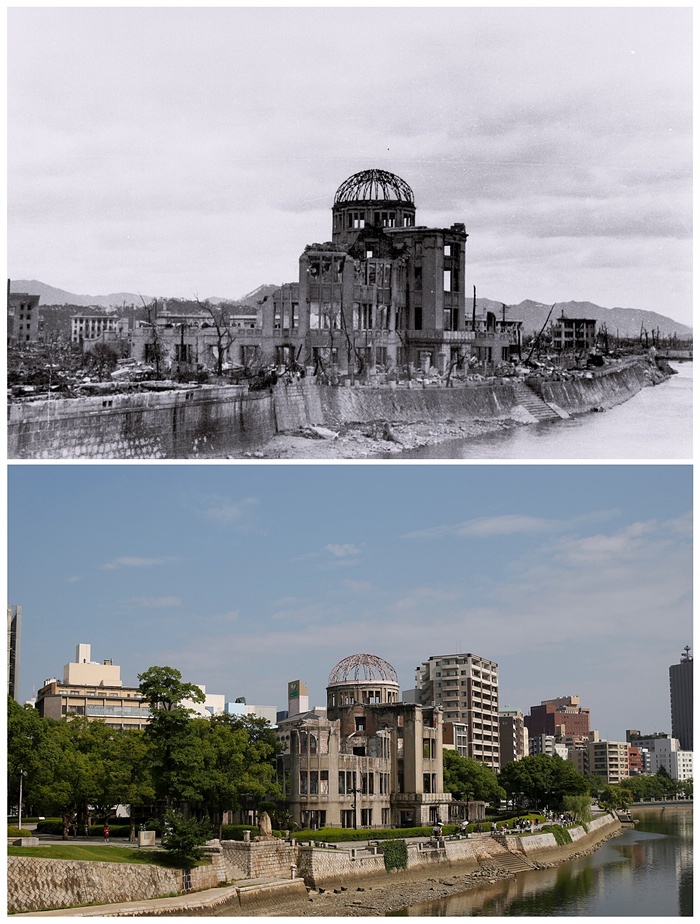
In this frightening week that is the anniversary of the bombings at Hiroshima and Nagasaki when we seem to be closer to nuclear war than any time since the Cuban Missile Crisis I feel a need to pray without ceasing for peace and also to share some thoughts. As I was wondering what to say I reread the introduction to my book, “Building Peace from the Inside Out.” What follows are excerpts from that introduction that seem unfortunately as relevant as they were when I wrote them 6 years ago.

“The Judeo-Christian scriptures have been promising a Messiah who brings peace to the world for 3600 years. Even for the US Post Office three and a-half centuries is pretty slow delivery service. In the New Testament (John 14-16), Jesus’ farewell discourse, describing a kind of peace the world cannot give, promises no less than four times that whatever we ask in Jesus’ name, God will provide. So where’s the peace? What’s the hold up? Maybe the problem is not on the shipping end, but on the receiving end? When we don’t get the peace we request is it because we don’t really mean what we ask for? Or is something getting in the way of our receiving what we say we want?
Luke 1:79 says that the long-awaited Messiah will “guide our feet into the way of peace.” Notice it says “into” the way of peace. It doesn’t say the Messiah will hold our hand and make sure we stay on the path. The Messiah gets us to the entrance ramp and trusts us to stay on course from there. We’re given a good map and expected to be able to follow it.

But really, shouldn’t God have known better? We humans don’t have the best track record when it comes to following directions. Would it have taken the Hebrews 40 years to travel the 200 or 300 miles from Egypt to Palestine if they were good at following directions? Even while Moses was up on the mountain getting the directions, the people he’s supposed to be leading are down in the valley building a golden calf to worship and fomenting a rebellion against Moses and God. Do they really want to get to the Promised Land? Or are they more concerned with their own comfort and being in control of where they’re going and how to get there? Peace seekers have to stay the course in good times and bad. When we start looking for short cuts instead of following the path that leads to peace how often do we end up far from our goal?

Luke 1:68-79 lays out very succinctly what the map to peace looks like. It mentions mercy twice, service, holiness, righteousness, knowledge, forgiveness, and light. There’s nothing in this passage about cruise missiles or Weapons of Mass Destruction–nothing about peace through domination or threats of Mutually Assured Destruction. What are we missing here? If we look around in the Judeo-Christian scriptures a little further we can find that Luke’s omission of peace through strength isn’t an oversight. Isaiah and Micah both specifically talk about beating swords into plowshares and spears into pruning hooks and not learning war anymore. If that’s not clear enough, Psalm 20 says that those who put their pride in horses and chariots will collapse and fall. Jesus restores the ear of the Roman servant that Peter has lopped off in the Garden of Gethsemane and spells it out very clearly – “Put away your sword. Those who live by the sword will die by the sword.” (Matthew 26:51-52)

And Jesus’ followers heed that advice so well they have given us the Crusades, the Inquisition, the Holocaust and assorted examples of genocide on nearly every continent. Based on results over several thousand years of history, it seems we don’t really want peace all that much.

So what’s the secret? It’s not rocket science. Sages of every tradition teach us the same values: mercy, forgiveness, righteousness, service. The Hebrew prophet Micah sums it up very succinctly when he asks and answers the basic question of all peace seekers and peace makers.
“He has told you, O mortal, what is good; and what does the Lord require of you but to do justice, and to love kindness, and to walk humbly with your God?” (Micah 6:8)

The Messiah’s mission is to show us in stories and actions what that means. Jesus says it and does it over and over again – treating the least and lost as worthy of God’s love and healing. In the Sermon on the Mount (Mt. 5-7) Jesus directly challenges the old ways that have failed repeatedly to bring peace. He says “you have heard it said an eye for an eye and a tooth for a tooth, but I say to you, love your enemies, pray for those who persecute you, turn the other cheek.” “Blessed are the Meek, for they shall inherit the earth.” The Meek? Maybe we don’t want peace that badly if we have to be wimps to get it.

Who are the role models and heroes and heroines we look up to most in our society? Why does the taller candidate win almost every presidential election in US History? We still put our trust in swords and horses and chariots and new impersonal technological ways to deliver “fire and fury” even though it’s obvious in generation after generation how ineffective and misdirected that route to “peace” is.

More subtly – in the Judeo-Christian tradition, look at how God’s peacemaking Messiah gets delivered to us – born in a barn – a helpless little baby. “A little child shall lead them.” Get it? We keep looking for Rambo and God sends us Gandhi. We don’t get what we say we want because it doesn’t come packaged the way we think it should look. If we want real peace, the gifts we need to cherish and open first are those wrapped in justice, mercy, humility, forgiveness, and love.

Personally, I am learning after decades of frustration trying to create peace and persuade or coerce others to live peaceful lives that what Gandhi said is so true, “there is no way to peace. Peace is the way.”
I have spent most of my adult life trying to do peace, only to realize that peace is not a matter of doing, but one of being. One cannot think or reason his or her way to peace but can only accept the natural state of peace by trusting the basic goodness of Being itself and living in harmony and trust with the universe. It may sound trite, but peace can only be built one relationship at a time, from the heart, with non-judgmental, unconditional love for oneself and every other being.

Justice, mercy, kindness, love, humility–all of those marvelous words tell us about keys to inner and outer peace. But just hearing about peace isn’t enough. Stories show us what peace looks and feels like, and, by contrast, what peace isn’t. My son teases me that he learned a lot of valuable lessons about sports and life from me – by seeing my mistakes and learning how NOT to do things. Learning by negative example is a wonderful teacher. We often learn more from our mistakes and those of others than we do from things that go well. When success comes too easily we have no reason to reflect on why things worked.

A mentor of mine taught me a great lesson several years ago. He said that there are only three simple questions we need to ask about why something happened. Whether we think an outcome is good or bad, playing the blame game does not help us learn and move forward. The three questions are:
“What worked?” “What didn’t work?” “What next?”

Those three simple questions help me find peace in difficult situations. They help me ground and center. They remind me I can never create positive change if I am stuck in being a victim to a past I cannot change. Those three questions help me to be more objective in analyzing and evaluating of situations and choices.

We know the things that make for peace. Pray that we relearn them quickly and avoid the endless and futile pursuit of peace through force and violence. They don’t work. It’s time to ask “What Next?”

Prayer for Independence Day

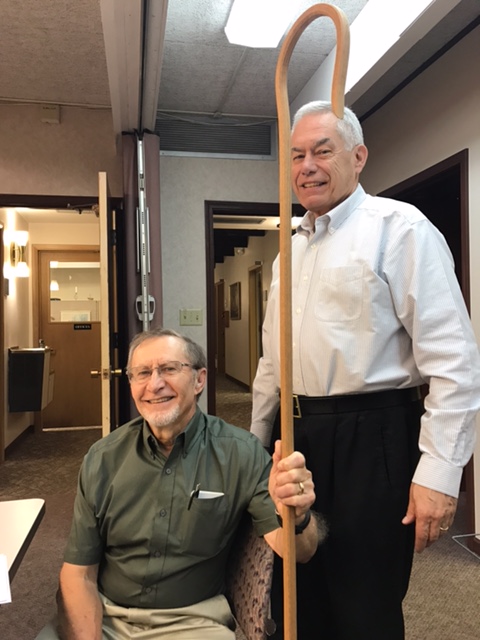
Last week I had the honor of joining the staff of Northwest United Methodist Church as a part-time Pastor of Congregational Care. In a bittersweet moment my good friend Tom Slack, who is retiring from the Northwest staff after 11 very good years of ministry, presented me with a shepherd’s staff that he received when he came to Northwest. We will all miss Tom and his wit and wisdom and caring ways. I am humbled to pick up some of the Slack (pun intended) created by Tom’s departure but know I cannot begin to fill his shoes.

Part of my responsibility will be to lead congregational prayer at Sunday worship; so I will be sharing those prayers from time to time here in my blog beginning with this one for Sunday, July 2. Please pray for Tom and me and our congregation during this time of transition.

O Giver of true freedom and joy, today we celebrate the brave founders of our country who 241 years ago pledged “their lives, their fortunes and their sacred honor” to declare the freedoms we continue to cherish and enjoy today. We give thanks for their courage and vision and for all those who have worked and sacrificed to preserve and perfect those freedoms ever since.

Our prayer today is that your spirit will come like a mighty wind to heal our divided nation and world. Give us hearts of compassion and ears willing to hear the opinions of others that differ from ours. Teach us to disagree without being disagreeable. Bless those who have taken upon themselves the heavy burden of governing in these difficult times.

We pray for peace and justice for all of your children. For those who suffer from addiction, depression, chronic pain, grief, oppression and war. Fill our hearts with the love of Christ and drive out the fear that makes us more concerned about our own freedom than the needs of our neighbors. Teach us again that freedom is not a zero sum game. In your eternal love, O God, remind us that there is a wideness in your mercy that provides healing and liberation for all of creation. When any of your children suffer, we all suffer together, and unless there is liberty and justice for all, no one is truly free.

The goal of spiritual freedom for all is a big dream and we are tempted to despair that we will ever achieve it. But then you remind us that with you all things are possible. Renew and refresh our faith and willingness to dream big dreams as we again celebrate Independence Day.

In the words of Sister Ruth Fox, we too pray that you “O God will bless us with anger at injustice, oppression, abuse, and exploitation of people, so that we will work for justice, equality, and peace.
May God bless us with tears to shed for those who suffer from pain, rejection, starvation and war, so that we will reach out our hands to comfort them and to change their pain to joy.

May God bless us with the foolishness to think we can make a difference in this world, so that we will do the things which others tell us cannot be done.

Hear our prayers O God, in the name of the young and fearless prophet Jesus Christ, Amen.

A Field of Dreams (Father’s Day Sermon), Deuteronomy 4:6-9

Back when my body would allow it, I used to play a lot of softball. I love that game in part because there’s no clock or time limit, or as Yogi Berra said, “It ain’t over till it’s over.” I learned that and another important life lesson in a softball game many years ago. Our team was down by 4 runs coming up for our last at bat. Just so you know, our team had never come back from 4 runs down ever in the history of the franchise. I was the 8th batter due up in that final inning; so I was not optimistic that I would get another at bat.

But, a few hits and a couple of errors by the other team and I suddenly realized I might be called on to hit. That was good, but the bad news was that because I didn’t expect our team to make a comeback, I hadn’t been paying as close attention to the score as I should have. Lo and behold, with two outs the batter just before me hit a triple and drove in a run and I was due up to bat. I knew the runner on 3rd base represented either the tying or the winning run, but I wasn’t sure which. Of course I could have asked the umpire or our coach, but I was too embarrassed to admit I didn’t know the score.

And it made a big difference. If the score were already tied and I made the 3rd out – we would just go to extra innings. But if we were still down a run and I messed up, the game would be over; and my out would result in our losing the game. (Just for the record – I got the game winning hit–one of the few highlights in my non-athletic career.) But the life lesson learned was more important – be sure you know the score, because you never know when you may be called on to step up to the plate with the game on the line.

Our text today from Deuteronomy is about making sure our children know the score in the game of life. In this passage Moses is like a coach giving his team final instructions because they are about to play a big away game when they cross the Jordan into the Promised Land. He tells them the most important thing is loving God always with their whole being and warns them that the prosperity they are about to enter after 40 long years of wandering in the desert is not just flowing with milk and honey. There is also the danger that when life is good for them they will forget that it is God who has delivered them and brought them to this good place. When we are going through rough times like a baseball team in a long losing streak we are likely to ask God to deliver us. But during the thrill of victory we may fall into the trap of thinking our success is because of our great skill and forget to give God the credit.

Moses goes on to stress the importance of teaching children about loving God and making sure future generations know the stories of God’s great acts of salvation. How do we do that? As Mebane said last week, it’s all about the fundamentals. First Moses says “Hear O Israel.” As players on God’s team we need to listen to God as our coach. If we are going to know how to play the game of life we need to learn how God wants us to live before we can pass that faith on to others. Moses says we do that with both our words and the example of our lives. He tells us we should recite God’s words to our children and talk about them when we are at home and away, which means everywhere.

Every sports team knows the importance of having home field advantage. You get to sleep in your own bed, eat normal meals, keep your regular routine in familiar surroundings and have the energy and enthusiasm of your fans supporting you during the game. Away games are much tougher. Traveling is tiring, most of us don’t rest as well in a strange place, you miss family and home cooking, schedules are different, and then of course there’s the problem of hostile fans when playing on the road. Championship teams are those that can overcome all those distractions and still play their best games away from home.

The game of faith is no different. It’s much easier to do daily devotions and prayer at home, to live our Christian values without the added temptations of a secular world bombarding us with lies about what it means to be successful. Especially away from the friendly confines of home we need to know the score, and coach Moses says we do that by loving God all the time, when we lie down at night wherever we are and when we rise up to face a new day. To win at the game of life we need to live in the assurance of God’s love when things are good and when we’re down 4 runs in the bottom of the ninth with two outs. That constant love is what gives us the peace that passes understanding to calmly step up to the plate and be ready for any curve ball life throws us.

How do we keep the love of God foremost in our minds and hearts? Moses says, “Bind God’s word as a sign on your hand, fix them as an emblem on your forehead, and write them on the doorposts of your house and on your gates.” For the Hebrew people these instructions literally meant to wear small leather pouches call phylacteries that contained small scrolls with the 10 commandments and other key scriptures to constantly remind themselves of God’s word. Today that verse can mean any reminder that works for you – keeping a Bible in a visible place (and actually reading it), jewelry with Christian symbols, a fish symbol on your car, a tattoo, or an image that reminds you of God on a computer screen or iPhone, a post it on the bathroom mirror, whatever works for you.

But these symbols are just meant as reminders about how God wants us to live. They are not intended to be a way to flaunt our faith or brag about what good Christians we are. If we don’t walk the walk nothing else matters. The point is to love God, not just to talk a good game. In Matthew 23 Jesus criticizes the Scribes and Pharisees because “they do all their deeds to be seen by others; for they make their phylacteries broad and their fringes long.” Anyone can talk a good game, but results are determined on the field of play.

The key to Moses’ teaching is “to love God with all your heart, soul and might.” Please note that Love is a verb not a noun. Christian love means putting faith into action. How exactly do we show our love for God? Praising God and being grateful for our blessings is one way, but even more important is how we treat others and all of God’s creation. In his parable about separating the sheep and goats Jesus repeatedly says, “What you do to the least of these you do to me.” How we treat others and how we take care of God’s creation shows our love for God or our lack of it because God’s spirit is in every living creature and person, even the most unlovable. Also a good coach doesn’t just tell players how to play the game, he or she shows them, and that is even more true in the game of life. Someone once told me “faith is caught more than it’s taught.” When I was working on this part of the sermon I was reminded of a song from “My Fair Lady” where Eliza expresses her frustration with her boyfriend Freddie this way:

“Words, words, words!
I’m so sick of words

Don’t talk of stars, burning above
If you’re in love, show me!
Tell me no dreams, filled with desire
If you’re on fire, show me!

Here we are together in the middle of the night
Don’t talk of spring, just hold me tight
Anyone who’s ever been in love will tell you that
This is no time for a chat.”

I can just hear God looking at our world full of so much chaos and hate and disregard for creation and pleading with us, “If you’re in love, show me!”

Of course we do love God, but just as we often disappoint and hurt the people we love the most we sometimes mess up on loving God too. Ever since Adam and Eve rebellion against parental authority and our Heavenly Father’s authority seems to be built into human DNA. In one of the great baseball movies of all time, “A Field of Dreams,” Ray Kinsella rebels against his father’s passion for baseball by refusing to play catch with his dad and by berating one of his father’s heroes, Shoeless Joe Jackson. Ray said Shoeless Joe was a criminal because he was one of the Chicago White Sox players accused of throwing the 1919 World Series. Ray then moves as far away from home as he can get and has to live with the regret that his father died before he could ever tell him he was sorry. When a wise mentor asks Ray why he did that his response is “I was 17.”

Many of us have been on one or both sides of that rebellion as kids or parents. And it hurts. When young people reject the values and faith practices we’ve tried to instill in them it is very painful, and thus some of the mixed emotions holidays like Father’s Day conjure up in us. My Mom was not much of a philosopher but she liked to express the concern Moses had by saying that “Christianity is only one generation from extinction.” There’s some truth in that saying even though our biblical history teaches us that God always finds a way to raise up a faithful remnant when the majority of people turn away.

Having said that, the fear of losing basic Christian and human values is very real, especially in the state our world is in today. Instead of a field of dreams we have a field of screams in our nation’s capital and a shooting in the Columbus library! And that’s just two of a dozen or more acts of violence that have been in the news this week. Reading the morning newspaper over a cup of coffee used to be one of life’s real pleasures for me, and I still do it because I want to be an informed citizen; but it has become an increasingly depressing task. But rather than throw up our hands and accept defeat, all the terrible news in our world is just more reason we need to be sure we teach and live God’s way of love more diligently.

One danger is that we panic about where the world is headed and try to force Christian values on children or others in unloving ways. Sooner or later that strategy backfires. The text we read this morning about loving God with all our being is bookended by two verses that tell us to FEAR God. I’d like you to get a picture in your head of someone you are afraid of. Got it? Do you love that person? It’s almost impossible to love something or someone if we are fearful. There’s no room for love in our hearts when we are full of fear. Unfortunately many people get turned off on because they are taught about a judgmental God that seems more like Big Brother than a loving parent.
It seems pretty significant to me that when he was asked to pick the greatest commandment, Jesus didn’t pick either of the verses in Deuteronomy 6 that teach us to fear God, he picked the one that says, “Love the Lord your God with all your heart and all your soul and all your might.” I saw a quote from another preacher recently who said her first priority is that “my children’s first knowledge of God will be that God is a God of love.” That’s a great theology.

Father’s Day is a day for appreciation and love for fathers and father-figures, but no one is perfect; so regrets, we’ve all got a few or a lot. But here’s the good news and bad news about the Yogiism that says “It ain’t over till it’s over.” Baseball games have no clock, which means they can literally go on forever or what seems like it about the 18th inning. That’s a problem for baseball’s popularity in our fast-paced 4G world, but when it comes to the game of life extra innings are great. It means more time for reconciliation and love.

That’s what happens to Ray Kinsella when he builds a baseball field in the middle of his Iowa cornfield. He had to put up with ridicule and scorn from family and friends to follow his dream. His baseball field almost led to financial ruin, but he had the support of a loving wife and daughter who could see the dream because they too believed. Ray didn’t understand what it meant when he heard a mysterious voice say, “If you build it he will come,” but he took a leap of faith and built his field of dreams and finally discovers what it all meant in the final scene from the movie.

Ray and his family have just watched Shoeless Joe Jackson and other deceased baseball stars play a game on their field and are getting ready to retire for the night when they notice Shoeless Joe hanging around. When Ray asks him what he wants Joe nods toward a young catcher who is still removing his catching gear and says, “If you build it he will come.” Ray’s jaw drops as he recognizes his father as a young man. His dad, John, introduces himself and thanks Ray and his family for building the field. After Ray introduces his dad to the daughter-in-law and granddaughter he never got to meet the two of them are left alone on the field to talk.

John says that playing there is a dream come true (because he never made it to the big leagues as a player). Then he asks, “Is this heaven?” And Ray says, “No, it’s Iowa.” Then he asks his dad “Is there a heaven?” And John says, “Oh, yes. It’s a place where dreams come true.” Ray ponders that and looks back at his wife and daughter sitting on the porch swing and says, “Then maybe this is heaven.”

John is about to walk away toward the corn beyond left field, but Ray says, “Dad, could we have a catch?” John says, “I’d like that.” And the movie ends with the two of them playing the game of catch Ray had refused to play as a teenager.

“Heaven is the place where dreams come true.” The kingdom of heaven is that place right here and now for those who love the God of love and reconciliation with all their being. That loving God will come to us wherever we are if we build it – if we build our relationship with God that is, and if we are willing as Ray was to “Go the Distance” even when others think we’re crazy.

[Preached at Northwest UMC, Columbus, Ohio, June 18, 2017]

Palace Intrigue: Samuel and James Comey

I am serving as a Bible Storyteller tonight for our Vacation Bible School and the story for tonight is the anointing of David as King of Israel (I Samuel 16:1-12). As I prepared this week to share that ancient story the news was all about the “he said, she said” back and forth drama between former FBI director James Comey and President Trump. I couldn’t help but think about the parallels between the two narratives. (Fear not, this blog is totally separate from telling the story at VBS. I will not make any partisan political points with the kids at church.)

The biblical story begins when God asks Samuel, the last of the judges who ruled Israel before they, going against God’s advice, became a monarchy, to go to Bethlehem and anoint a new king from among the sons of Jesse. Samuel is afraid that Saul will kill him if he finds out what his mission is; so God suggests a little divine diversion and tells Samuel to take a heifer with him and pretend that the purpose for his trip is to offer a sacrifice. Samuel does the Lord’s bidding and invites Jesse and his sons to “the sacrifice” where he has Jesse bring before him each of his sons to see which one God has chosen to be the new king.

First is Eliab who is strong and handsome, and Samuel is sure he has found God’s man. But God says no and explains to Samuel that God does not look on outward appearances as mortals do. Instead God “looks on the heart.” (I Sam. 16:7) So the search continues with Abinadab, then Shammah, and four more of Jesse’s sons, and each in turn is rejected by God. In frustration Samuel asks Jesse if he has any other sons and is told that there is one more, David, the youngest who is out tending his father’s sheep. Samuel insists that David be summoned and when he appears God said to Samuel, “Arise and anoint him; for this is the one.” (v. 12)

Samuel didn’t want to challenge Saul’s authority and power. We can all understand the fear of retaliation. It occurred to me that the same thoughts must have been going on in James Comey’s mind before his testimony before the Senate on Thursday. We may never know for sure what his motives are. Only God can look on Comey’s heart and judge his intent. But I am willing to entertain the possibility that like Samuel the former FBI director may have overcome his fear of retribution by the President to do what he believed was required of him as a citizen, public servant, and Christian (he’s a very faithful United Methodist).

There are those who will argue that Comey is just angry because he was fired and is trying to get even with the President, and that’s a possibility; but considering the risks involved in challenging the most powerful person in the world I think that is unlikely. If I were in Comey’s shoes the option of simply going quietly into retirement free from the stresses of Washington politics would have a great deal of appeal. My opinion is that challenging the power of the President while knowing first-hand how President Trump normally deals with those who oppose him required a great deal of courage and faith in the power of doing what one believes is the right and honorable thing in spite of fears or consequences.

Fear is a powerful motivator. Even as I write these words I am not sure I will be brave enough to post them because I know several of my dear friends and family members will strongly disagree with what I’ve said. But sometimes telling the truth is a stronger duty than fear of conflict and disapproval. I hope someday soon we will know which version of the Trump-Comey controversy is the truth. In the meantime for the good of our own peace of mind and the health of our nation we would do well to withhold any surefire opinions and judgment and remember that only God can look into our hearts.

Memorial Day Prayer

O God of Salvation History, one of the many gifts you have blessed us with is the ability to remember. Memories are cherished traces across the timelines of our lives that nothing can ever erase. This weekend we set aside time to celebrate special memories of those dearest to us.

We honor all the men and women who have made the ultimate sacrifice to preserve and protect the freedoms we too often take for granted. Flags and flowers are symbols of our gratitude for those who gave their lives in the service of their country. In a moment of holy silence we now offer our personal prayers of thanks and honor as we remember. (pause)

Many people also use Memorial Day as a time to honor the memory of other loved ones who have gone on before us–parents, grandparents and others whose sacrificial love made life possible for us in so many ways. We know life changes from generation to generation, but memories preserve the wisdom and virtues of the ages. We humbly pray that the memories we are creating for those who come after us will be worthy and true to your heavenly purposes for your people.

Lord, we also give thanks for your grace that lovingly forgives our many failures. Teach us also to forgive others and ourselves so painful memories and the burdens of guilt and regrets won’t hinder our faith journeys.
So on this Memorial Sabbath day as followers of Jesus Christ, we entrust all of those we remember and honor into your eternal care. Christ has showed us the ultimate truth that love conquers death and that sacrifice is transformed into victory in your everlasting arms.

And now remembering Christ’s sacrificial love for us we join our voices with all the saints as we pray in Christ’s name with the words he taught us. Our Father,…

(Northwest UMC, Columbus, Ohio, May 27, 2017)