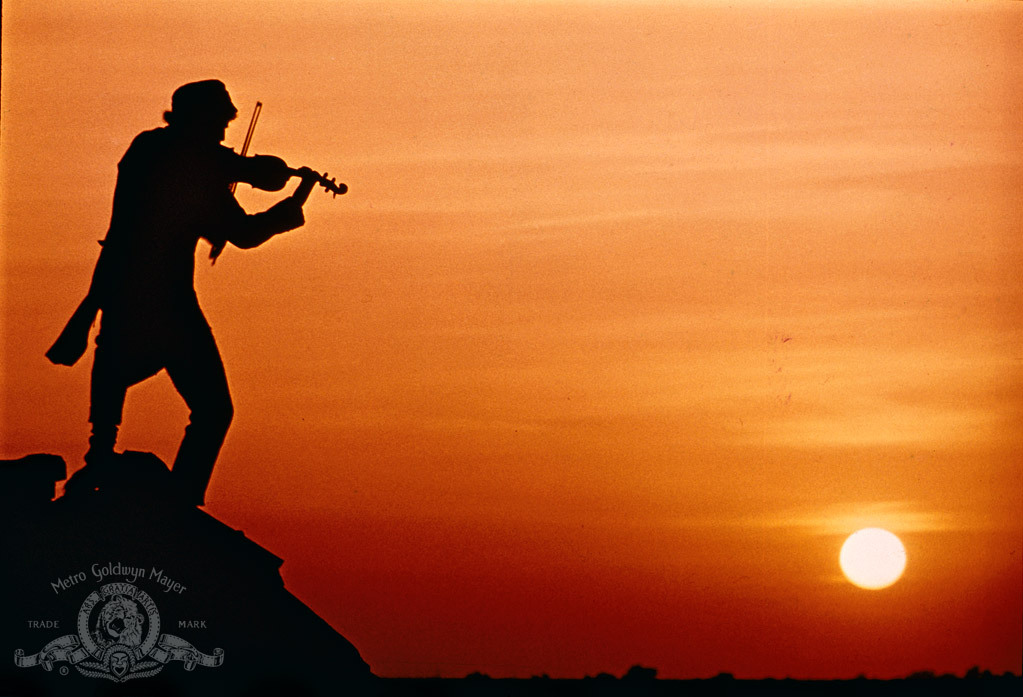
Fiddling While Democracy Burns: A Modern Parable

Art often speaks more profoundly about the challenges of life than ordinary words can convey.  And just as often most of us don’t have ears to hear what the artists and visionaries are trying to tell us, at least until fiction becomes our reality.  Among other dystopian prophets I am thinking of George Orwell’s “1984,” Suzanne Collins’ “The Hunger Games,” and Margaret Atwood’s “The Handmaid’s Tale.”

Or from the Judeo-Christian Scriptures Amos and other prophets pronounce judgment on their own people for their violation of their covenant with Yahweh.  Here’s a sample from Amos:

“Thus says the Lord: For three transgressions of Judah,
    and for four, I will not revoke the punishment,
because they have rejected the instruction of the Lord
    and have not kept his statutes,
but they have been led astray by the same lies
    after which their ancestors walked.
So I will send a fire on Judah,
    and it shall devour the strongholds of Jerusalem.

Thus says the Lord:  For three transgressions of Israel,
    and for four, I will not revoke the punishment,
because they sell the righteous for silver
    and the needy for a pair of sandals—
they who trample the head of the poor into the dust of the earth
    and push the afflicted out of the way;” (Amos 2:4-7)

Anyone tempted to bow down to the idol of Christian Nationalism would do well to ponder these warnings. 

One of my favorite musicals has always been “Fiddler on the Roof.” Its theme of love conquering oppression never seems out of date and is all too relevant today. In fact when I thought about the symbolism of Fiddler I discovered that I wrote about it, not coincidentally, in 2019 during Trump’s first term.  The parallels today are even more stark.  In “Fiddler” the Jewish village of Anatevka is being forced to flee their beloved home because of Russian persecution.  We are living through such terrifying times right now in our once beautiful democracy.

Here’s what I wrote about Fiddler during Trump 1.0:  “Some of Fiddler’s insights are so good I am tempted to call it the Gospel according to Tevye. I was in a discussion the other day about praying for President Trump, and all of us present agreed we should and he certainly needs it. His erratic and delusional Messianic references to himself since then only confirm that conclusion.

One of the first things that came to my mind about praying for the President is a line from Fiddler where a Rabbi says this prayer: “God bless and keep the czar—far away from us.” On a more serious note I think one of the best parts of Fiddler is the opening where the title and its metaphor for life are explained.

“Away above my head I see the strangest sight
A fiddler on the roof who’s up there day and night
He fiddles when it rains, he fiddles when it snows
I’ve never seen him rest, yet on and on he goes

{Refrain}
What does it mean, this fiddler on the roof?
Who fiddles every night and fiddles every noon
Why should he pick so curious a place
To play his little fiddler’s tune

An unexpected breeze could blow him to the ground
Yet after every storm, I see he’s still around
Whatever each day brings, this odd outlandish man
He plays his simple tune as sweetly as he can

{Refrain}

A fiddler on the roof, a most unlikely sight
It might not mean a thing, but then again it might!”

And then Tevye says, “A fiddler on the roof. Sounds crazy, no? But here, in our little village of Anatevka, you might say every one of us is a fiddler on the roof trying to scratch out a pleasant, simple tune without breaking his neck. It isn’t easy. You may ask ‘Why do we stay up there if it’s so dangerous?’ Well, we stay because Anatevka is our home. And how do we keep our balance? That I can tell you in one word: tradition!”

Our traditions of love, compassion, hospitality and justice are under attack, but they are the solid rock and anchor we can cling to in each and every storm; and if we do we will still be around after the perils of this present age are no more.”

Today in 2025 when the prospects of anyone stopping the fascist overthrow of our democracy seem pretty slim I need to amend that last sentence.  I no longer am so confident “we will still be around” when this nightmarish storm is finally over.  I continue to hope that enough Republican members of Congress will find the courage to stop the carnage.  They are the only ones standing between us and a total dictatorship. 

Just this weekend Trump has begun ignoring court orders to stop illegal deportations.  He has also revoked pardons for some on his political enemies hit list that were issued by President Biden.  Can the Fiddler keep scratching out a simple tune or has that metaphor shifted to fiddling while our democracy burns?

And most tragic to me is that it is not just democracy burning.  Among his more than I can count acts of treason Trump has destroyed the departments and the international efforts dedicated to fighting climate change.  Mother Nature is no respecter of political ideologies.  Red and blue states are suffering the ravages of extreme weather disasters caused by climate change, and this administration simply doesn’t care.  Trump, Musk and their billionaire class only care about personal wealth and power.  But if we fail to preserve our only home in the universe nothing else is going to matter. 

So here we are, and so far there is a thread of hope symbolized by a bunch of courageous protestors who are individually and collectively fiddlers on the roof, and the question hangs in the air now as it did in Anatevka:

“A Fiddler on the roof, a most unusual sight…. It may not mean a thing, but then again it might.”

*music by Jerry Bock, lyrics by Sheldon Harnick

When All is Lost, It’s Not!

HolyLent
“Turn, O LORD! How long?
Have compassion on your servants!
Satisfy us in the morning with your steadfast love,
so that we may rejoice and be glad all our days.” – Psalm 90:13-14

My Lenten encounter with Psalm 90 has taken a very humbling turn. Focusing on this Psalm during these first few days of Lent has shown me how very little I know about the Psalter, and that is not a good feeling. Maybe I “knew” more about the theology, structure and purpose of the Psalms in my seminary days, but I am embarrassed to admit how little this part of the Hebrew Scriptures has informed my own theological journey over the last four decades.

In particular Psalm 90 has reminded me that like the Pentateuch the book of Psalms is divided into five books. That may not sound terribly relevant to most casual readers of the Bible but it is. The divisions of the Psalms correspond to different historical contexts and the ensuing theological issues God’s people were facing at different points in the long relationship the Hebrew people had with their God. The fact that Psalm 90 is the opening chapter in Book IV of the Psalter is therefore significant as is the fact that it is the only Psalm attributed to Moses.

The plea for God to turn (repent) and have compassion on God’s servants in verses 13-14 is always relevant because we fallible humans are always in need of God’s forgiveness. But this plea is more than a generic mea culpa. Book IV of the Psalms addresses a huge theological crisis for the Hebrew people. When the Babylonians destroyed Jerusalem and carried many of the Hebrews off into exile in 587 BCE the Hebrews lost what had been the three most important elements in the foundation of their faith for hundreds of years: their land, their monarchy and their temple. Book III ends with the plaintive lament asking why God has abandoned them. “How long, O Lord? Will you hide yourself forever? How long will your wrath burn like fire? Lord, where is your steadfast love of old, which by your faithfulness you swore to David?” (89: 46, 49)

It is in response to that desperate plea for compassion from God that Psalm 90 begins by imagining a response from Moses and a time before Israel had land, temple or monarchy, but only God to rely on. One ancient manuscript calls this Psalm “A prayer of Moses the prophet, when the people of Israel sinned in the desert.” That reference is to the golden calf affair in Exodus 32, one of the few other references in all of Scripture where God is asked to repent. In that case Moses begs God to repent of God’s anger toward his rebellious children when they melt down their jewelry to fashion an idol to worship because they can’t wait even 40 days for Moses to come back down from his summit meeting with God. God is so angry that he plans to destroy the people right there in the desert, but Moses convinces God to repent and to keep covenant with his children even though they have broken their promises yet again.

Now in exile the Psalmist is asking God to turn/repent of the judgment on Israel’s sin that has resulted in loss of land, temple and the supposed security of an earthly king. The prophets have tried in vain for decades to warn the people of Israel about placing their faith in the false gods of political power and materialism. Amos is perhaps the most direct and reflects the tenor of those warnings that went unheeded: “Thus says the Lord: For three transgressions of Judah, and for four, I will not revoke the punishment; because they have rejected the law of the Lord, and have not kept his statutes, but they have been led astray by the same lies after which their ancestors walked. So I will send a fire on Judah, and it shall devour the strongholds of Jerusalem. Thus says the Lord: For three transgressions of Israel, and for four, I will not revoke the punishment; because they sell the righteous for silver, and the needy for a pair of sandals—they who trample the head of the poor into the dust of the earth, and push the afflicted out of the way.” (Amos 2:4-7).

A contemporary prophet and biblical scholar, Walter Brueggmann, describes the current crisis in American Christianity in unsettlingly similar terms: “The crisis in the U.S. church has almost nothing to do with being liberal or conservative; it has everything to do with giving up on the faith and discipline of our Christian baptism and settling for a common, generic U.S. identity that is part patriotism, part consumerism, part violence, and part affluence.” It’s the same message we get when Jesus warns us in the Sermon on the Mount, “Do not store up for yourselves treasures on earth, where moth and rust consume and where thieves break in and steal; but store up for yourselves treasures in heaven.” (Matt. 6:19). From Moses and the prophets to Jesus, the word of God is constant and true, and we still don’t have ears to hear.

That’s why we need Lent every year (or more often). It’s time to ask for God’s compassion on our misplaced principles and values, on our false gods of comfort and prosperity and selfish pride. As individuals, as a church and as a nation Lent is examination time. What do we need to beg God to forgive us for? Where in our lives do we need God’s compassion? And the Psalmist reminds us loud and clear that there is nothing that will truly satisfy our hunger but God’s steadfast love. Even when we lose everything we treasure and value–land, temple, monarchy or whatever our personal versions of those things are, God’s love is constant and eternal. And because it is, even in the exile of fear, loneliness, failing health, economic or political chaos “we may rejoice and be glad all our days.” Thanks be to God.